Reading, Writing and Knowing in Early America and the Digital Age

Category: Private (Page 8 of 11)

Freedom on the Move – Thoughts, Suggestions, Concerns


Warning: Undefined variable $num in /home/shroutdo/public_html/courses/wp-content/plugins/single-categories/single_categories.php on line 126

Warning: Undefined variable $posts_num in /home/shroutdo/public_html/courses/wp-content/plugins/single-categories/single_categories.php on line 127

By Alec

There are a number of things I really liked about the Freedom on the Move database. I appreciate that it encourages a type of interactivity that is beneficial to both the curators of the database and to the users, who in the act of transcribing these ads, have the opportunity to become assistant curators themselves. At least in my own experience, sifting through databases can become tedious to the point that my eyes start to glance over the information I need. By asking users to play an active role in the archival process, users remain alert and aware of the content of each runaway ad they process. I also think this database is a great tool for having students “dip their toes” into the realm of text markup, which can be pretty intimidating and technical without a pretty UI to guide you through each step, as was the case here.

There are a few suggestions I’d make for future development, though:

  • Building off of what Avery had to say about the utility of using drop-down menus to categorize content and make searching more efficient, I think that the whole transcription process could do well with a generous sprinkling of drop-down menus. Many variations in data entry (e.g. “one” vs. “1”) that complicate the archival process could be eliminated by replacing text entry boxes with drop-downs. Obviously some categories, like physical descriptions, do mandate text entry, though.
  • It would be helpful to know how closely the creators/developers want users to stick to the original wording of the ads. For example, in the box asking for information about physical features, if the ad describes the runaway as “thin as a beanpole”, should I copy that over directly, or generalize it to “skinny”?
  • Support for multiple runaways per ad!!! This seems like a pretty substantial oversight. One of the ads I transcribed featured three wanted runaways, with plenty of details about each, but I could only input information about one.

Overall, I think that this database is a success with regard to both its goals and its execution. I am somewhat concerned, though, with the implications of reducing any historical document, let alone one which deals with the description of individuals who were already treated more as objects than humans in their own lifetimes, to a series of categories. Returning to Avery’s post, she makes a great point about what it means to continue the surveillance already conducted on these individuals by preserving their bounties. Though I think that the importance of preserving this aspect of American history probably outweighs this concern, the general question of how we change our perception of history by manipulating/transcribing/archiving sources is an extremely significant one.


Freedom on the Move database – surveillance or empowerment?


Warning: Undefined variable $num in /home/shroutdo/public_html/courses/wp-content/plugins/single-categories/single_categories.php on line 126

Warning: Undefined variable $posts_num in /home/shroutdo/public_html/courses/wp-content/plugins/single-categories/single_categories.php on line 127

By Avery

Overall, I like the user interface of the Freedom on the Move database. A few suggestions:

  1. Clarify the “county” field
    1. When the database asks for “county” do they mean the county at the time or the county as it exists now? Maybe lines haven’t changed much since the 19th century, but I bet there are a few areas with significant changes.
  2. Add a “work” field
    1. At least some of the ads mention the specific type of labor the enslaved person typically performed. I can imagine that as a researcher on the other side of the program, type of work would be a very helpful filtering category.
  3. Change the “color” field to a drop down menu
    1. There will always be exceptions if you limit the field to a certain set of options, but I think for search purposes, researchers would have an easier time if the data were more streamlined.
  4. Make an “age range” option in addition to “age”
    1. Most of the ads I looked at had a range of ages, so it makes sense to either have an “age range” option. Alternatively, the parser could instruct the data enterer to choose the lowest age given, or otherwise standardize the process.
  5. There’s no way to get back to the home screen after you’ve entered data.
    1. I tried to go back and see what the Freedom on the Move site is all about, but I could only choose to fill in another ad or go to the Cornell University home page. I had to log back in from the original link that Dr. Shrout sent us.

After I stepped back from entering data, I thought about our class discussion on surveillance and power. We explored the tension between the power of the slaver and the enslaved. One of our readings suggested that runaway ads are a power-play by slavers because they expose enslaved bodies (Morgan and Rushton). Contrastingly, the other reading held that runaway ads expose white ignorance via their crude, incorrect descriptions of the runaway (Waldstreicher). Our class mostly walked the mid line, acknowledging the influence that media has in shaping ideas of a group of people, but also focusing on the enslaved’s agency by reinterpreting the law as representing slave owners’ fear rather than slave owners’ power.

By resurrecting runaway slave ads, are were empowering the stories of enslaved persons or are we just following in a long tradition of surveillance? Certainly the historian exerts power in historical writing by inducing particular responses in her audience. I don’t see databasing runaway ads itself as a sinister act of surveillance. Historians’ interpretations of the data will be the step towards empowerment or disempowerment.

In general, I think the discipline of history is in a moment of lifting up the stories of the “common people,” those on the periphery of state politics. That’s why I like Cordelia’s post critiquing the particular and contradictory appearance that Ben Franklin cultivated. Runaway ads were born of a situation of ugly power dynamics, but digitizing them gives more people access to the history of enslaved resistance.


Piling on Franklin


Warning: Undefined variable $num in /home/shroutdo/public_html/courses/wp-content/plugins/single-categories/single_categories.php on line 126

Warning: Undefined variable $posts_num in /home/shroutdo/public_html/courses/wp-content/plugins/single-categories/single_categories.php on line 127

By Dr. Shrout

Cordelia’s title made me laugh aloud – but I also like that she points out how reified historical characters are often more complicated that simple historical narratives cast them. This also links back to group B’s presentation, which reminded us that historical narratives and national myths are often consciously created, rather than naturally occurring.

I want to highlight a passage from Cordelia’s post, though, which I thought beautifully summed up the tension between what Franklin thought he was doing, and how we see him as historians:

Waldstreicher further mentions how Franklin’s print culture “had far more to do with slavery than previously believed” as runaways used their knowledge and skills to change their condition – an ideal that resided deeply with Franklin. Franklin, therefore, appears to only apply intellectual precepts to the white men who can make a difference in the printing or political world.

I hope we’ll get to this issue in class – how the structures of information transmission that enabled (according to some authors) the spread of revolutionary politics, also served to marginalize some people in the early United States.

Sherwood problematizes both articles for this class, and asks a question that is central to how we understand non-elite resistance in the early republic: How can we be sure that enslaved people (or the poor, or servants, or anyone else) were not simply reacting to their circumstances (running away) but were instead consciously fashioning themselves. I hope we’ll talk more about this issue in class, and particularly about how to assess how historical actors felt about their quotidian actions, whether we can access those feelings, and what – as historians – we should do about them.


This class has kinda made me hate Ben Franklin


Warning: Undefined variable $num in /home/shroutdo/public_html/courses/wp-content/plugins/single-categories/single_categories.php on line 126

Warning: Undefined variable $posts_num in /home/shroutdo/public_html/courses/wp-content/plugins/single-categories/single_categories.php on line 127

By Cordelia

Last night, I had the privilege to listen to Davidson grad, Clint Smith, talk about his experiences with teaching in low-income high schools. After reading the David Waldstreicher article, “Reading the Runaways: Self-Fashioning, Print Culture, and Confidence in Slavery in the Eighteenth-Century Mid-Atlantic” I was reminded of something Smith mentioned in his talk. He discussed how African-Americans are taught of the same heroism of the founding fathers and patriotism towards the United States as the white students, while the white students are the ones whose ancestors benefitted and who truly continue to benefit today from the actions of the founding fathers. I was reminded of this when Waldstreicher mentioned Benjamin Franklin and the way that he was “appearance-conscious,” thereby slightly excusing his actions in continuously publishing ads in his newspapers requesting the return of runaway slaves. It seems odd to me to deem Ben Franklin “appearance-conscious” and not clarify that that refers to social issues. He was, after all, quite content with opposing the conventional way of things when it came to political issues. Waldstreicher further mentions how Franklin’s print culture “had far more to do with slavery than previously believed” as runaways used their knowledge and skills to change their condition – an ideal that resided deeply with Franklin. Franklin, therefore, appears to only apply intellectual precepts to the white men who can make a difference in the printing or political world.

Although I try to remember that the people of the past should not be judged with the morals of the present, it is difficult to have blatant hypocrisy pointed out by Waldstreicher and to not like Benjamin Franklin a little bit less for it.


An Age of Disguise


Warning: Undefined variable $num in /home/shroutdo/public_html/courses/wp-content/plugins/single-categories/single_categories.php on line 126

Warning: Undefined variable $posts_num in /home/shroutdo/public_html/courses/wp-content/plugins/single-categories/single_categories.php on line 127

By Sherwood

In “Visible Bodies,” authors Gwenda Morgan and Peter Rushton explain how the emergence of an advertising culture made “the bodies of the poor, the troublesome and the criminal” apparent to the upper echelons of society (39). Whereas previously the elite would rarely encounter or interact with these less fortunate individuals, now the desires and needs of the masses were represented by ads in print newspapers. Advertisments also served as a way for owners to identify and retrieve runaways, either indebted servants or slaves who had fled. Morgan and Rushton conclude that the “careful descriptions” were necessary because quite simply, “people were not what they seemed” (40). They often obscured their race, class, gender and past.

In his article “Reading the Runaways,” David Waldstreicher argues that fugitive advertisements from colonial era newspapers demonstrate an instance in which Morgan and Rushton’s conclusion rings true by showing how blacks cleverly manipulated their circumstances to resist servitude. For example, escaped slaves like Tom were able to operate in a market in which they were “producers, consumers, and commodities” by leveraging trade skills, multiple languages, travel experience and mixed racial ancestry to their advantage (245). Living on the margins of society, you see, gave slaves a unique understanding of the peoples and cultures of colonial America. Waldstreicher’s interpretation of colonial slavery is pretty unique. Certainly, blacks resisted their bonds, as any slave would. But I’m suspicious of the claim that slaves operated with such autonomy.

But giving Waldstreicher the benefit of the doubt, what made these authors essentially describe the 18th century as an “age of disguise?” I’d reckon that the close interaction of varying races, languages, occupations, genders and social classes facilitated by urban environments led to the emergence of a cosmopolitan population with a wide-ranging knowledge of these subjects. Certainly, cosmopolitanism seems consistent with the increased globalization and urbanization of the 18th century. This phenomenon is particularly interesting to us, since we’re interested in network analysis. The kind of social networks that Alec describes in his historiography were not possible before the 18th century, or at least they would have been much less dense. If we could graph them, cosmopolitans like Tom would likely be the “missing link” between most networks.


Founding fathers’ modern image


Warning: Undefined variable $num in /home/shroutdo/public_html/courses/wp-content/plugins/single-categories/single_categories.php on line 126

Warning: Undefined variable $posts_num in /home/shroutdo/public_html/courses/wp-content/plugins/single-categories/single_categories.php on line 127

By Avery

comic

Not a real blog post, just thought this was funny and needed to be shared:

I wonder where this fits into the mythical retelling of the American Revolution…


Presentation Background Research


Warning: Undefined variable $num in /home/shroutdo/public_html/courses/wp-content/plugins/single-categories/single_categories.php on line 126

Warning: Undefined variable $posts_num in /home/shroutdo/public_html/courses/wp-content/plugins/single-categories/single_categories.php on line 127

By admin

Digital Archive Assessment

Avery, Kurt, Wilson and Aidan

The Newberry Library’s “Digital Collections for Classroom-Representing the American Revolution, 1768–1893,” is an archive of sources dedicated to making sources pertaining to the American Revolution available for students. The main focus of this archive is to analyze the historical impacts of the American Revolution and its implications upon historical teachings. It also tracks the evolution of the way the American Revolution was taught as America continued to progress. It is a very comprehensive archive containing a wide variety of sources and perspectives.

We used three criteria to assess the archive:

  1. Critical review
    1. What point of view does the archive present?
    2. Quality of primary sources
  2. User Interface
    1. How is it set up?
    2. Does it enhance your experience of the primary documents?
    3. Aesthetics
  3. Utility
    1. Where/how do we see this collection being useful?

Critical Review

Perspectives

In their introduction, the curators ask: “How did people interpret the events of the American Revolution in the eighteenth and nineteenth centuries?” and “In what ways has the Revolution meant different things to different people at any given time?” I was prepared to be disappointed, but the curators delivered an impressively broad range of perspectives, including patriot colonists’ point of view, views of Englishmen across the ocean, and the perspective of enslaved persons.

Though the authors are careful to explicitly state the point of views representing in their first set of documents describing colonial reaction to the revolution. The curators write:

“Two points are worth noting: First, both of these texts present the perspectives of people who resisted British rule… Second, the events to which these writers respond occurred in the years before the military conflict actually began in 1775. It is only in retrospect, knowing the Revolution would soon begin, that historians can look to these sources for evidence of the cultural and political climate that would soon lead many colonists to take up arms against British rule.”

However, such explicit disclaimers are nonexistent after that. The collection is redeemed by its effort to include primary sources from so many different people on different sides of the conflict, but it would have been helpful for the curators to continue to openly qualify the documents.

Quality of primary sources

Primary sources include broadsides, speech transcriptions, printed images, song/poems, and a map. Overall the curators provided quality sources, including sources that seem only tangentially related to the American Revolution, but actually greatly contribute to our understanding of it.

The source set representing the construction of American national identity in the 19th century hosts some of the most interesting sources. This set is also interesting as a primary/secondary crossover source. These 19th century sources tell the narrative arc of the revolution as it was memorialized, providing an important step for us today in monitoring our reactions to revolutionary sources—if we can see how national opinions were shaped, we can understand better why we might react the way we do today as Americans looking back at our history.

Another unconventional but highly relevant source that the curators include is James Theodore Holly’s “A Vindication of the Capacity of the Negro Race for Self-Government, and Civilized Progress, as Demonstrated by Historical Events of the Haytian Revolution.” This source brings the American Revolution into a more global perspective (beyond England), as well as acknowledging the important intellectual and strategic contributions of a minority group.

User Interface

The user interface for this collection is well-designed.

Overall, the design packages resources relating to the document sets in a way that clearly indicates the sources’ original context, as well as allowing users to search for other relevant information. The curators provided a very clear, hyperlinked table of contents which lets users quickly jump to their desired section. Each primary source image stands out on a white background, and its metadata set is easily accessible by clicking the tab just to the right of the image. Captions provide a helpful, quick summary of the image. Each source is also tagged with a variety of key words. If a user clicks on a tag, it takes them to a page with related items found in other digital collections of the Newberry Library.

Aesthetically, the interface makes good use of appropriately contrasting colors and readable fonts. The site as a whole is a little bit text-heavy in certain sections, and might do better to place primary source boxes in the text body rather than providing the summary write-up for each set and then showcasing all the primary sources in a row.

Utility

The utility of the Archive “Digital Collections for Classroom-Representing the American Revolution, 1768–1893” is to serve as a resource for students wishing to further explore the historical implications of the American Revolution. This is a very valuable asset to students because it contains multiple types of sources, such as written texts, maps, and pictures. These are all very valuable as it enables students to further strengthen their knowledge by analyzing the historical context behind a wide range of sources. This archive also includes a great amount of primary sources, further extending opportunities to analyze historical documents. It also appears that this archive caters to the high school age students, because after each source there is a list of questions to consider while reading, making it easier for a younger demographic to follow along with these sources.


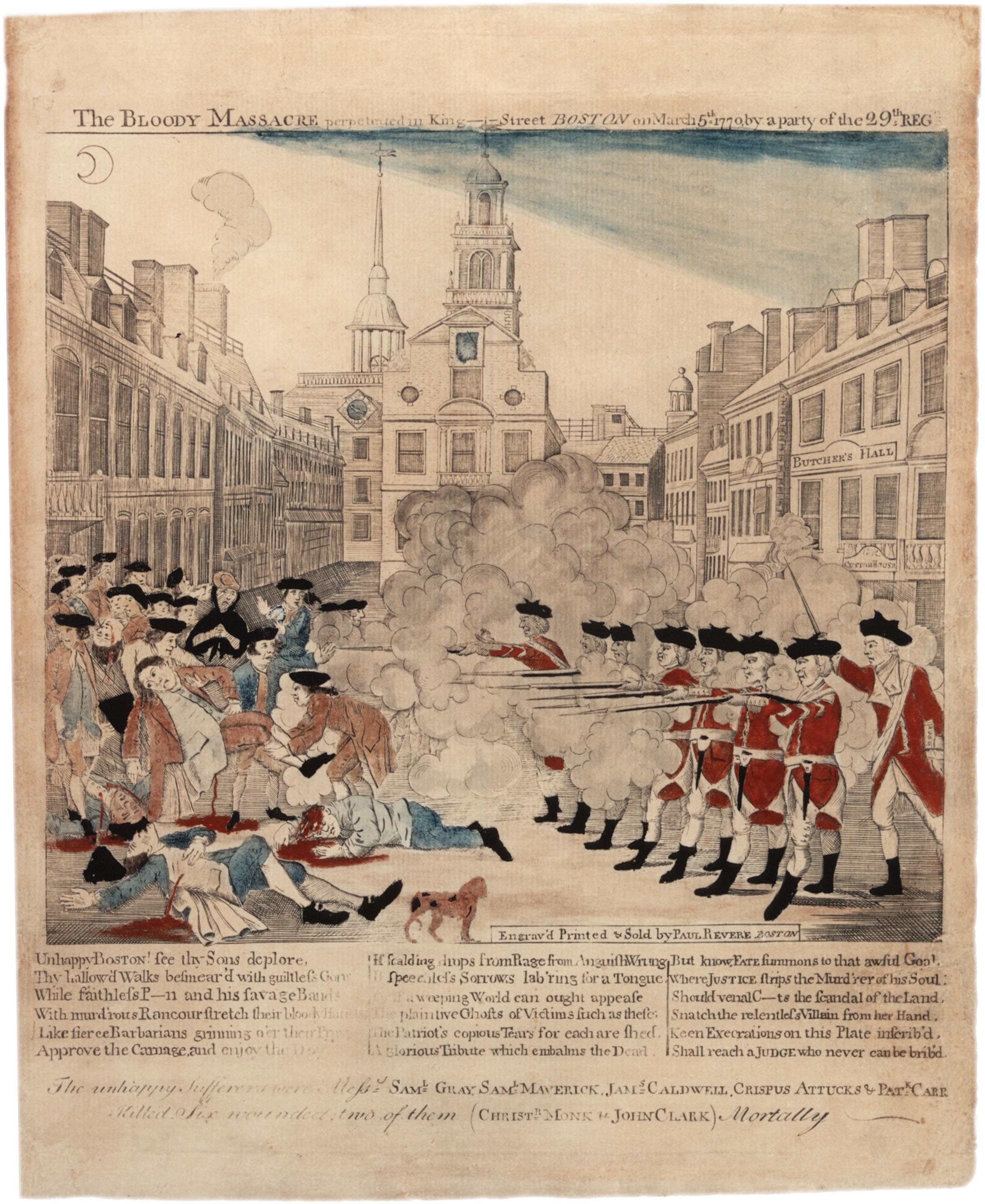
Boston Massacre data


Warning: Undefined variable $num in /home/shroutdo/public_html/courses/wp-content/plugins/single-categories/single_categories.php on line 126

Warning: Undefined variable $posts_num in /home/shroutdo/public_html/courses/wp-content/plugins/single-categories/single_categories.php on line 127

By Dr. Shrout

Screen Shot 2015-02-12 at 2.54.26 PM

Here is some of the data from the Boston Massacre exercise.

A spreadsheet of all of the people involved, color coded to highlight those who are members of the same group:

A network of the different groups that these people were associated with:


How early America sounded


Warning: Undefined variable $num in /home/shroutdo/public_html/courses/wp-content/plugins/single-categories/single_categories.php on line 126

Warning: Undefined variable $posts_num in /home/shroutdo/public_html/courses/wp-content/plugins/single-categories/single_categories.php on line 127

By Dr. Shrout

The Boren and Roginska article raises an interesting historical question – how did colonial Philadelphia (and by extension, other colonial cities) sound? We are used to living in a world of amplified sound, but for people in colonial America – either participants in the Great Awakening listening to George Whitfield, or soldiers trying to hear the voice of their commanding officer over a crowd of rowdy Bostonians – the question of un-amplified (or, at least, un-electronically-amplified) sound transmission was crucial.

As Kurt points out, the Boren and Roginska article is multi-layered: it re-examines an experiment conducted by Benjamin Franklin, which in turn tested a claim made by George Whitfield about the range of his voice in public speeches. Kurt helpfully distinguishes between the kinds of experiential experiments that Franklin did, and the (more modern) math that Boren and Roginska employed. I’ll be interested to hear how other students felt about the utility of these experiments. What does knowing about the reach of public speeches in early America tell us about knowledge transmission? Would you feel confident performing similar analyses of other public events?

Finally, Kurt does a very good job of connecting this work on Franklin to our earlier articles, pointing out that while Franklin might not have been solely responsible for print culture in America, his role as an innovator was certainly important to the development of early American scientific, political and information culture. Reading this, it occurred to me that Franklin might make an interesting case study for a final paper for this class.


« Older posts Newer posts »

© 2026 History 245

Theme by Anders NorenUp ↑