Nature in narratives and our role as storytellers


Warning: Undefined variable $num in /home/shroutdo/public_html/courses/wp-content/plugins/single-categories/single_categories.php on line 126

Warning: Undefined variable $posts_num in /home/shroutdo/public_html/courses/wp-content/plugins/single-categories/single_categories.php on line 127

Cronon prompts an interesting discussion on the role of nature in narratives, one that I think Koppes lacked, and that is: although nature, in and of itself, is not always linear, why and how do we fit it in to a narrative structure? “Environmental history sets itself the task of including within its boundaries far more of the nonhuman world than most other histories, and yet human agents continue to be the main anchors of its narratives.” This problem of framing the role of nature is especially tricky when we think about nature in a nonlinear sort of way. Sometimes things in nature are cyclical and at times random, so how do we condense nature into a narrative structure?  Should we? And moreover, we tend to talk about nature in terms of its instrumental value at the sake of its intrinsic value, which creates an interesting problem when we try to determine its importance.

One of the things I think we need to be especially wary of is the tendency to reduce nature’s implications to binaries such as good vs. bad, helpful vs. harmful. Because if postmodernism has taught us anything, it’s that we need to be skeptical of our epistemological lenses. And yet, this fear shouldn’t stop historical inquiry. I think Molly wrote it best when she said, “He believes that ‘historical storytelling helps keep us morally engaged with the world by showing us how to care about it and its origins in ways we had not done before’ (1375).  Even if narrative histories are malleable, they help humans today stay morally engaged.  Historians’ efforts are not futile, even in a postmodernist society.”

I’m particularly concerned with ensuring that nature in an objective form is represented in history. But this is difficult when “Nature is unlike most other historical subjects in lacking a clear voice of its own” while simultaneously being anything but silent. We interpret nature’s meaning from our own human values and we can’t always stay true to the facts that are presented. This is why Bonnifield and Worster came to such different conclusions. But as Molly said, this may not always be bad if we can keep humans today morally engaged.
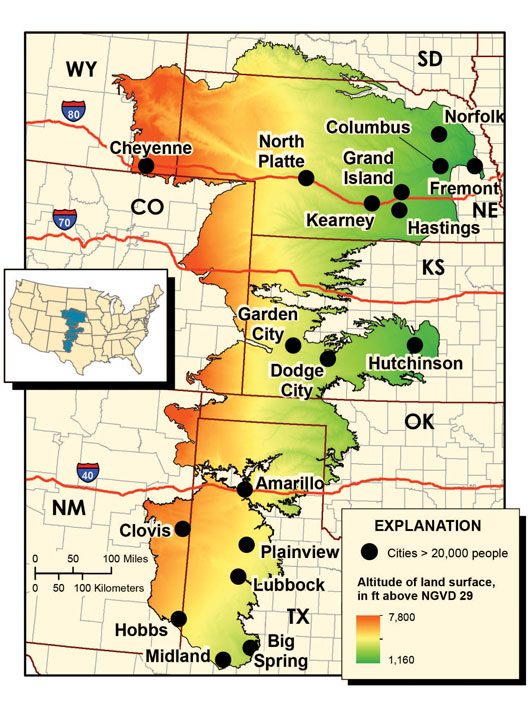
Depletion of the Ogallala Aquifer

And this got me thinking about the current discourse surrounding the depletion of the Ogallala Aquifer. It is a shallow water table aquifer located under the Great Plains that depleting rapidly as a result of agricultural irrigation and drilling for oil and natural gas. The dilemma here, and like many other environmental issues, is how do we frame this event so that we as humans can understand the potential ecological damage? Of course here we are framing different problems, but Cronon’s article can be helpful in thinking about how we construct discourse today. Our human voices place value on nature, but activists who call for change should also implement strategies other than narrative; narrative only takes us so far. Resources such as maps, art, and hard science reports can animate nature’s important position as a stakeholder.
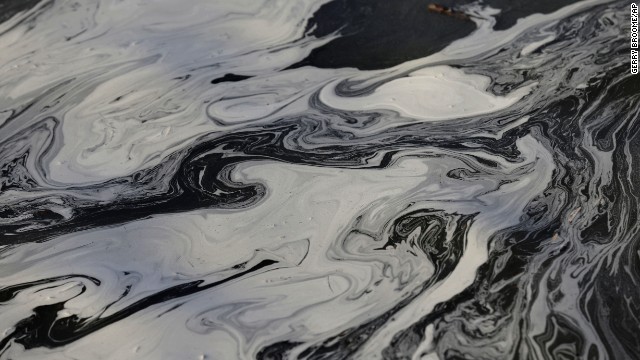
What Would Thoreau Do?


Warning: Undefined variable $num in /home/shroutdo/public_html/courses/wp-content/plugins/single-categories/single_categories.php on line 126

Warning: Undefined variable $posts_num in /home/shroutdo/public_html/courses/wp-content/plugins/single-categories/single_categories.php on line 127

I agree with Price when he wrote that Koppe’s review is lacking. “His indictment of boosterism and expansionary economics fails to connect policy with environmental consequences.” However, it’s also important to remember the state of the environmental movement at the time of the Dust Bowl. At this point in time we have national parks, the writings of Thoreau’s, and the beginnings of the Sierra Club – but not much policy. And so I again agree with Price when he wrote, “Over irrigation of water sources and overuse of soils certainly can have dangerous environmental impacts, but Koppes fails to identify any policy of wrongdoing.” Koppes casts the farmers in a negative light – though legally they had not done anything “wrong”.

Koppes writes, “Conservation as a cultural reform had come to be accepted only where and insofar as it had helped the plains culture reach its traditional expansionary aims.” So in that sense, although the foundations of environmentalism have been set, environmentalism is only valued to the point that it meets short-term economic efficiency and growth. Farmers were still thinking in the short term. Exploit the land now for a quick profit with heavy machinery, fossil fuels, and chemicals- but at a point at which you fail to incorporate ecological economics and place value on ecosystem services, you’ve got a lot of long-term consequences. But according to Koppes, “for the individual farmer, devoted to profit maximization in the present, the system is not irrational.” Koppes attempts to tie the Dust Bowl Tragedy to economic systems; capitalism, labor exploits, industry. But does not adequately address policy or culture.

But while I think that Koppe’s argument is somewhat lacking, I think his message is clear: there will likely be consequences when we exploit the land. He writes that the Dust Bowl is where “social forces and natural conditions converge”. And I believe this review serves as an important reminder that our actions can have potentially devastating consequences. Fortunately, our environmental policy has developed tremendously since the Dust Bowl, but we still have ways to go. And our culture as a driving force for conservation could still use some work too.

What is a “good” quarantine?


Warning: Undefined variable $num in /home/shroutdo/public_html/courses/wp-content/plugins/single-categories/single_categories.php on line 126

Warning: Undefined variable $posts_num in /home/shroutdo/public_html/courses/wp-content/plugins/single-categories/single_categories.php on line 127

I chose to read “Extraordinary and Even Arbitrary Powers” because I was looking to compare and contrast the dialogue of quarantine and public health policies with my own research. I have been looking into federal and state responses to the Yellow Fever Outbreak in the Mississippi River Valley of 1878 and found striking parallels as well as contrasts between the two.

At Mary Mallon’s time, state and national health boards were still in their early formation stages (more so in the South than the North). But a lot still remained unclear about jurisdiction, funding, and research roles of the boards. It was a time of anxiety in the public health world and policy makers, businessmen, and health officials alike were still sorting out their place in the field. New York’s board, however, as Leavitt writes, had been frontrunner in forming policies since it gained legitimate authority in 1866. She writes, “The local board soon became the nation’s leader in terms of defining municipal programs to promote health and prevent disease, and its accomplishments were adopted as models across the country” (40).

And yet, one of the most established boards in the country couldn’t quite figure out what to do with little Mary Mallon. After the yellow fever outbreak in Memphis, state and federal officials blamed the poor sanitation conditions for the epidemic. However, New York was doing fairly well in that regards. They needed to find another way to take action, so they put Mary Mallon in quarantine?  “Why was quarantine the first response of the New York officials instead of last resort?” (47)

John wrote that “Mary Mallon’s capture and subsequent isolation can be viewed as a manifestation of the belief that it was possible for humankind to conquer disease” and I agree with that to a certain extent. However, there was also just a sense that people did not know what to do with her. And this raises a whole host of ethical questions that Leavitt discusses in this chapter, “Was it necessary to restrain even one person’s individual liberty in order to achieve health?” (69) And yet, there are records that officials believed that their capturing of Mallon was reasonable. And while I agree with Molly when she wrote, “The real disaster, was not the outbreak of typhoid, but Mary’s treatment and the public’s reaction to it”, there was no protocol for dealing with cases like silent-carriers. What is our value criteria for dealing with such sensitive subjects like quarantine? Public officials didn’t really have a good rubric back then – and even today we are still having similar discussions about the spread of HIV and tuberculosis.  What is “good” quarantine?

Research Update: Yellow Fever 1878


Warning: Undefined variable $num in /home/shroutdo/public_html/courses/wp-content/plugins/single-categories/single_categories.php on line 126

Warning: Undefined variable $posts_num in /home/shroutdo/public_html/courses/wp-content/plugins/single-categories/single_categories.php on line 127

I’m looking at the 1878 yellow fever epidemic in Memphis and the impacts on national reconciliation.

I started off my search for primary sources trying to obtain some sort of records surrounding the debates of the 1878 National Quarantine Act and the 1879 formation of the National Board of Health. Within these records I was looking to analyze the reasons Southern Congressman had for abandoning state right’s policies in favor of a stronger piece of federal legislation. In addition, I was hoping to explore the reasons of Northern opposition to national action.

I have been able to find some awesome sources that cover these debates, but could stand to find a few more, as well as newspaper sources that covered the debates. However, I need to be sure to keep this source narrowed to Memphis and the surrounding Mississippi River Valley. The plague also affected New Orleans and Atlanta (although it hit Memphis the hardest) so keeping my focus on Memphis has required some digging.


Fact vs. Fiction in “Down with the Old Canoe”


Warning: Undefined variable $num in /home/shroutdo/public_html/courses/wp-content/plugins/single-categories/single_categories.php on line 126

Warning: Undefined variable $posts_num in /home/shroutdo/public_html/courses/wp-content/plugins/single-categories/single_categories.php on line 127

The one thing I can hold true from Steven Biel’s Down with the Old Canoe, it’s that there are a whole bunch of stories that come from the Titanic. Biel makes the case that we should not exploit the myths of the Titanic because as its legacy could mean any number of things depending on our own cultural context.  Over the years the saga of Titanic has been shaped to a variety of ends – begging for a resolution that Biel argues we will never fully get.

I agree with Amani when she wrote, “the Titanic served as a powerful metaphor for groups all across American society, groups like women’s suffragists, African Americans, the wealthy, and even traditionalists”. And I think Wells said it best when he observed that the Titanic served as a blank canvas on which Americans could project their own meaning, “The Titanic was certainly meaningful, but only in that it reflected the social and ideological complexities of a particular historical moment.” Those fighting for female empowerment pointed to the fact that women were strong enough to row the life-support boats and were organized enough to erect expensive memorials (although they paradoxically praised male chivalry). Meanwhile anti-suffragists reflected that women were better served by chivalry than voting rights. It gave special attention to praising the heroic deeds of the champions of capitalism, like Astor. “Such anecdotes” Biel writes, “served to conflate wealth and self-sacrifice, power and moral grandeur, social status and character” (42). Fundamentalists pointed to the greed and subsequent divine punishment of the day while the progressives pointed to new safety regulations. Everyone, it seemed, had something to gain and lose from the disaster.

But this book is not really about the sinking of the Titanic. No, it’s more about a society’s ability to reconstruct an event. I agree with Molly, the ability of a culture to reshape a disaster does not make the event intrinsically meaningless, especially when we are talking about lives. But thinking about going forward with my primary analysis paper, Biel’s text serves as reminder that I should understand the biases of my speaker. What you have to lose or gain in your recounting or exploiting of disaster?

Ha – here’s one thing this guy gained in exploiting the disaster:

http://www.huffingtonpost.co.uk/2013/02/27/titanic-ii-cruise-ship-lifeboats-blue-star-line_n_2771356.html

The economic discourse around seismic enlightenment


Warning: Undefined variable $num in /home/shroutdo/public_html/courses/wp-content/plugins/single-categories/single_categories.php on line 126

Warning: Undefined variable $posts_num in /home/shroutdo/public_html/courses/wp-content/plugins/single-categories/single_categories.php on line 127


The fireman’s commission, on the thirtieth anniversary of the temblor, published a report assessing the structural progress made since the 1906 earthquake. “The lessons of 1906 were speedily forgotten. Public apathy, an aversion to admitting that earthquakes occur in California, and the desire of building construction speculators to build for profit, combined gradually to prevail over the counsel of engineers” (115). The 1906 earthquake left at least 3,000 dead – but did little in the way of encouraging structural change. It was only after experiencing more earthquakes in the 20s and the 30s that Californians began to accept their precarious geography. It was only then understood that “Economic development depended on open recognition of earthquake risk.”

In this course we have talked extensively about who shapes the perception and narratives of disaster. And in the case of the 1906 “fire”, Steinberg argues that business elites and politicians fueled by their economic interests shaped the discourse. At the time of the temblor, San Francisco was developing into a banking hub and already led the West in trade and manufacturing. As a result, the economic elite cried “fire” rather than “earthquake” – seemingly positing the disaster as nothing more than a freak accident. Business leaders assumed indifference to the damages of the earthquake calamites in order to ensure continued investment in the city. However, Steinberg was quick to point out that the earthquake did in fact cause tremendous damage, pointing to the fact that the quake damaged 95% of the chimneys in San Francisco. Steinberg reports that in all, the jolt was responsible for 20% of the damage. (However, Steinberg does a good job of explaining the difficulties of classifying the fire and the quake as two separate occurrences.) Yet at the time, the quake was understood as “a little shake in the earth’s crust. . .constitu[ing] no real source of danger.”

This reminds me of some of the responses to Galveston Hurricane. Leaders of the city initially resisted the idea of constructing a sea wall. For although Progressive prudence encouraged its construction, building the massive wall meant that the city had to recognize that it was in a dangerous location.

Steinberg concludes his argument talking the modern implications to this disaster surrounding social justice. The 1989 jolt encouraged improvements in earthquake resistant construction – but these advancements have not yet reached the more marginalized citizens.  Jean concludes her post with an important question, “has the legislation constructed in the wake of disaster been beneficial to all classes in society (outside of economic benefits)?” For while it is true that there is “no safe place”, Steinberg argues that real estate cartel continues to quell the seismic enlightenment in favor of profit. “The idea of no inconveniencing someone – but allowing them to be killed, well, things seem to be upside down.”

Rebuilding Galveston: Then and Now


Warning: Undefined variable $num in /home/shroutdo/public_html/courses/wp-content/plugins/single-categories/single_categories.php on line 126

Warning: Undefined variable $posts_num in /home/shroutdo/public_html/courses/wp-content/plugins/single-categories/single_categories.php on line 127

While Galveston never fully regained its premier economic position following the massive destruction of the 1900 hurricane, its efforts to rebuild were extraordinary and reflected both the hubris of the age as well as a a welcomed sense of practicality. The hurricane took the lives of some 6,000 – 8,000 and resulted in property damage amounting to approx. $30 million. Yet despite these tremendous numbers, “there was no public discussion about abandoning the island.”  W.L. Moody  (who interestingly went on to found American National Insurance Company) told a reporter, “There was no question about it, “Galveston will be rebuilt stronger and better than ever before.”

So with this firm conviction city leaders boldly began to seek out ways in which to “eliminate the dangers of disaster.” CRC Member Ike Kempner, also the city treasurer, was primarily considered with ensuring the economic integrity of Galveston following its destruction. Galveston still boasted a large deep-water port, but the threat of another disaster discouraged investors. So while Galveston desperately needed to protect the city from future disasters, it had to do so in a way as not to disclose the city’s precarious geography. “Building a sea wall or taking other precautionary measures seemed to acknowledge the city’s dangerous position, yet without some moves by Galveston leaders to calm fears of future calamity, people would not remain, return, rebuild, or invest.” In that sense, the efforts to rebuild Galveston were as concerned with erecting sea walls and buildings as with reconstructing a new mindset – that while Galveston was an important economic hub, it was also vulnerable to natural disasters. Galveston became the meeting place of Gilded Age hubris and Progressive practicality.  And nowhere was this more evident than in the remarkable construction of the sea wall.  An ambitious undertaking to say the least, the sea wall was constructed “with great faith in modern technology and an equal resolve to remain on an unprotected sandbar.”

The seawall still protects the city of Galveston today. It extends almost ten miles along the Gulf of Mexico Side of Galveston, protecting nearly one-third of the beachfront. However the seawall resulted in some unforeseen consequences, like the erosion of the beach in front of the wall. Resultantly, the city must actively engage in “beach renourishment” – in which sand is dredged and brought to the shore.  But in 2011 Rice University released a study suggesting that the environmental and economical costs of dredging are so tremendous that in the event of a future hurricane – Galveston should not rebuild some of its coasts. It’s been over one hundred years since the hurricane and we’re still recovering.

Plaguing the Soul of the South: The 1878 Yellow Fever Epidemic in Memphis


Warning: Undefined variable $num in /home/shroutdo/public_html/courses/wp-content/plugins/single-categories/single_categories.php on line 126

Warning: Undefined variable $posts_num in /home/shroutdo/public_html/courses/wp-content/plugins/single-categories/single_categories.php on line 127

The yellow fever epidemic that plagued Memphis in 1878 claimed upwards of 20,000 lives, more than the Chicago Fire, the San Francisco earthquake, and the Johnstown flood combined.  The epidemic was aided by El Niño, which turned the American South in a tropical region ideal for mosquitos, and by the rapid influx of immigration, which provided a fresh source of nonimmune blood. The response to the epidemic was controversial and chaotic and resulted quarantined cities, obstructed commerce, and paralyzed governments. Well over half the city’s population either died or fled, resulting in an economic collapse the led Memphis to temporarily loose its city charter. However, the epidemic of 1878 was not the first yellow fever outbreak in America, or even Memphis for that matter.

So how did the anxieties around previous yellow fever outbreaks affect the response to the catastrophic epidemic of 1878? And moreover, how did the reactions of the 1878 outbreak create new policies and regulations to prevent and quell future epidemics? To explore these questions, I plan on consulting a variety of different sources. Before the 1878, Memphis was somewhat notorious for loose sanitation regulations and practices, despite having been adversely affected by outbreaks in the past. So first I plan on consulting primary source accounts before the outbreak of 1878 that address the previous outbreaks of yellow flu and the subsequent responses. Furthermore, I plan on consulting a myriad of secondary sources that assess the efficacy of the response methods to the 1878 epidemic in reducing the impact of later epidemics. The response will include both government-sanctioned responses as well as civil and charitable actions.

The epidemic of 1878 affected cities and towns from New Orleans to Memphis. (Interestingly, many churchly folks cited epidemic as God smiting the large Mardi Gras festivals and Carnivals held in Memphis and New Orleans each year. Sound familiar? There is extensive amount of writing on the epidemic in New Orleans, however, but significantly less surrounding the outbreak in Memphis. Finding material specific to Memphis has slowed my research process.

Neglect and Responsibility, Past and Present


Warning: Undefined variable $num in /home/shroutdo/public_html/courses/wp-content/plugins/single-categories/single_categories.php on line 126

Warning: Undefined variable $posts_num in /home/shroutdo/public_html/courses/wp-content/plugins/single-categories/single_categories.php on line 127
From the recent coal ash spill in North Carolina (http://i2.cdn.turner.com/cnn/dam/assets/140209142643-01-nc-coal-ash-ap749629851608-horizontal-gallery.jpg)

Although nowhere near as damaging at the Johnston Flood, about two weeks ago some North Carolinians experienced a different sort of flood themselves when a storm water pipe broken beneath one of Duke Energy’s 14 coals ash ponds. Duke Energy reported that 50,000 to 82,000 tons of coal ash and up to 27 million gallons of water were released from a coal ash pond in Eden, about 130 miles northeast of Charlotte. The containments are still flowing into the Dan River. The preliminary reports suggest that the coal ash ponds in North Carolina lack stringent regulations and that the pipe that broke had not been properly maintained. (Sound familiar?) These reports led the New York Times to publish, “North Carolina citizens have good reason to wonder just whom their environmental regulators are trying to protect.” The question now: who are we to blame?

In the case of the Johnstown Flood, I agree with Jean and Catherine, we should hold people accountable. Jean pointed out that using a more structuralist approach we can blame  “Ignorance and focus on capital, reputation and pride that a person holds often clouds the vision of doing what is right.” We can also blame the mindset of the people in Johnstown. As Victor Hesier would later recall, “The townspeople, like those who live in the shadow of Vesuvius, grew calloused to the possibility of danger. ‘Sometime’ they thought, ‘that dam will just give way, but it won’t ever happen to us!’ (66).” And if you want to point fingers at someone specific, maybe try Benjamin Ruff, the man in charge of the dam’s restoration.

But with so many running narratives – is it even useful to attribute blame? This is the question that the current North Carolina and federal governments are facing in dealing with the coal ash. Federal prosecutors recently order dozens of subpoenas seeking documents from Duke and the N.C. Department of Environment and National Resources. Critics are also looking to Governor Pat McCrory for appointing businessman John Skvarla as head of the department.

But at the end of the day we must hold people responsible for the coal ash and the Johnston Flood; ignorance is not a good enough excuse. If you are going to intentionally manipulate nature, you better intentionally manage it, if not for the sake of environmentalism, for the people. These two tawdry tales illustrate the need for stricter regulation and enforcement. Why can’t we learn from the past?

Confusing the boundary between city and country


Warning: Undefined variable $num in /home/shroutdo/public_html/courses/wp-content/plugins/single-categories/single_categories.php on line 126

Warning: Undefined variable $posts_num in /home/shroutdo/public_html/courses/wp-content/plugins/single-categories/single_categories.php on line 127

In Nature’s Metropolis, William Cronon makes the argument that the stories of Chicago and the Great West are lacking unless told together.  And while the regions look, sound and smell different – they both represent America’s marketplace evolution and the process of abstracting commercial value from physical landscapes.

To begin, it seems to be really incredible – truly a symbol of mankind’s determination – that Chicago was able to rise out of the swampy lowlands. It had none of the natural advantages found in great cities else where around the world . . no fertile valley’s, no great harbours, no broad rivers. Instead, its creation depended solely on the force of human will”(15). Cronon, although he seems wary of using the term ‘progress’, demonstrates how humans, when faced with opportunity, will prove extremely innovative. In doing so, nature becomes, as Emerson writes the mere “double of man” (15). So while the environment does play a role, ultimately it appears, culture begets culture.

But how do humans decide in what ways to manipulate nature – to convert it from a pristine wilderness to a cultivated garden? “The ways people value the products of the soil, and decide how much it costs to get those products to market, together shape the landscape we inhabit” (50). I think Eli said it best in his post, “Yet, part of the ethos of America, especially of the past, which I am beginning to understand is the desire for commercial hegemony.” And in this sense, understanding Chicago from theories of economic geography is extremely valuable. For after all, Chicago out of all of the cities in the Midwest most effectively reshaped its land to become the ultimate gateway city to the west. (Catherine did a great job in her post discussing the importance of transportation. Both manmade, and to a lesser extent, natural.)

Nature’s Metropolis provides a strong argument in explaining not only the rise of Chicago, but also in the altering of America’s landscapes for the cultivating and trading of commodities. Whether urban or rural, these regions fundamentally reshaped the other – confusing our traditional notions between natural and artificial. “Gauged by how we feel about them, the distance we travel between city and country is measured more in the mind than on the ground” (8). Chicago proves to be an extremely effective case study – erasing the boundaries between country and city.