Toto, I’ve got a feeling we’re not in Kansas anymore!


Warning: Undefined variable $num in /home/shroutdo/public_html/courses/wp-content/plugins/single-categories/single_categories.php on line 126

Warning: Undefined variable $posts_num in /home/shroutdo/public_html/courses/wp-content/plugins/single-categories/single_categories.php on line 127

spoonsThe piece that most captivated me were the two spoons with tornadoes depicted in the spoon itself using silverpoint to create the metallic lines. This kind of art especially intrigues me because it’s like the spoon died and the image depicted was its last memory that’s been frozen in time, almost like a photograph. If that makes sense. The best comparison I can think of comes from the nuclear blasts at Nagasaki and Hiroshima. There were reports of shadows being printed on the walls from the power of the bomb. I’m not sure how this is physically possible (remember, I’m a history major), but that is what I thought of when I saw those spoons on display.

Tornadoes are incredibly devastating storms that occur mostly in the United States. These acts of nature are rotating, funnel shaped clouds that extend from a thunderstorm to the ground. Tornadoes do not occur with every powerful thunderstorm, however. When a warm front meets a cold front, the warm air tries to rise, but clashes with the cold air that acts as a blanket. As the warm air tries to push up in between the cold air, sometimes a funnel occurs causing a twister. When the twister reaches the ground, it becomes a tornado. Tornadoes most often occur in “tornado alley,” which is a flat stretch of land from western Texas to North Dakota. This area is particularly susceptible to tornadoes because “the dry polar air from Canada meets the warm, moist tropical air from the Gulf of Mexico.” Typically, tornadoes travel from southwest to northeast, but can move in any direction including backwards. These storms are incredibly powerful as winds can reach up to 300 mph (highest recorded); however, they rarely last longer than ten minutes and leave skinny damage paths. On rare occasions, tornado damage paths have been recorded in excess of one mile wide and 50 miles long. For example, the Tri-State Tornado recorded a path of 219 miles, a duration of 3.5 hours, and a forward traveling speed of 73 mph. Yay for fun facts!

How does all of this USEFUL information connect to these spoons? So, like any good historian, I did a little background into the author of this piece. Her name is Kate Kretz and she makes some incredible pieces. As I stated earlier, she uses a technique called silverpoint, which according to her website, is “an archaic drawing technique that leaves fine, ghostly metallic lines on a gessoed surface.” So cool. What’s even cooler is her interpretation of the work. Now, bear with me as I attempt to explain. She doesn’t necessarily care about the act of nature (tornado, storm, or other disruptive force); she cares that they represent disturbances in family life. Although her website doesn’t explicitly make this claim, I think she uses household items to symbolize an aspect of the family. Generally speaking, a spoon is more representative of family than a landscape or fencepost. So, she creates these incredibly detailed storm depictions out of household items to represent some family trouble. Granted, I would only appreciate the incredible talent behind the art, but now that I know her backstory, the piece is that much more powerful.

And of course: 

First quote: http://www.dosomething.org/tipsandtools/11-facts-about-tornados

Second quote: http://katekretz.blogspot.com/
Robert Polidori’s “5417 Marigny Street”: The Power of Photography


Warning: Undefined variable $num in /home/shroutdo/public_html/courses/wp-content/plugins/single-categories/single_categories.php on line 126

Warning: Undefined variable $posts_num in /home/shroutdo/public_html/courses/wp-content/plugins/single-categories/single_categories.php on line 127

Different kinds of primary sources have the ability to offer distinct looks into the past. A diary entry can provide one person’s emotions and perspectives that may clue a historian into a pattern that existed across a certain faction of society. Advertisements offer suggestions about the interests of a particular demographic according to what the advertisement focuses on. Art is an interesting primary source in that it almost works as a visual diary through which the artist conveys a message. In the “State of Emergency” exhibit, the artists’ intentions seem to be grounded in eliciting an emotional response from the viewer. However, as historians, it is important to recognize these intentions and the emotions the artist is trying to convey in order to objectively analyze the works and their historical merit.

Robert Polidori’s photograph, 5417 Marigny Street, New Orleans, LA, is a great example how art can act as a primary source. The photo is of the inside of a home that was made uninhabitable by Hurricane Katrina in 2005. In it you can see dirty dishes on the coffee table, bottles of Tabasco on the counter, and tattered furniture that will never be sat in again; it is the portrait of a life interrupted. It is for this reason that this photograph is distinct from images that flashed across the TV screens, or were plastered all over newspapers and magazines following the disaster. While those images are disturbing and emotional in their own right, Polidori is able to strike a different chord with his viewers by photographing the inside of this home. Images from within the home paint a more complete picture of the people who lived in it, and the life that was taken from them.

Sometimes there are weaknesses in a primary source’s ability to provide a historian with enough information to draw larger conclusions. This photograph however, does not necessarily fall victim to this tendency because although this is only a picture of one home, the viewer knows that there were thousands more pictures to be taken, just like this one. Perhaps the furniture would have been arranged differently, or a different book on the coffee table, but it would still portray an interrupted life. This realization can allow historians to begin to assess the social implications of a disaster like Hurricane Katrina, which are crucial to writing the history of a certain event. While written accounts are valuable in their own ways, works of art like Polidori’s photograph can enhance a historians understanding through heightening the emotional response of the viewer through personalization.

For all its merits as a historical primary source, a potential weakness of Polidori’s photograph is that he did not live through Hurricane Katrina himself. He is a photographer that was sent to New Orleans post-Katrina by the New York Times to photograph the destruction. In the case of this particular photograph, 5417 Marigny Street, there doesn’t seem to be any traces of personal bias, but the photographer’s background is important to note for the reason that it may have affect his approach to this assignment, or even to his photography in general. It forces us to examine the Polidori’s motivations, which may not be bad, but should be noted. Despite this potential shortcoming, however, I still contend that his photograph is ultimately successful in enhancing our understanding of the impact that Hurricane Katrina had on the people of New Orleans, and subsequently, the wider implications it had on the city of New Orleans—politically, economically, etc.

History Is More Than Just The Facts


Warning: Undefined variable $num in /home/shroutdo/public_html/courses/wp-content/plugins/single-categories/single_categories.php on line 126

Warning: Undefined variable $posts_num in /home/shroutdo/public_html/courses/wp-content/plugins/single-categories/single_categories.php on line 127

World War II is often touted as one of the bloodiest moments in history, and for good reason. Children today often grow up hearing tales of the nearly incomprehensible atrocities that occurred during this bleak moment in history, leaving words such as Holocaust, Hiroshima, and Hitler ringing in their ears. But what impressions do these tales really leave on those who have never experienced the unique terror of each individual disaster? And what assurance do those that had an active part in each tragic moment of history have that their terrors won’t fade away as humanity continues its blundering and blind race into the future?

Art is one way to ensure that more than the facts and experiences of history continue forward- it has the ability to encapsulate the emotions of each disaster and invoke them into each viewer. In his dynamic piece, London 1940, Bloomsbury, Clerkenwell, Southwalk, Waterloo (2012), Matthew Picton presents a tangible way to keep these memories alive through his vivid portrayal of just a sliver of the damage mankind wrought on both itself and nature in London, 1940. Picton’s piece incorporates text, paper, and charcoal into a meaningful rendition of the impact of German aerial bombing on the city of London during World War II. Yellowed paper fragments that are formed to depict the layout of the city of London vividly contrast with blackened sections of the “city” where the paper buildings have been completely burned away, leaving nothing behind but the foundations and black smudges of ash.

In regard to the intention behind his piece, Picton states: “The city represents a fragile compact between the forces of nature and those of human desire and inequality” (State of Emergency exhibit). In extension to Picton’s analysis of his own work, it is certainly apparent that in the continual battle between nature and man, man often destroys not only nature, but also himself. Picton’s inclusion of the Thames River, smudged and dirtied with charcoal, brings an element of nature into his rendition of London. The treatment of the surface of the Thames plainly demonstrates the effect man has on the purity of nature. Yet, far more garish than the smudged surface of the Thames are the black abysses left in the center of London from the bombings. The devastation from the bombings makes it clear that man not only has the power to irreparably damage nature, but also through the process to destroy himself and his creations.

Extending beyond Picton’s synopsis of the power of his own work, viewers and historians alike can more broadly analyze the impact that a piece like this can have on the study of history.  Picton’s rendition of midcentury London suggests that no piece of history, however small, is unimportant. Though perhaps larger World War II tragedies such as the Holocaust and the nuclear bombings in Japan overshadow in some ways the bombings in London, as historians it is absolutely imperative not to gloss over any moment in history, no matter how small. Though his piece depicts only a small fragment of the city of London and an even smaller sliver of the damage left in Europe from World War II, the impact of this disaster cannot be overstated.

While staring at Picton’s rendition of wartime London, it is easy to feel the confusion and panic London citizens must have felt as they raced among the haphazard and disorderly London streets to escape the falling bombs. This is why art can be such a powerful tool- it can invoke emotions in such a way that allows the viewer to feel as though they are part of that moment in history instead of just an observer.

Cancer Valley: An American Wasteland


Warning: Undefined variable $num in /home/shroutdo/public_html/courses/wp-content/plugins/single-categories/single_categories.php on line 126

Warning: Undefined variable $posts_num in /home/shroutdo/public_html/courses/wp-content/plugins/single-categories/single_categories.php on line 127

While visiting the State of Emergency exhibit, I found myself drawn to Richard Misrach’s “Swamp and Pipeline, Geismar, Louisiana.” This large photograph captures the ruinous effects of petrochemical factories along the Mississippi River. While the foul, green water and decaying wildlife are intended to show the detrimental ecological effects of the petrochemical companies, the photograph also draws attention to the economic and quality of life issues present in the region. This region, nicknamed “Cancer Alley” suffers from extreme poverty and increased rates of cancer among its inhabitants. Cancer Valley is composed of a mainly African- American population whose voices have been drowned out by the pro-industry legislation of the region. “Swamp and Pipeline, Geisha, Louisiana” serves as an important social and environmental commentary on a forgotten region of the United States. It is important to note, Cancer Valley is not only an environmental disaster, but a socio-economic disaster as well[1].

I found Misrach’s choice to utilize large photograph to create his artistic thesis to be well engineered. As a viewer, I was immediately drawn to the environmental desolation the photograph documents. While viewing the green water and decaying plant life in the photograph, the audience seeks to understand what is causing these uncommon effects. The answer lies squarely in the middle of the photograph; the pipeline is the culprit. The position of the pipeline in the photograph leaves no doubt as to whom Misrach views as the offending party.

It is useful to note Misrach’s decision to photograph a swamp to portray the deleterious effects of the petrochemical companies. Swamps are often referred to as wastelands. The contaminants present in the water only enforce the wasteland motif. The swamp allows Misrach to characterize Cancer Alley as an abandoned region of the country. Misrach seeks to remind those that view his photograph that despite our best efforts to protect our natural ecosystems, there are still regions in the United States ruined by industry. Misrach’s attention seems to be specifically drawn to the South. “Swamp and Pipeline, Geismar, Louisiana” appeared in various other exhibits, with one entitled “Revisiting the South: Richard Misrach’s Cancer Alley[2].” This intense focus on the southern region of the United States struck me as important to understanding Misrach’s message. Misrach photographs images from a region that is notoriously poorer, unhealthier, and more pro-business than its northern counterpart. Misrach’ photograph attempts to comment on all of these issues present in the region.

As Americans, we are familiar with our own ruinous effects on the environment, however, the effects from the pollution by the petrochemical companies in Cancer Alley transcend their mere ecological impact. Cancer Alley is not only polluted physically, but socially and economically as well. This photograph serves as useful tool to prove that some disasters are not as straightforward as they seem—some effects may be below the surface.

Overall, “Swamp and Pipeline, Geismar, Lousiana” provides onlookers with an untold narrative of disaster. The Cancer Valley region along the Mississippi River is an environmental, social, and economic wasteland. Misrach’s photograph reveals a hidden disaster in modern America


[1] http://science.kqed.org/quest/2013/04/03/misrachs-cancer-alley-documenting-the-poisoning-of-americas-wetland/

[2] http://science.kqed.org/quest/2013/04/03/misrachs-cancer-alley-documenting-the-poisoning-of-americas-wetland/

Critical Distance: Ai Weiwei’s “Namelist” and the Memory of Disaster


Warning: Undefined variable $num in /home/shroutdo/public_html/courses/wp-content/plugins/single-categories/single_categories.php on line 126

Warning: Undefined variable $posts_num in /home/shroutdo/public_html/courses/wp-content/plugins/single-categories/single_categories.php on line 127
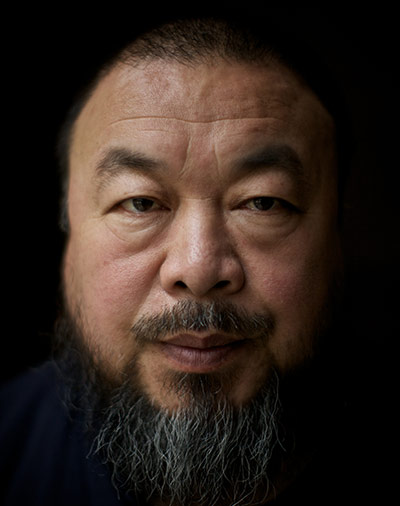
Ai Weiwei – Artist & Social Activist

Solemn yet provocative, artist Ai Weiwei treads a fine line  between commemoration and protest in his piece Namelist. Designed to underscore the deaths of 5,096 children in the 2008 Sichuan Earthquake, Ai’s work—as its title suggests—lists the names, genders, ages, and birthdays of each young victim. But even more, Namelist attempts to make order of the unfathomable chaos of disaster, reinforcing as much the guilt of government officials as the innocence of voiceless victims. Following the earthquake in May 2008, a volunteer investigation spearheaded by Ai uncovered the corruption and oversight of Chinese governmental officials, who failed to address poor school construction before the earthquake and struggled to cover it up in the aftermath. As many like Ai have protested, it was not merely the earthquake itself, but these governmental failures that claimed the lives of thousands of students, who passed away in—to them—unthinkable ways: swiftly, brutally, far from home. Ai’s work thus assumes the task of social activism, challenging quite directly—with simple, black script on white paper—the inhumane response to human catastrophe. But how does such artwork preserve the memory of disaster?

As an American observer, Namelist calls one word to mind: distance. While the Sichuan Earthquake lies distant in my memory— nearly 8,000 miles away and six years into the past—Ai extends this physical separation with his emotionally detached memorial. Countless boxes stretch from one wall to the other, most filled with names and birthdays, some with numbers, others empty. Scanning the list, each box overlaps with the others until the victims themselves seem to lose their individuality. But this feature, I think, encapsulates much of Ai’s message. In his attempt to organize neatly the deadly toll of the earthquake, to personalize each individual’s suffering, Ai fails. The only distinct, individualizing feature of each victim is his or her assigned number, which—in many cases—is the only information listed. Much of this interpretation, I admit, is influenced by the fact that I cannot read each victim’s name or birthday. Regardless of the language barrier, however, I sense a critical distance from the Sichuan Earthquake. I don’t feel any empathy towards its faceless victims. Witnessing loss on this scale seems incomprehensible to me. And for this reason, I believe that Ai’s work successfully assumes the task of social activism. Rather than burying his audience in emotion, he places the viewer in the position of the arbiter, to determine the culpability of those allegedly at fault.

That is not to say that Ai completely depersonalizes the very real suffering of each victim. On the contrary, in his piece Remembrance—a companion piece to Namelist—Ai treats each victim individually. A nearly 4 hour-long  audio recording, Remembrance plays the names of all 5,096 victims read by over 3,000 strangers. As each unique voice reads a name in its native language, each child assumes his or her own individual identity. Like scanning the list of names, I realize just how difficult it is to make sense of, to place an order on the immense suffering and chaos of disaster. But unlike viewing Namelist, I do not  sense the same effect of melding each victim together. Instead, by personalizing each individual’s pain in his depiction, Ai preserves the memory of each child, while the echo of each name reverberating off of the list creates a powerful juxtaposition. As I stated previously, Ai tempers his protest with commemoration. And in combining the experience of Namelist with that of Remembrance, Ai performs this tremendous balancing act, reconciling the impersonal distance of disaster with the personal pain of each victim.

Assuming this position as both a distant arbiter and a personal witness is much like the task of the historian who studies disasters. While analyzing each event empirically is the ultimate aim, one cannot ignore the importance of preserving its memory and those of its victims. As we continue to study disasters this semester, reading the work of both scholars and popular historians, let us remember the critical distance and humane depiction of Ai Weiwei’s works and ask ourselves: how should historians perform this balancing act? Or can only artists, like Ai, tread this fine line between commemoration and analysis?

The Power of Art and Disaster


Warning: Undefined variable $num in /home/shroutdo/public_html/courses/wp-content/plugins/single-categories/single_categories.php on line 126

Warning: Undefined variable $posts_num in /home/shroutdo/public_html/courses/wp-content/plugins/single-categories/single_categories.php on line 127

I loved going to the State of Emergency exhibit even though I am not that much of an art person. As I was walking through the exhibit, I loved seeing the power of art and how it can portray disaster in an appropriate manner. Piece by piece, I respected more and more the feelings of the people within the disasters…

Then, boom. I saw the piece about the Atlanta flood of 2009. All of these memories came flooding (no pun intended) back into my mind. Molly shouldn’t feel guilty about not remembering. Some areas of Atlanta were more affected than others.

It had rained non-stop for a week. The saturday before the flooding became disastrous (September 19th), I ran in the Gwinnett County XC meet. The meet is hosted on these soccer fields on the banks of the Chattahoochee (official called River Green Park). About 1/3 of the course was under water, people ran the slowest times we had ever run, and we have a picture of us laying down in a creek that was made by the rain. At the 2-mile mark, the water on the field was about 2 feet deep, and a bunch of runners lost their spikes (running shoes) in the mud underneath the water. Runners in the JV races were mud-surfing on the course. Everyone’s team color was brown by the end of the meet.

Sunday night into Monday morning (September 20th-21st), the flooding took a turn for the worse. The Chattahoochee and all of its run-offs couldn’t take any more water. My mom works at my school, so she wanted to leave extra-early to make sure that we could get to school on time (8:00). We live about 15 minutes away from school. We left at 6:30 so that my mom could get there by 7:15; we got to school at 8:45, and my mom was one of the first staff members there. On the way, we made so many “illegal” U-turns because rivers were running across roads (Part of every interstate in metro-Atlanta was under water, including the 14/16 lane downtown connector). At one of these river-road crossings, we saw a car up against the trees where the current met the woods on the side of the road. Most cars that tried to cross the water made it. This car wasn’t so lucky. I don’t know if that person made it or not (I’m pretty sure he or she did. The only memory burned into my brain is the car), but the majority of fatalities were due to failed flood crossings in cars (needless to say, I don’t like talking about this specific memory). They cancelled school at 9:30 that morning, which was after a lot of students had already arrived. We didn’t have school for the next two days because too many roads were closed to make it to any destination.

Throughout the day, a creek started running through our back yard (from the back of it to our house and around the sides of our house). On one side of our house, the debris from our back yard clogged up the water to the fence, so we had a sort of pond on the back corner of our house. My dad was working out of town, so my older brother had to walk into the pond and unclog the area next to the fence. The water was inches away from getting into our back door. Most of my friends had flood damage in their house. We definitely lucked out. After the flood, my dad landscaped a creek bed to run the water safely to the front of our fence and through our front yard out to the road to prevent that from happening again. My family did nothing but sit at home and watch local news and the water flow through our yard onto our mostly-flooded street for three days.

I recounted the story mostly because that’s how I felt I should properly address it. Art can definitely help people understand disasters in a way that essays can’t, and vice versa.  There’s no way for me to describe a natural disaster that I experienced other than to tell you what I saw, not what news stations or historians told me.

Simple Words Trump Sheer Size


Warning: Undefined variable $num in /home/shroutdo/public_html/courses/wp-content/plugins/single-categories/single_categories.php on line 126

Warning: Undefined variable $posts_num in /home/shroutdo/public_html/courses/wp-content/plugins/single-categories/single_categories.php on line 127

The “State of Emergency” art exhibit in the Belk Visual Arts Center on the campus of Davidson College almost seems ironic at first glance. An exhibit that shows off artists and their interpretations of crisis is actually remarkably clean, modern and spacious. When I think of disaster and crisis my mind doesn’t picture sleek, white walls and a spacious gallery, however, this is what I saw at the “State of Emergency” exhibit. To me, this unique and somewhat mislead structure, describes the meaning of the entire exhibit as a whole. To me it represents how these works of art are providing different ways at looking at disaster and crisis just as the exhibit structure provides you with a different visual viewpoint. Furthermore, because of this unique design, I found myself leaving the area with most of the art pieces and focusing on the room across the hall. At first, I couldn’t tell if it was a piece of art or a building structure or what; it was massive. As I began to lean in I realized it was a wall with names all over it. But it wasn’t just a wall; this wall represented the massive size of the 2008 Sichuan earthquake.

This work was called “Namelist and Remembrance,” by Ai Weiwei which commemorates the school children lost in the 2008 Sichuan earthquake. According to the exhibit curator, “Namelist” will cover the gallery walls with the names of 5,196 schoolchildren who perished in the earthquake because of shoddily constructed schools. The names of the deceased will be read aloud in the audio work, “Remembrance.”  As background, Ai Weiwei is a Chinese contemporary artist, active in sculpture, installation, architecture, and social, political and cultural criticism. As a political activist, he has been openly critical of the Chinese Government’s stance on human rights and has even investigated government corruption, in particular the Sichuan schools corruption scandal following the collapse of so-called “tofu-dreg schools” in the 2008 Sichuan earthquake.

Subsequently, Weiwei’s work, “Namelist and Remembrance,” is a continuation and political expression of his investigation into the scandal following the earthquake. The 2008 Sichuan earthquake, according to official figures, stated that 69,197 were confirmed dead, including 68,636 in Sichuan province, and 374,176 injured, with 18,222 listed as missing. Besides the sheer size of the artwork by Weiwei and its evident resemblance to the size of the earthquake, I believe his work is making a much bigger political argument than just commemorating the lives lost. I think this piece offers a unique window into the terrors of the earthquake, and in Weiwei’s attempt, probably the terrors of the Chinese government. This piece details all of Weiwei’s work in the past on the corruption of the Chinese government but shows us intimate details about that event like no other kind of historical evidence can. As this piece is a reaction to disaster and crisis, it is fitting that in Ai Weiwei’s past he led a team to survey the post-quake conditions in various disaster zones. I think this artwork can shine some light about the time and place where this crisis occurred and maybe more importantly, something about the human values of this civilization. With the background of Weiwei and the source information from the Sichuan earthquake, I believe his argument is a response to the government’s lack of transparency. By creating this sculpture with all the student’s names on it, I think he is doing what the government didn’t do in revealing names of students who perished in the earthquake due to substandard school campus constructions. A political statement against the Chinese government takes on the simplest of forms, as the artwork is just a list of names; an extremely powerful message.

Weiwei’s piece highlights and certainly speaks true to the message given by exhibit curator Lia Newman when she claimed, “The goal of the exhibition is not simply to present images of horror or ‘disaster pornography’ but rather to open a dialogue about the role artists can play in bringing attention to disasters while working toward recovery.” By not only commemorating those who had passed and taking political action through art, Weiwei is an excellent example of artists using their role in society to shine light on disaster relief and crisis situations at all ends of the earth.

Source: (Ai, Weiwei (2011). Ai Weiwei’s Blog: Writings, Interviews, and Digital Rants 2006-2009. Cambridge, Massachusetts: MIT Press. p. 209.)

“Juarez Series” Rising from the Ashes


Warning: Undefined variable $num in /home/shroutdo/public_html/courses/wp-content/plugins/single-categories/single_categories.php on line 126

Warning: Undefined variable $posts_num in /home/shroutdo/public_html/courses/wp-content/plugins/single-categories/single_categories.php on line 127

They are nothing more than a burnt outlines, hollow images lying dead on paper. They empty and anonymous. These pieces, as part of Miguel Aragón’s “Juarez Series”, are chilling windows into Juarez, the heart of the Mexican drug trade, and one of the deadliest cities in the world.

Since 2007, drug wars in Juarez have claimed the lives of over 10,000 men, women, and children. At stake: entry to the American drug market valued around $40 billion.[1] It is a war that is constantly changing shape, having evolved from a war between large and powerful gangs into a daily battle between more central and localized drug cells. The method of the fighting the war has changed as well. Dating from the Nixon administration in the United States to the end of President Calderon’s term in Mexico, authorities from both nations waged a full out war on drugs that debatably spilled more blood than it saved. Currently, however, President Nieto is enacting a policy change that promotes education for youth and conditional cash transfer programs to reduce drug violence.

Miguel Aragón’s piece, however, reminds us that despite all of the policy changes, Juarez is far from safe. His piece makes the war personal, forcing us to step back from the numbers and ideologies that muddle the debates, and to look at the war. Really look at the war. When looking at the painting we become emotional and feeling beings.

And when I do, I feel uneasy. Aragón’s piece is quiet and subdued. A sense of thoughtfulness draws me near and it serves as a reminder, in Aragon’s words, that “our physical existence is finite.” The violence rages on in Juarez and yet Aragón chooses to create images that are still and colorless.

But these images are grounded in reality. Aragón sources photographs from the media of Juarez and transforms images of violent deaths into really beautiful works of art. He uses a laser to create cardboard matrixes, and as the cardboard burns away, a layer of soot is created that is subsequently transferred to the paper. In this way, Aragón creates a great deal of tension as he transforms photographs of brutal slaughterings and makes them in quiet works of art. The tension between the two demands that we pay attention.

In a city where murder is a part of everyday life, as common as a breath, we fear desensitization will outshine compassion. But Aragón’s piece directly challenges this notion – mandating that we rethink disaster as a feeling people. Because while numbers and dates are helpful in understanding of disaster in an intellectual and removed way, that way is only a part of the puzzle. But Aragon’s series is unique as the war continues today; Juarez is not our history, but our present. And allowing Aragón to retool how we think about disaster helps us to not only understand our past, but also enables to make better decisions and policy changes today.

[1]. Jeremy Relph, “Growing up in the World’s Deadliest City” Buzzfeed. 7 March 2013 http://www.buzzfeed.com/jeremyrelph/growing-up-in-the-worlds-deadliest-city

Individuality vs. Anonymity: the “Ubiquitous Yet Indescribable” Nature of Art


Warning: Undefined variable $num in /home/shroutdo/public_html/courses/wp-content/plugins/single-categories/single_categories.php on line 126

Warning: Undefined variable $posts_num in /home/shroutdo/public_html/courses/wp-content/plugins/single-categories/single_categories.php on line 127

Blog Post #2 (for the State of Emergency exhibition)

A black and white spreadsheet envelops an entire wall, each row representing a young victim of the 2008 Sichuan earthquake. Chinese characters denoting name, gender, and birthdate fill the cells. The language prevents me from being able to speak these words, making the incident seem foreign and distant, but the length of the list alone is disturbing. A startling number of the cells have been left blank, representing unidentified victims. Ironically, what’s distinct about these victims is that nothing is known about them. They have been given their own space on the spreadsheet yet remain indistinguishable.

Ai Weiwei’s “Namelist” demonstrates a grim dichotomy between individuality and anonymity. The piece is as much a list of information as it is a work of art, and viewers are inclined to see it as both. When observed as information, viewers interpret the data and focus intensely on a small portion. But when observed as art, viewers observe the entirety of the piece and their focus is scattered. The victims are represented with individuality in the former approach, but with anonymity in the latter. “Namelist” is both commemorative monument and a provocative message in this way. I feel some reverence for the victims of this disaster, but am mostly unable to connect with them. Instead, the sanitary, apathetic presentation and sheer vastness of the piece disgust me as much as the wreckage probably would have.

A second piece accompanies the first. In “Remembrance”, voices read off the names of the victims. Each name is read by a different voice. After listening to the track play for a while, the names and voices both become indistinguishable. Much like the spreadsheet did, “Remembrance” pays homage to each victim individually, but they are all eventually forgotten in the multitude. Also like the spreadsheet, my inability to understand the language restricts my ability to feel sympathetic for each victim. Because the sounds are meaningless to me, each name blends into the next. I cannot identify one name from another, and I do not have friends or family with these names. Once again, I feel both reverence and indifference simultaneously.

In his essay “Disaster: A Useful Category for Historical Analysis”, Jonathan Bergman explains that a disaster is “ubiquitous yet indescribable” (Bergman 934). He tries to pinpoint a definition for the term by examining its origins and evolution, but ultimately determines that broadness makes the term a useful category for historical analysis. The grim dichotomy between individuality and anonymity seems consistent with Bergman’s conclusion: this dichotomy is easily recognizable in Weiwei’s work, yet escapes verbal definition.

Disasters are interdisciplinary subjects that span the fields of environmental science, sociology, history, and more. They can be quantified in terms of physical damage, casualties, or psychological impact. They can be defined as natural, unnatural, or a combination of the two. Only art can project sensations—like Weiwei’s dichotomy—that are complex enough to accurately represent the complexity of disaster. Like disaster, art is “ubiquitous yet indescribable” and therefore better suited to tell the story.

From Trial to Triumph: Art and its Role in Beginning the Healing Process


Warning: Undefined variable $num in /home/shroutdo/public_html/courses/wp-content/plugins/single-categories/single_categories.php on line 126

Warning: Undefined variable $posts_num in /home/shroutdo/public_html/courses/wp-content/plugins/single-categories/single_categories.php on line 127

On Friday, March 11, 2011, Japan was hit off the Pacific coast of Tōhoku with most powerful earthquake known ever to have hit their countryside. It was the fifth most powerful earthquake in the world since modern record-keeping began in 1900. This undersea megathrust earthquake triggered a powerful tsunami waves reaching heights of up to 40.5 meters which, in certain areas, travelled up to 10 kilometers inland. This earthquake tsunami combination inflicted damage on a colossal scale in terms of death, injury, infrastructural damage, and psychological damage. A report completed by the Japanese National Police Agency on September 12, 2012, confirmed 15,883 deaths, 6,150 injured, and 2,643 people missing. The earthquake and following tsunami inflicted extensive and severe structural damage in north eastern Japan, leveling thousands of buildings and partially leveling thousands more. In addition the tsunami initiated nuclear accidents. Areas surrounding the nuclear power plants were evacuated, while at least three nuclear reactors suffered explosions due to hydrogen gas that had built up within their outer containment buildings after cooling system failure.

The great struggle in the wake of unexpected, large scale destruction is how to understand or conceptualize what has occurred. How can communities process the tremendous loss they have experienced, and how can we, the larger world community, understand and talk about their loss both in terms of specific incidents and in broader world context? Coming to terms with the experience is an essential part of the healing process. In order for this to take place, a platform for discussion must be established. Art is a particularly useful medium because of its reconstructive and interactive nature. Through the creation of artwork, the artist must first identify the meaning they are trying to convey, then decide how to reconstruct that meaning in a physical space. In this way the artist must come to terms not only with the effects of the event, but also with how the event fits into a greater narrative. Furthermore, once the art is created, the observer then brings to the viewing of the art his or her own previous experiences. Thus, the piece is a facilitator for a unique dialogue between artist and observer that connects them through common human experience.

The artist Miki Kato-Starr, who lived through the earthquake and subsequent tsunami, created a piece for the 2011 earthquake and tsunami for the State of Emergency Exhibit which does just that. The piece that she created utilizes two trees. Strung from its branches are light bulbs and attached to its trunk is a series of strings, one that circles the trunk and several others that connect to the boats at the very base of the tree. Each one of these boats fashioned out of paper is filled with grains of rice, and the boats are arranged in a circle. This piece of art simultaneously captures the aftermath of the disaster as well as the process of moving on. In the words of the artist, the earthquake and tsunami ravaged the land and left Japan disoriented. The circle formation of the boats was meant to invoke a sense of directionless drifting. However, with time it has become clear that the Japanese people, now a few years after the earthquake, are beginning to piece their lives back together. Thus, Miki Kato-Starr gave the boats traveling in the circle a slight direction. The boats seem to curl in, slowly making effort to travel to the tree. Here the tree, with branches full of light, represents life and a hopeful future. The piece powerfully depicts that although a clear path has not yet been established, the Japanese people are forging ahead to create for themselves a new life and future in the wake of the disaster. Her use of rice to fill the boats is poignant as well in that it transcends class and regional barriers to provide a depiction of how all suffered from the disaster. Just as rice, as a staple part of the Japanese diet, is consumed by all, the rich and the poor alike lost their homes.

Art as a medium for discussing disaster can be useful in that it provides a rare opportunity for interactive experience in a way that words may fail us. Adjectives may never be big or exact enough to communicate how the disaster has touched the lives of those involved. Furthermore, it is transformative. It allows us to forge something beautiful from the ashes of devastation.


Amani Carter