
Warning: Undefined variable $num in /home/shroutdo/public_html/courses/wp-content/plugins/single-categories/single_categories.php on line 126
Warning: Undefined variable $posts_num in /home/shroutdo/public_html/courses/wp-content/plugins/single-categories/single_categories.php on line 127
 Contrary to what the title might suggest, I will not be talking about deep dish pizza. I will, however, discuss Carl Smith’s well-written article, “Faith and Doubt,” and the importance of the Chicago fire. Rarely do I ever enjoy reading (I picked the wrong major), but Smith’s analysis of the fire’s social affect on the city whetted my appetite for something different than descriptions of the fire’s physical destruction. One of his arguments claims that, at least among fire literature and Chicagoans, the city’s importance grew following the fire. He claims “the destruction indicated not the degree of Chicago’s venality or misfortune, but the grandeur of its destiny.” (130) The Chicago fire became the city’s “epic moment” that spawned a belief that Chicago was “pure, heroic, and modern.” (131) Religious explanations for the fire further contributed to this thinking by claiming “God smote the city…as a warning and a lesson for all other cities.” (135) Therefore, members of the city and nation must protect the valuable future of Chicago (by protecting the social order) because only Chicagoans could withstand such a divine beating. I viewed these religious justifications as comparable with the struggles of Job in the Bible. Smith cites individuals that believed the deaths as a result of the fire were deserved due to a lack of “character and resolve.” (150)
Countering this view of Chicago’s perfect post-fire community, Smith provides numerous examples of terrible actions performed by these supposedly “good” people. Thieves, looters, and whiskey-drinking women plagued the city. Although many of these criminal accounts were exaggerated, Smith hits the nail on the head by claiming that the fire brought all forms of society down to the lowest level. (151) To quote my esteemed colleague Price, who quoted Smith, “inequalities of society were now leveled off as smooth as the beach itself.” (157) The fire evened up the playing field by destroying a significant aspect crucial to class separation: material wealth.
Perhaps because Chicago did not witness a pivotal battle in the Civil War, I often forget of its existence during this period. Reconstruction, disenfranchisement, and southern hostility are the key words I think of eight years following “The War to Suppress Yankee Arrogance.”* Smith, however, reminds us (me) that the city did exist and became instrumental in the nation’s healing process after the war. I never thought of that angle, but his justification for this claim persuaded me to believe him. Many Americans donated to assist the burned city and focused on Chicago’s needs instead of other social disagreements. “The rest of the country forgot its petty artificial division and rediscovered its finest collective self,” claimed Smith. (141) Although I think Smith may have exaggerated 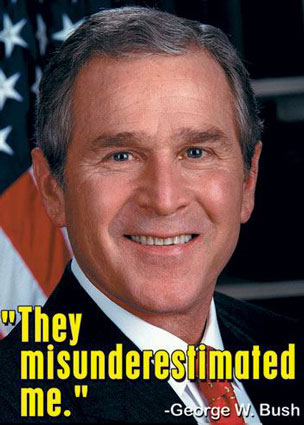 to the extent these petty differences were forgotten, I thought back to 9/11 and how unified America was. Following 9/11, President Bush’s approval rating was through the roof; proof that disaster causes those affected to forget other predicaments. In the wise words of my Davidson advisor, “when shit hits the fan, people rally around their own.”
*One of many ridiculous names for the Civil War. For further reading and laughs, http://civilwartalk.com/threads/the-different-names-for-the-civil-war.76252/