Chicago Exceptionalism


Warning: Undefined variable $num in /home/shroutdo/public_html/courses/wp-content/plugins/single-categories/single_categories.php on line 126

Warning: Undefined variable $posts_num in /home/shroutdo/public_html/courses/wp-content/plugins/single-categories/single_categories.php on line 127

Contrary to what the title might suggest, I will not be talking about deep dish pizza. I will, however, discuss Carl Smith’s well-written article, “Faith and Doubt,” and the importance of the Chicago fire. Rarely do I ever enjoy reading (I picked the wrong major), but Smith’s analysis of the fire’s social affect on the city whetted my appetite for something different than descriptions of the fire’s physical destruction. One of his arguments claims that, at least among fire literature and Chicagoans, the city’s importance grew following the fire. He claims “the destruction indicated not the degree of Chicago’s venality or misfortune, but the grandeur of its destiny.” (130) The Chicago fire became the city’s “epic moment” that spawned a belief that Chicago was “pure, heroic, and modern.” (131) Religious explanations for the fire further contributed to this thinking by claiming “God smote the city…as a warning and a lesson for all other cities.” (135) Therefore, members of the city and nation must protect the valuable future of Chicago (by protecting the social order) because only Chicagoans could withstand such a divine beating. I viewed these religious justifications as comparable with the struggles of Job in the Bible. Smith cites individuals that believed the deaths as a result of the fire were deserved due to a lack of “character and resolve.” (150)

Countering this view of Chicago’s perfect post-fire community, Smith provides numerous examples of terrible actions performed by these supposedly “good” people. Thieves, looters, and whiskey-drinking women plagued the city. Although many of these criminal accounts were exaggerated, Smith hits the nail on the head by claiming that the fire brought all forms of society down to the lowest level. (151) To quote my esteemed colleague Price, who quoted Smith, “inequalities of society were now leveled off as smooth as the beach itself.” (157) The fire evened up the playing field by destroying a significant aspect crucial to class separation: material wealth.

Perhaps because Chicago did not witness a pivotal battle in the Civil War, I often forget of its existence during this period. Reconstruction, disenfranchisement, and southern hostility are the key words I think of eight years following “The War to Suppress Yankee Arrogance.”* Smith, however, reminds us (me) that the city did exist and became instrumental in the nation’s healing process after the war. I never thought of that angle, but his justification for this claim persuaded me to believe him. Many Americans donated to assist the burned city and focused on Chicago’s needs instead of other social disagreements. “The rest of the country forgot its petty artificial division and rediscovered its finest collective self,” claimed Smith. (141) Although I think Smith may have exaggerated to the extent these petty differences were forgotten, I thought back to 9/11 and how unified America was. Following 9/11, President Bush’s approval rating was through the roof; proof that disaster causes those affected to forget other predicaments. In the wise words of my Davidson advisor, “when shit hits the fan, people rally around their own.”
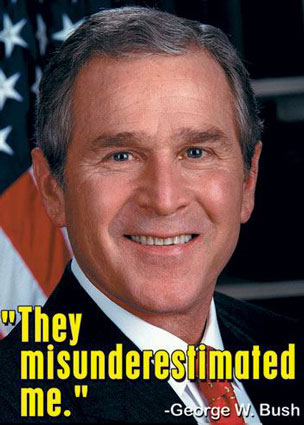
 

*One of many ridiculous names for the Civil War. For further reading and laughs, http://civilwartalk.com/threads/the-different-names-for-the-civil-war.76252/

Disaster Boosterism and Fear of the Poor


Warning: Undefined variable $num in /home/shroutdo/public_html/courses/wp-content/plugins/single-categories/single_categories.php on line 126

Warning: Undefined variable $posts_num in /home/shroutdo/public_html/courses/wp-content/plugins/single-categories/single_categories.php on line 127

Carl Smith’s intense analysis of the narrative which formed around the Chicago fire in its aftermath is both fascinating and telling. I think it is, perhaps, an even more revealing analysis than any direct analysis of the fire might be, because the particulars of his investigation expose the thoughts, fears, and culture of Chicago’s narrative-makers.

Clearly, we saw in Cronon’s work that Chicago possessed ample boosters. Yet, boosterism in the face of disaster might still be unexpected; yet, it persisted. To Chicago’s boosters, and indeed many of its citizens, the fire marked Chicago as a great city: “Greater than the catastrophes that consumed Rome, London, and other world capitals, the fire proved that Chicago and America had already surpassed or would soon supersede these other cities in all respects”(130). The logic feels backward, but perhaps it is sound. Indeed, only a significant city could have a disaster on the scale of the Chicago fire of 1871. This is likely true of many disasters; as we have discussed, disasters are the confluence of nature and humanity, with the human element emerging as a decisive division between disasters and events. Today, our public figures are quicker to mourn the losses than to highlight the silver lining of a disaster. Leaders in the Gilded Age, however, seemed to remain relentlessly positive in the face of disaster.

On the other hand, the fire brought to light the fear of social instability. The rhetoric that emerged from disaster posited that the ‘respectable’ elements had banded together, unified and determined to survive. The poor were the most significant losers, altogether. From one perspective, they were the malefactors and miscreants who encouraged and spread the fire, looted, raped vulnerable women, and inconsiderately occupied crowded spaces with the wealthy. From another, they were helpless: “Others among the poor died because they evidently lacked the character and resolve to save themselves, which was also why they were poor in the first place”(150). In this case, Smith is merely explaining the narrative that existed, rather than asserting the above himself. These two narratives seem contradictory: these helpless poor, unable to save themselves, were amply able to terrorize the respectable citizens already traumatized by the approaching flames. Displacing the natural horror of the fire with fears of social unrest likely served to reinforce existing social order, implying that through a control of the ‘less respectable’ citizenry, the elite and middle class might be more able to exert control over such uncontrollable events as fire.

I take a more cynical view of preserved and “natural” spaces, such as National Parks, than does Emily. I think that the preservation of these natural spaces is as much a part of the capitalist culture as anything else. National parks and outdoor spaces have been commodified within the ethos of our consumer culture. People drive to these “natural” spaces, spend a day there, bring their own food or purchase it their. Trips down rivers are often guided. My own extensive time spent canoeing Wisconsin’s beautiful waterways has sent me past as many riverside houses, park ranger stations, and farms as anything else. We consume this preserved nature in small doses, which we can easily control. It certainly has an inherent appeal; however, that does not extricate it from capitalism. Capitalism does not judge the things we consume, but makes them available in the most appetizing portions for our consumption. Natural spaces in America have been packaged and labeled for our consumption, and we suspend our knowledge that they are just as “unnatural” as Manhattan as we consume them.

I don’t think the cow did it


Warning: Undefined variable $num in /home/shroutdo/public_html/courses/wp-content/plugins/single-categories/single_categories.php on line 126

Warning: Undefined variable $posts_num in /home/shroutdo/public_html/courses/wp-content/plugins/single-categories/single_categories.php on line 127

And even if it did, it’s a cow, so is it really to blame?

Richard Bales’ investigation of the Chicago fire of 1871 seems like a crime scene investigation, more than historiographical work. I certainly share his chagrin that the investigatory committee did not further investigate  “Peg Leg” Sullivan and Dennis Regan more, since their testimony does seem strange and not very believable. I wonder, also, why none of Bales’ documents include testimony from anyone at the McLaughlin party, since they were closest to the barn and were still, according to Mrs. O’Leary’s testimony, awake at the time. It seems deeply unfair that Mrs. O’Leary was assumed to be instantly guilty. Her testimony as well, in my opinion, seems somewhat jumbled, which cannot have favorably impacted her case.

Denser, lengthier and yet more interesting was Father Pernin’s account of the Peshtigo fire. I don’t think that I could have chosen a better person to describe such an event: his command of language, combined with his spiritual attitude of morality driving results, and belief that the fire may be the apocalypse itself makes for quite an interesting description. For instance: “I perceived above the the dense cloud of smoke overhanding the earth, a vivid red reflection of immense extent, and then suddenly struck on my ear, strangely audible in the preternatural silence reigning around, a distant roaring, yet muffled sound, announcing that the elements were in commotion somewhere” (253). Such a description balances ominous portents with matter-of-fact description to create a chilling and vivid scene. He also seems to imply, on some occasions, that certain people died in the inferno due to their misbegotten behavior: the guests of the party who laughed at him, the dog that didn’t come with him, his horse that wouldn’t follow (even when he used its name, if you can believe that!).

All in all, he creates a scene of grand chaos, which elegantly describes what must have been a horrifying experience for everyone involved. Certainly, little can be worse than surviving such horror, only to return to bury the dead and care for the dying. One thing that I found particularly odd was that the townspeople chose to hang the man looting corpses, but then let him go. I suppose that there was no modicum of punishment available in this particular case, what with the fire and all.

Finally, I want to disagree with Marston’s claim that Cronon underestimated the role of technology, science and industrialization in driving Chicago’s rise.  Cronon’s analysis continually examines the ways in which the “natural advantages” of Chicago–the river, the location near the lake, the surrounding plains–were often fraught with drawbacks. He documents well the ways in which Chicago and her boosters subverted nature in order to create a city from the mud. Ultimately, Cronon’s vision of Chicago is much more of a city crafted from “capital geography” than its natural counterpart.

Confusing the boundary between city and country


Warning: Undefined variable $num in /home/shroutdo/public_html/courses/wp-content/plugins/single-categories/single_categories.php on line 126

Warning: Undefined variable $posts_num in /home/shroutdo/public_html/courses/wp-content/plugins/single-categories/single_categories.php on line 127

In Nature’s Metropolis, William Cronon makes the argument that the stories of Chicago and the Great West are lacking unless told together.  And while the regions look, sound and smell different – they both represent America’s marketplace evolution and the process of abstracting commercial value from physical landscapes.

To begin, it seems to be really incredible – truly a symbol of mankind’s determination – that Chicago was able to rise out of the swampy lowlands. It had none of the natural advantages found in great cities else where around the world . . no fertile valley’s, no great harbours, no broad rivers. Instead, its creation depended solely on the force of human will”(15). Cronon, although he seems wary of using the term ‘progress’, demonstrates how humans, when faced with opportunity, will prove extremely innovative. In doing so, nature becomes, as Emerson writes the mere “double of man” (15). So while the environment does play a role, ultimately it appears, culture begets culture.

But how do humans decide in what ways to manipulate nature – to convert it from a pristine wilderness to a cultivated garden? “The ways people value the products of the soil, and decide how much it costs to get those products to market, together shape the landscape we inhabit” (50). I think Eli said it best in his post, “Yet, part of the ethos of America, especially of the past, which I am beginning to understand is the desire for commercial hegemony.” And in this sense, understanding Chicago from theories of economic geography is extremely valuable. For after all, Chicago out of all of the cities in the Midwest most effectively reshaped its land to become the ultimate gateway city to the west. (Catherine did a great job in her post discussing the importance of transportation. Both manmade, and to a lesser extent, natural.)

Nature’s Metropolis provides a strong argument in explaining not only the rise of Chicago, but also in the altering of America’s landscapes for the cultivating and trading of commodities. Whether urban or rural, these regions fundamentally reshaped the other – confusing our traditional notions between natural and artificial. “Gauged by how we feel about them, the distance we travel between city and country is measured more in the mind than on the ground” (8). Chicago proves to be an extremely effective case study – erasing the boundaries between country and city.

Natural Teleology: the Railroad and the “Natural” History of Chicago


Warning: Undefined variable $num in /home/shroutdo/public_html/courses/wp-content/plugins/single-categories/single_categories.php on line 126

Warning: Undefined variable $posts_num in /home/shroutdo/public_html/courses/wp-content/plugins/single-categories/single_categories.php on line 127

Our readings this week bridge a divide that I’ve seen in our previous readings: a disjunction between urban, economic, and environmental history. Rozario overlapped urban and economic history, Matthews environmental and social history, and Schneirov economic and social history. In Nature’s Metropolis, however, William Cronon does not merely suggest where these subjects might overlap, but fuses each together, suggesting that just as an isolation of the rural and the urban is an “illusion,” so too is any division of these historical subjects (18). In Chicago, Cronon asserts, we see the rise of a natural city and, consequently, a unique, interdisciplinary subject of historical inquiry.

As Eli humorously argued in his post last week, Turner’s “Frontier Thesis”—while it was certainly significant to the historiography of the American West—implausibly treated the frontier as an omnipotent actor in American history that not only offered the natural conditions suitable for westward expansion, but served as a driving force for American democratization. Much of Eli’s critique of Turner seems to be Turner’s heavily stereotyped characterization of the frontier.  But, as I think Eli’s quotations allude to, Turner personifies the frontier as one who “masters the colonist” (quoted in post). Its stereotypes aside, such a notion of the frontier seems contrived. While I can accept treating the frontier as  a natural actor in history, I have trouble with seeing a place as taking such an active role in events. If anything—as, I think, the articles by Kevin Rozario and James Connolly would suggest—places can reflect social and economic changes, rather than direct them. In this sense, I think we should should see nature—whether on the frontier or in the city—as a passive actor, being acted upon and responding  accordingly.

A Turnerian himself—though certainly a disillusioned one—Cronon adopts much of Turner’s treatment of nature and place as actors in Nature’s Metropolis. Chicago’s expansion, he asserts in his prologue, was foreshadowed by “nature’s own prophecies” and “expressed natural power” though the product of human ingenuity (13). But as Cronon goes on challenge what is, in fact, natural and unnatural about the city, I think we can begin to see the clearest depictions of nature and place as historical actors much like we might consider persons to be. As Sarah previously highlighted, the natural landscape surrounding Chicago directly influenced its development. From its central location to its proximity to Lake Michigan, the area in Upper Illinois that would one day be Chicago drew the eye and inspired the rhetoric of early “boosters.” But as Cronon highlights, Chicagoans’ struggle to overcome its natural disadvantages also shape much of their story. For example, to compensate for its muddiness, Chicagoans literally raised the city in its early history. What’s interesting in Cronon’s treatment of nature, however, is that, in addition to  environmental factors, he treats economic and technological impacts as natural—he calls them “Second Nature,” whereby humans adapt nature form new environments. Such “natural” actors include an ever-expanding, national railroad network and Chicago’s economic  alliance with the industrialized Northeast. These “First Nature” and “Second Nature” forces drastically influenced the emergence of Chicago as “Nature’s Metropolis.” What I found most interesting, however, were instances where these seemingly disparate natural forces converged. Cronon highlights one particularly interesting example of this phenomenon: the railroad. Economically, the railroad cut back on Chicago’s seasonal economic cycles and strengthened the city’s trading alliances with other regions. Environmentally, the railroad transformed and blended into the natural landscape. But the railroad was also influenced by other natural forces. In Chicago, proximity to Lake Michigan and the Erie Canal influenced travel rates, while its central location attracted both the eastern and western ends of the railroad web. In this sense, the railroad did not exist in “First Nature” or “Second Nature” exclusively, but in both. As Cronon writes, the railroad “partook of the supernatural, drawing upon a mysterious creative energy” (72). This, I argue, suggests that Cronon treats “nature” much as Turner treats the frontier—an omnipotent force as much as a historical actor.

So, in reading Cronon, how should we understand his Turnerian bias?

I’ll leave this for discussion in class. But—as I argue above—I think that Cronon simply recapitulates Turner, substituting “nature” for the frontier and endorsing a natural teleology for the Chicago’s preeminent rise as does Turner for American democratization.

Cronon’s Chicago


Warning: Undefined variable $num in /home/shroutdo/public_html/courses/wp-content/plugins/single-categories/single_categories.php on line 126

Warning: Undefined variable $posts_num in /home/shroutdo/public_html/courses/wp-content/plugins/single-categories/single_categories.php on line 127

There are two approaches to understanding nature, and neither debates the inclusion of humans or cities in the definition of nature. There is the all-welcoming approach: nature is everything, and there is the nihilist approach: nature is nothing. Personally, I don’t believe the second approach because if nature is nothing, then nothing would be everything. An example of the interconnectedness between all elements on this earth, or nature, is sunsets which environmentalist William Cronon presents on page 73 of Nature’s Metropolis. “’Fancy the rail gone, and we have neither telegraph, nor schoolhouse, nor anything of all this but the sunset.’” But is a sunset any more or less natural depending on the “telegraph” or “schoolhouse”? I argue no. The sun slips over the earth’s edge leaving us, in our place on earth, behind. This phenomenon occurs everyday regardless of what tree grows or what electricity pumps through the wires. Does this sunset vary for the people of Los Angeles? The anthropogenic pollution may augment the light refraction, and make the sunset more beautiful, but it is impossible to separate these factors and produce the same result.

It is based off this concept that William Jackson Turner, in “The Significance of the Frontier in American History”, and later, William Cronon, categorize cities as part of nature. Chicago was able to develop because of ecological advantages that allowed humans to survive (glaciers in carved out lakes and deposited fertile fine-grained soil which supported grains and grasses which then attracted herbivores, omnivores, and carnivores). As Eli points out in “Chicago: the power of space”, the natural benefits boosters publicized did not seem to be so beneficial after all, as the city had to spend thousands of dollars dredging sand from the “natural harbor”. In this manner, nature can be both an attraction and a deterrent. Chicago is unique because it was about to thrive (not just develop) because of the transcontinental railroad. Contrary to Marston’s post, I believe Cronon attributes the rise of Chicago greatly to the transcontinental railroad (see Nature’s Metropolis: “Rails and Water”), while still acknowledging the environmental foundations that even allowed people to settle in this region. Without the railroad, the city would have had to continue to fight for its purpose, however there is a reason the railroad was established in Chicago and not in Minneapolis or Green Bay.

As a concluding point, when I think of the most “natural” place on Davidson College campus, I think of the Davidson College Ecological Preserve: 200 acres of “untouched” land. I think most students would agree. However, would most students be surprised to learn that these 200 acres are actually a second-growth forest, meaning that it is not the original land that was there 500 years before European explorers reached the new world? This ecological preserve also served as farmland, and potentially a golf course, before the school acquired it and allowed the native forest to re-emerge.

Theorizing A City


Warning: Undefined variable $num in /home/shroutdo/public_html/courses/wp-content/plugins/single-categories/single_categories.php on line 126

Warning: Undefined variable $posts_num in /home/shroutdo/public_html/courses/wp-content/plugins/single-categories/single_categories.php on line 127

Reading the blog posts for this week thus far, I think Sherwood, Jean, and Sarah all make excellent points about the natural and unnatural juxtaposition theorized by Cronon.  There is no doubt that Chicago rose because of its natural geography and the locational advantage as the “gateway” to the west.  I though Sherwood’s aside was particularly fascinating, pointing out almost irony behind the modern definition of natural.  Just because farmers use land, does that mean they are any more natural than others?  Sherwood mentions the cultivation of land, which I think brings a very interesting debate about how much we can change nature for it to still be considered natural.

On a separate note, the element of the introduction and the first two chapters that stood out most was the near overwhelming amount of Chicago urban theory.  Cronon brings theorists and historians like Sullivan, Garland, Turner, Von Thunen, “Boosters,” and many others as people all trying to explain how and why Chicago grew.  From the vast array of opinions, it almost seems like the rise of Chicago is almost too complex to explain using one theory alone.  Every argument made by the historians above can be challenged.  The booster’s argument, ranging from Scott’s economic to others focused more on the relationship between the city and the land, only accounts for small periods of Chicago’s history.  The theory of the concentric rings seems unlikely as you split the city into different regions.  No one theory adequately explains the complexity of Chicago.  Almost taking the Hewitt argument towards disasters (how every disaster must be looked at separately), I believe we cannot summarize or compare the rise of Chicago to any other city.  While Chicago had the geographical foundation, the city became great for so many individual reasons.  No one factor or theory can summarize the cities rise to power.

To finish off, I believe one aspect that Cronon and the several other Chicago theorists severally underestimate is local climate.  As I am writing this blog post at home in Massachusetts, desperately hoping my evening flight doesn’t get cancelled due to the foot of snow we are getting right now, I wonder how much climate and weather factored into the rise of these cities. Cities with harsh winters like Boston and New York arose because they did not necessarily rely on their local natural products.  Trade and industry drove their expansion.  Meanwhile a city like Chicago had an entirely different function but with the same “natural” problems.  Chicago has similar, if not worse, weather than other big Northeast cities.  They have the snow, the wind, and the freezing temperatures.  All of this has made me think about how it was possible for Chicago to be the center of Midwestern agricultural trade when little could grow locally because of the long harsh winters.  It takes Cronon two chapters to first mention problems of the impeding weather, saying that only through the building of railroads could crops be transported easily.   This makes me question whether Chicago could have risen without the use of modern transportation.  While Chicago was clearly the best geographically Midwestern city for trade, if technology wasn’t evolving around the 1830’s there was no way the harsh climate of Chicago would have allowed the city to grow so astronomically.  Cronon’s book severely underestimates the rise of science, technology, and industrialization in Chicago’s history.

Natural Chicago


Warning: Undefined variable $num in /home/shroutdo/public_html/courses/wp-content/plugins/single-categories/single_categories.php on line 126

Warning: Undefined variable $posts_num in /home/shroutdo/public_html/courses/wp-content/plugins/single-categories/single_categories.php on line 127

As jeatikinson’s post mentioned, Cronon describes the advantages Chicago has geographically as a city—convenient transportation, natural resources, central location, nearby bodies of water. This argument reminded me of Kenneth Hewitt’s emphasis on geography. According to Hewitt, geography is one of the most important aspects of a city. I think that jeatikinson, Cronon, and Hewitt all make a valid argument about locations being important. Unlike Hewitt though, I wouldn’t say it’s the sole determinant in a successful city although it is a major concern. Cronon suggests that geography alone is not the only factor, which I think might be more reasonable than geography and geography alone. He writes, “natural avenues of transportation might play important roles in shaping a city’s future, but the preexisting structures of the human economy—second nature, not first nature—determined which routes and which cities developed most quickly.” Jeatikinson also mentions how New York City has similar qualities to Chicago. It too served as a sort of gateway like Chicago served as a gateway for the west, as elcaldwell notes in his post. New York was a funnel for many immigrants into America.

Cronon’s discussion of what “natural” actually means reminded me of my essay on the “State of the Emergency” exhibit. I saw that even in seemingly unnatural disasters like Hiroshima, nature could still be affected. As a child, Cronon inherently called the rural farms “natural” and the city “unnatural.” An older Cronon wonders whether plowed fields are any more natural “than the streets, buildings, and parks of Chicago. For Cronon, humans have drastically change nature in both situations. This idea, however, implies humans are somehow unnatural. I think the distinction Cronon attempted to make as a child might be better termed country/rural vs. urban. It seems term “nature” almost needs to be better defined. Are humans not part of “nature”? I mean we are technically living beings and a type of animal, but at the same time, a railroad is not a living being although living beings create it. Some of Cronon’s argument makes it seem as if humans try to count new technologies as natural, for instance Cronon writes of “rhetorical mysticism when they likened the railroads to a force of nature, but there can be no question that the railroads acted as a powerful force upon nature, so much so that the logic they expressed in so many intricate ways itself finally came to seem natural.

Another point I find interesting in Cronon’s argument is about the far-reaching effects of Chicago. Chicago is removed from much of the developing West. It is not obviously tied to “the great tall grass prairies would give way to cornstalks and wheatfields, The white pines and the north woods would become lumber, and the forests of the Great Lakes would turn to stumps. The vast herds of bison…would die violent deaths.” Still, Chicago, according to Cronon, is central in all these events. A small pebble can create large ripples that hit the distant shore.

Chicago: the power of space


Warning: Undefined variable $num in /home/shroutdo/public_html/courses/wp-content/plugins/single-categories/single_categories.php on line 126

Warning: Undefined variable $posts_num in /home/shroutdo/public_html/courses/wp-content/plugins/single-categories/single_categories.php on line 127

A couple years ago, I heard about a UW-Madison professor who was under attack by local Republicans, after criticizing actions by Governor Scott Walker to strip unions of collective bargaining rights and insinuating connections between ALEC (the American Legislative Exchange Council, an organization with strong ties to the Koch brothers). The university was subject to a FOIA request on his emails as they might pertain to Republicans, and while UW did release some of his emails, they also withheld others, and argued that the FOIA request was essentially an attack on academic freedom. That professor, I recently learned, was Bill Cronon.

I share the above because it is a personal connection to Cronon, given that I was born and raised in Madison, and count it as my home. I think that one of the greatest struggles in life is self-understanding, and I have found that history is an incredibly effective avenue through which to pursue that understanding. From before early modern Europe to 20th century America and beyond, everything that we understand about our past informs us of our present. Perhaps that is why, as a midwesterner who lives three hours from Chicago and has spent days and weeks there and in its suburbs, I found Cronon’s work so interesting. While I realize that it is a long assignment, I encourage you to read it. It is revealing and fascinating in ways that pushed me to think differently about a wide variety of things.

Turner argued that in the frontier we saw civilization rebuild itself. Yet, what we truly saw was a civilization that already existed push its way into seemingly boundless space in a way that had never been done before. Cronon wrote of American imperial desires, and certainly these existed. Westward expansion was its own form of imperialism, and not many years after the Chicago fire the U.S. expanded overseas. Yet, part of the ethos of America, especially of the past, which I am beginning to understand is the desire for commercial hegemony. The empire that Americans envisioned was commercial, not political. This vision has largely been realized, and a plethora of examples come to mind: the Panama canal, banana republics, our dominance of the World Bank and the IMF, the massive amount of money which foreign citizens and governments our willing to lend us, New York as the center of the financial world, our power to affect drug policy in Latin America, the power of free trade agreements to make or break developing countries.

The history of Chicago is fascinating. Boosters argued that the city had the natural benefits which would enable it to succeed: it’s location on the Chicago river, which would serve as a natural harbor on the Great Lakes and its central location. Yet, these benefits did not seem to be so beneficial after all. The government was forced to spend hundreds of thousands of dollars to allow ships passage on to the Chicago River, and the swamp-like characteristics of the surrounding area limited passage to the city for a significant part of the year. And yet, Chicago still managed to achieve significance with the building of a canal that connected it to the east. Then, railroads expanded, first with a line intended to stretch from Chicago to Galena, and then the Illinois Central railroad. Over time, the “geography of capital,” as Cronon brilliantly describes it, came to favor Chicago at least as much as its natural geography.

I am humbled by my inability to adequately communicate Cronon’s sublime understanding of Chicago, but I will try to contribute my own thoughts. It is amazing to me that Chicago succeeded at all, for every benefit seemed insignificant and every drawback, paramount. Yet, it did succeed. Perhaps the relentless boosterism should take credit, though it seems that other cities had as many proponents as Chicago. Rather than ask why Chicago succeeded, perhaps we might acknowledge that some midwestern city had to succeed in such a way. Chicago functioned as a gateway to the west, and while it did not have to be Chicago which succeeded, it had to be some city. As Cronon illustrated, Chicago came to exist both on the boundary of two literal watersheds, as on the boundary of two watersheds of capital. In the later parts of its development, its function as the terminal for so many rail lines made its success inevitable. Clearly, however, the competition offered by transportation on waterways to eastern markets made rail lines compete, which I imagine had some positive effect.

I also want to add that I thoroughly appreciated Cronon’s elucidation of railway economics, with high fixed costs, which is a cornerstone of microeconomic thinking and, I think, helps the reader to understand why the railways, though mighty concentrations of capital, were not immune to bankruptcy.

I think that Marston made a good point regarding  Cronon and Turner: whether or not Cronon changed one’s mind on Turner, he certainly cast him and his work in a better light. Cronon forced me, though ready to heap criticism upon Turner, to reconsider his thesis in a different and more sympathetic light. Cronon’s work pushed me to examine the ways in which Turner had contributed to historiography and to American imaginings of the frontier and our history. Rather than endearing Turner to me, this makes me more wary. Consider, please, the way in which Turner has shaped historical views of the west and the frontier. Consider, again, the way in which Cronon is able to recast Turner’s work and defend it. These examples illumine the significant power that historiography and general academic exegesis have to shape our perceptions. Perhaps we should be even more careful and critical in our readings, so as not to be led astray.