The Great Flood: Moralizing the City or Unjustly Punishment?


Warning: Undefined variable $num in /home/shroutdo/public_html/courses/wp-content/plugins/single-categories/single_categories.php on line 126

Warning: Undefined variable $posts_num in /home/shroutdo/public_html/courses/wp-content/plugins/single-categories/single_categories.php on line 127

In the second section of our reading of The Johnstown Flood, McCullough breaks his flow of describing the socio-economic and cultural factors that shaped Johnstown and South Fork Fishing and Hunting Club and the deficiencies that led to the dam’s collapse. Although I thought these were the only towns associated with the great flood, the second section describes every community in between that disintegrated as well. Before reading about the other communities, I pictured water gradually pouring into Johnstown. I hadn’t conceptualized a wave until I read narrative after narrative of those who survived the wave and those who fell victim to the wave.

The tidal wave that collected “several hundred freight cars, a dozen or more locomotives, passenger cars, nearly a hundred more houses, and quite a few human corpses” reminded me of the religious undertones of Father Peter Pernin and the religious concentration of “Faith and doubt: the imaginative dimensions of the Great Chicago Fire” in discourse about the Chicago Fire. McCullough does not declare those who died to be sinners, nor does he directly assign blame for the cause of the dam breaking, but this lack of blame may be interpreted as a flood sent by God. “But he had gone only a short way when he saw the wave, almost on top of him, demolishing everything, and he knew he could never make it” (161). This is similar to CT’s post about God’s choice to demolish Chicago.

Most religions have a flood narrative, whether as a cosmology or an act of purification, and this wave’s chaos could have described a purification act: “everyone heard shouting and screaming, the earsplitting crash of buildings going down, glass shattering, and the sides of houses ripping apart. Some people would later swear they heard factory whistles screeching frantically and church bells ringing” (145). I am only further convinced after reading the descriptive imagery of the St. John’ Catholic Church spires catch fire and fall off (169).

I am interested to continue reading and see how McCullough ties everything together, and if he ever directly blames one group of people for this disaster. I also wonder if he will describe who is financially responsible, and who will pay for the farmland and houses that were swept away.
A Feeling of Fresh Perspective


Warning: Undefined variable $num in /home/shroutdo/public_html/courses/wp-content/plugins/single-categories/single_categories.php on line 126

Warning: Undefined variable $posts_num in /home/shroutdo/public_html/courses/wp-content/plugins/single-categories/single_categories.php on line 127

As I was reading the first three chapters of The Johnstown Flood, I felt like I was reading literature, not history. I knew McCullough had the ability to do this, though, as I have read his other works before. I also know almost nothing about the Johnstown flood, so I feel like I can read it from a fresh perspective, getting lost in the story.

With that said, I do not think that McCullough properly places blame while assessing the flood. After reading about many different disasters, their causes, and effects in class, I feel like blame cannot be solely placed on one person or one group of people. A mix of unexpectedness and unpreparedness definitely contributes to disasters, but I do not feel as though a sole party is at fault, especially in the case of the Johnstown flood. McCullough argues that the elites were responsible for the flood, but another historian could argue that the lack of proper building codes that have yet to be put in place by the government. If I were looking at the disaster as a stand alone, I might, like jewarren, place blame on a sole party, but because I have studied multiple different disasters up to this point in the course, I’m much more wary of quickly trying to find a specific cause of the catastrophe. I think McCullough is a great historian and writer, but I am not even sure if I agree with what is on the back cover, which hints at placing blame on the elites, but I guess that making a bold claim makes for more interesting writing, whether or not you agree with it.

Selfish Living or Acceptable Ignorance


Warning: Undefined variable $num in /home/shroutdo/public_html/courses/wp-content/plugins/single-categories/single_categories.php on line 126

Warning: Undefined variable $posts_num in /home/shroutdo/public_html/courses/wp-content/plugins/single-categories/single_categories.php on line 127

Reading the first three chapters of David McCullough’s book, it is obvious that McCullough attempts to blame a variety of people for the events around the 1889 storm.  However, I believe some of the targeting is a too harsh and unwarranted, especially on the members of the South Fork organization.  Clearly McCullough tries to place considerable blame on these elite businessmen who established, lived, and were members of the South Fork Fishing and Hunting Club.  Pointing out members like Carnegie who willingly financed the dam’s research, acknowledged the risks presented by Fulton and Morrell, yet ignored calls to fix the structure.   McCullough is extremely harsh on the men of the South Fork essentially stating that their frugality endangered Johnstown.  However, the more I read chapter two and three, the more I tended to agree with Catherine that this disaster should not be blamed on these people.  During the second chapter especially, I could not help but think of extravagant homes from around the word and potential blame if something extreme were to happen.  For example, you hear about celebrity homes on the foothills of LA that clear out vast amounts of space for views of the downtown or houses in Malibu built on cliffs for better ocean views.  Should we blame them for forest fires in dry areas because some material in their houses slightly expedited the natural progression of a fire?  If an earthquake were to hit, could we blame those in Malibu for potential landslides because their houses disrupted natural landscape?  Additionally, I thought of houses along ski resorts and if an avalanche were to occur, would we blame those inhabitants that who created a cliff while building their house, ultimately facilitating an avalanche?  I understand there is a difference between these example and building an unstable dam, yet I just do not think you can put blame for these people for the severity of the rain was what caused most of the problems.  As McCullough states, the rain had already caused flood from anywhere between 2-10 feet before the dam broke.  This storm produced rain unlike anything ever produced or ever expected.  As Sarah points out the engineers did everything according to code and did a “competent job”. Everything was up to standard set up by the government and maintaining the dam was not a requirement.  The residents of the club had done everything legally required.

Placing blame for something unnatural starts a slippery slope when it comes to proving a precedent for responsibility.  By definition, unnatural is something out of the ordinary; impossible to predict.  By placing blame on the elite members along the Fork, people are implying that they should predict the future.  The storm was of greater magnitude than ever expected so how could one prepare for something like that.  I feel this would be very different had a smaller rain storm destroyed the walls because that was something that could have happened at any time.  Going back to the house at a ski resort, if there were to be a snow storm of epic scale followed by a subsequent avalanche, could we blame the person when for x number of years their cliff had produced no problems.  So long as regulations are met, we cannot place blame for predicting the unexpected.  That is not to say that these people did not inhibit to the severity of the damage, yet there needs to be a line between willful endangerment and something like this.

Neglect and Responsibility, Past and Present


Warning: Undefined variable $num in /home/shroutdo/public_html/courses/wp-content/plugins/single-categories/single_categories.php on line 126

Warning: Undefined variable $posts_num in /home/shroutdo/public_html/courses/wp-content/plugins/single-categories/single_categories.php on line 127
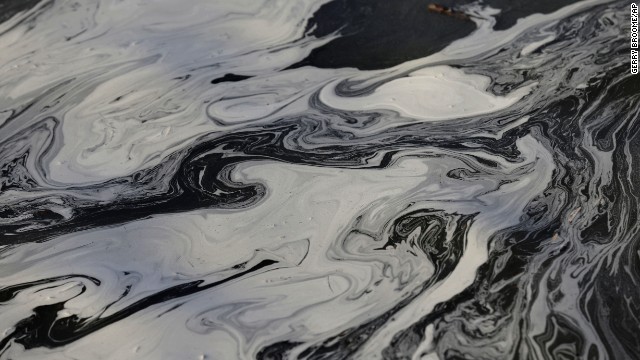
From the recent coal ash spill in North Carolina (http://i2.cdn.turner.com/cnn/dam/assets/140209142643-01-nc-coal-ash-ap749629851608-horizontal-gallery.jpg)

Although nowhere near as damaging at the Johnston Flood, about two weeks ago some North Carolinians experienced a different sort of flood themselves when a storm water pipe broken beneath one of Duke Energy’s 14 coals ash ponds. Duke Energy reported that 50,000 to 82,000 tons of coal ash and up to 27 million gallons of water were released from a coal ash pond in Eden, about 130 miles northeast of Charlotte. The containments are still flowing into the Dan River. The preliminary reports suggest that the coal ash ponds in North Carolina lack stringent regulations and that the pipe that broke had not been properly maintained. (Sound familiar?) These reports led the New York Times to publish, “North Carolina citizens have good reason to wonder just whom their environmental regulators are trying to protect.” The question now: who are we to blame?

In the case of the Johnstown Flood, I agree with Jean and Catherine, we should hold people accountable. Jean pointed out that using a more structuralist approach we can blame  “Ignorance and focus on capital, reputation and pride that a person holds often clouds the vision of doing what is right.” We can also blame the mindset of the people in Johnstown. As Victor Hesier would later recall, “The townspeople, like those who live in the shadow of Vesuvius, grew calloused to the possibility of danger. ‘Sometime’ they thought, ‘that dam will just give way, but it won’t ever happen to us!’ (66).” And if you want to point fingers at someone specific, maybe try Benjamin Ruff, the man in charge of the dam’s restoration.

But with so many running narratives – is it even useful to attribute blame? This is the question that the current North Carolina and federal governments are facing in dealing with the coal ash. Federal prosecutors recently order dozens of subpoenas seeking documents from Duke and the N.C. Department of Environment and National Resources. Critics are also looking to Governor Pat McCrory for appointing businessman John Skvarla as head of the department.

But at the end of the day we must hold people responsible for the coal ash and the Johnston Flood; ignorance is not a good enough excuse. If you are going to intentionally manipulate nature, you better intentionally manage it, if not for the sake of environmentalism, for the people. These two tawdry tales illustrate the need for stricter regulation and enforcement. Why can’t we learn from the past?

Clouding the Water


Warning: Undefined variable $num in /home/shroutdo/public_html/courses/wp-content/plugins/single-categories/single_categories.php on line 126

Warning: Undefined variable $posts_num in /home/shroutdo/public_html/courses/wp-content/plugins/single-categories/single_categories.php on line 127

David McCullough sets the scene by introducing a range of characters from the wealthy to the middle class of Johnstown. Setting up the scene allows McCullough to give narratives that provide background information that sets up the reader for the disaster that is going to occur.

Location of Johnstown is important when understanding the flood and the severity of its impact on the town. As Sarah mentions in her post, Johnstown was an area that was exposed to and prone to unexpected rains and windstorms. The location in a valley makes Johnstown specifically susceptible to flooding. Comparing the Chicago Fire of 1871 and the Johnstown Flood of 1889 many similarities can be drawn. Both places had natural elements that made them vulnerable to hazardous elements whether it is fire or rain. Catherine points out that there are many parallels between the two disasters, in both the Fire and the Flood the often threats of damage, but no actual harm caused people to become immune to the actual threats of a serious fire or flooding. More specifically in Johnstown, there were many written accounts of the threats that were given to the South Fork dam. “In 1881, the dam threw a terrific scare into the people in the valley. On the morning of June 10, during a flash flood, a rumor spread through Johnstown that the damn was about to break.” (63) Throughout the years until 1889 there was not much cause for alarm because the threats of calamity only proved to be rumors. So, in the wake of a disaster people are disorganized and are not fully aware of the dangers.

Touching upon the aspect of blame, I disagree with Sarah post because in this instance there are people who can be held accountable. Ignorance and focus on capital, reputation and pride that a person holds often clouds the vision of doing what is right. There were many opportunities for the dam to be fixed, and as hindsight is always 20/20 there were telltale signs of a dam that needed amending. Thus far, McCullough has presented the information about Benjamin Ruff who was in charge of the restoration of the old dam. Ruff was put off by the findings of John Fulton, associate to Daniel Morrell (a man who held a high reputation), who sent Fulton to check the status of the South Fork dam. Fulton saw the faults of the dam, the erosion and lack of upkeep, gave great concerns to urgent correcting the issues. Ruff was put off by Fulton’s findings and disregarded his suggestions as he saw Fulton as less then competent. While the blame is not solely on Ruff, it was people with his  attitude that accompanied to the devastation of the flood.

Flood Versus Disaster: The Creation of the Johnstown Flood of 1889


Warning: Undefined variable $num in /home/shroutdo/public_html/courses/wp-content/plugins/single-categories/single_categories.php on line 126

Warning: Undefined variable $posts_num in /home/shroutdo/public_html/courses/wp-content/plugins/single-categories/single_categories.php on line 127

The Johnstown Flood of 1889 is an “accident” that draws parallels to the Great Chicago Fire of 1871 because of human interaction with and development of the land, and human hesitation to acknowledge the preceding signs. McCullough’s geological notes regarding the speed of urbanization and tree removal on hill slope porosity describe how the development of the city quickened the speed at which the water arrived in Johnstown. This is a common problem that continues into today. Historically, rivers have big floods every 10 years, and massive floods every 100 years that widen and extend the river channel. The flood is severe, but afterwards the land gets to rest for the next 100 years. Urbanization messes up this cycle by making rainfall reach river channels quicker, and therefore increasing the volume of water in the riverbed in a shorter amount of time. The rapid industrialization of steel mills and subsequent population boom in Johnstown after the canal construction reduced the time it took water to reach the city and exacerbated the flood.

Similar to how Pernin and Smith note the small fires that broke out before the Great Fire, McCullough notes the heavy rain that occurred months before the Great Flood. Additionally, McCullough observes that in 1864 the dam broke for the first time. As Sarah points out, neglect of dam maintenance led to the eventual collapse, but the growth of the city led to a higher death toll. While the people of Johnstown did not doubt the potential of flooding, they had grown accustomed to this scare. For these two reasons: urbanization and precipitation patterns, I cannot place all the blame on the South Fork Fishing and Hunting Elite.

It is frustrating to read about the ironies McCullough presents, including the capitalists vacationing to South Fork Fishing and Hunting Club in order to free their cluttered minds from work; and how the capitalists, who commanded and encouraged construction of the dam, were not physically affected with the eventual collapse of the dam, however this disaster did not lie entire in the hands of the rich.

The Johnstown Flood


Warning: Undefined variable $num in /home/shroutdo/public_html/courses/wp-content/plugins/single-categories/single_categories.php on line 126

Warning: Undefined variable $posts_num in /home/shroutdo/public_html/courses/wp-content/plugins/single-categories/single_categories.php on line 127

David McCullough uses individual vignettes to introduce Johnstown, the surrounding area, and the South Fork Dam. Contrary to my initial opinion, much of the disaster does not seem to be based on corruption in McCullough’s depiction of the event. The South Fork dam itself was properly built. It was created in the standard manner of almost all dams, involving packed earth. The engineers did a competent job. The only problem was maintenance of the dam. The dam was part of a canal that soon became unproductive when a nearby railroad grew rapidly. Attention was soon diverted from the canal and dam to the more profitable and useful railroad. In nakindig’s post it is written, “Preparedness, or lack thereof, is of utmost importance to preventing disasters.” So perhaps the dam should have been maintained and prepared to prevent a disaster. I feel I can’t really place blame on people for focusing on the railroad more than the dam though. I don’t think anyone willfully plotted to let the dam’s condition disintegrate. There is only so much money and time that people necessarily have to concentrate on the most beneficial thing. I’m sure there were other dams built in a similar manner that were also not maintained, but since they did not break, they faded into obscurity. Also it is unclear whose responsibility it was to maintain the dam. The state, the federal government, the builders, people who used the canals, people’s whose homes might flood if the dam failed?

Many of contributing factors seem to be other issues. First, the area is prone to unexpected rains after windstorms; the locals call them “thunder-gusts” (20). Johnstown was built down in a valley, a place prone to flooding. More people moved to Johnstown—which created more possibility for a higher death toll—because it was a growing town. Since the beginning of the war, the west opening, and the Iron Company moving into town, Johnstown attracted many people, McCullough writes.

McCullough also contrasts the people in the Clubhouse with the factory workers in Johnstown. This seems to align with “The Wedge” discussed in this post. Like Emily said her post “The Power of Hardship to Unite,” this poor mass against a few rich people seems to be a stereotype of the Gilded Age. I thinks it is kind of limited to group people into two categories. There are so many varying ranges of wealth, and not all “poor” people are downtrodden, oppressed, and helpless nor are all “wealthy” people evil, selfish, and destructive, not to mention all the people not neatly captured in these two categories.

Approaches to Studying the History of American Disasters


Warning: Undefined variable $num in /home/shroutdo/public_html/courses/wp-content/plugins/single-categories/single_categories.php on line 126

Warning: Undefined variable $posts_num in /home/shroutdo/public_html/courses/wp-content/plugins/single-categories/single_categories.php on line 127

Focus Question: What are different historical approaches to studying the history of American disasters?

Disaster is, as Bergman puts it, “ubiquitous yet indescribable.” It is difficult to exactly characterize disaster, as we saw in our class list on Tuesday. Everything from hurricanes to terrorism was lumped under disaster. The definition and study of “disaster” has evolved. Early on, supernatural events were thought to bring about disasters. Disasters were not natural; they represented God’s displeasure with humans. Then the language around disasters shifted to science. Disaster descriptions were couched in purely secular terms.

Even more recently, there has been focus on “human ecology” or the link between human and non-human worlds. Several scholars, such as Matthew Mulchay, think this intersection of natural and human forces precipitates disasters. Some even call modern disasters “unnatural.” It seems a bit extreme, however, to call every disaster unnatural. For instance, humans do not cause most hurricanes. Despite more recent emphasis on humans affecting weather patterns, there still appear to be some events humans did not cause. It reminds me of the old saying, “If a tree falls in a forest and there is no one around to hear it, does it still make a sound?” If humans were entirely uninvolved, there could still be hurricanes. They might not directly cause humans trouble, but perhaps hurricanes could be considered disastrous for the nature and wildlife they impact.

Disasters seem to reveal failings in society. David McCullough writes about the Johnstown Flood as the clash of social problems and nature, which seems more reasonable than the “unnatural” category. A combination of human and natural events caused the Johnstown flood. If there had been no improperly built dam, the heavy rain would not have had such a disastrous effect. If there had been no heavy rain, the dam might not have failed. Other scholars maintain nature or man alone causes some disasters. There has been a general movement to increasingly describing disaster in cultural or social frameworks. The piece by Kenneth Hewitt continues this cultural trend. He emphasizes the geography of disasters, which often highlights the rift between the impoverished and wealthy. Disasters in poverty-stricken areas typically produce higher death rates and reveal the limited political voice of people. Disasters form a window to study race, class, gender, politics, and governmental structure.