Nature in narratives and our role as storytellers


Warning: Undefined variable $num in /home/shroutdo/public_html/courses/wp-content/plugins/single-categories/single_categories.php on line 126

Warning: Undefined variable $posts_num in /home/shroutdo/public_html/courses/wp-content/plugins/single-categories/single_categories.php on line 127

Cronon prompts an interesting discussion on the role of nature in narratives, one that I think Koppes lacked, and that is: although nature, in and of itself, is not always linear, why and how do we fit it in to a narrative structure? “Environmental history sets itself the task of including within its boundaries far more of the nonhuman world than most other histories, and yet human agents continue to be the main anchors of its narratives.” This problem of framing the role of nature is especially tricky when we think about nature in a nonlinear sort of way. Sometimes things in nature are cyclical and at times random, so how do we condense nature into a narrative structure?  Should we? And moreover, we tend to talk about nature in terms of its instrumental value at the sake of its intrinsic value, which creates an interesting problem when we try to determine its importance.

One of the things I think we need to be especially wary of is the tendency to reduce nature’s implications to binaries such as good vs. bad, helpful vs. harmful. Because if postmodernism has taught us anything, it’s that we need to be skeptical of our epistemological lenses. And yet, this fear shouldn’t stop historical inquiry. I think Molly wrote it best when she said, “He believes that ‘historical storytelling helps keep us morally engaged with the world by showing us how to care about it and its origins in ways we had not done before’ (1375).  Even if narrative histories are malleable, they help humans today stay morally engaged.  Historians’ efforts are not futile, even in a postmodernist society.”

I’m particularly concerned with ensuring that nature in an objective form is represented in history. But this is difficult when “Nature is unlike most other historical subjects in lacking a clear voice of its own” while simultaneously being anything but silent. We interpret nature’s meaning from our own human values and we can’t always stay true to the facts that are presented. This is why Bonnifield and Worster came to such different conclusions. But as Molly said, this may not always be bad if we can keep humans today morally engaged.
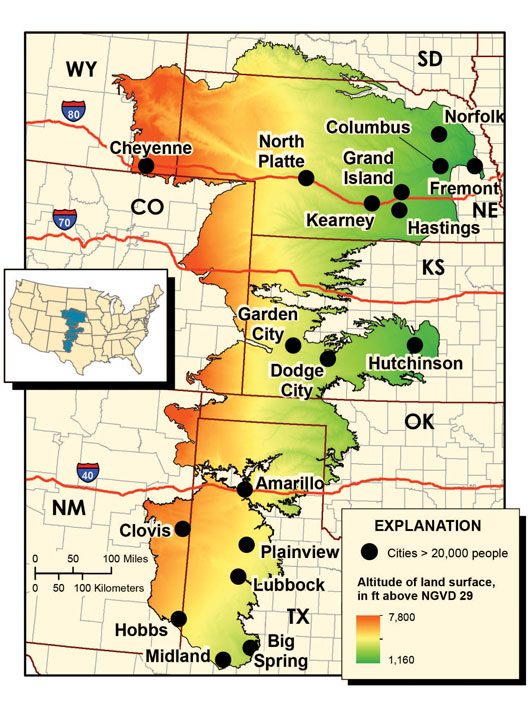
Depletion of the Ogallala Aquifer

And this got me thinking about the current discourse surrounding the depletion of the Ogallala Aquifer. It is a shallow water table aquifer located under the Great Plains that depleting rapidly as a result of agricultural irrigation and drilling for oil and natural gas. The dilemma here, and like many other environmental issues, is how do we frame this event so that we as humans can understand the potential ecological damage? Of course here we are framing different problems, but Cronon’s article can be helpful in thinking about how we construct discourse today. Our human voices place value on nature, but activists who call for change should also implement strategies other than narrative; narrative only takes us so far. Resources such as maps, art, and hard science reports can animate nature’s important position as a stakeholder.

A Fragile Environment


Warning: Undefined variable $num in /home/shroutdo/public_html/courses/wp-content/plugins/single-categories/single_categories.php on line 126

Warning: Undefined variable $posts_num in /home/shroutdo/public_html/courses/wp-content/plugins/single-categories/single_categories.php on line 127

The video “The Plow that Broke the Plains” places a clear emphasis on the human role in the Great Plains disaster. Nate rightly suggests that there are both natural and manmade elements to this disaster. The narrator repeats phrases such as “high winds and sun” throughout the film, clearly suggesting that the editors and directors of the film believed that the fragility of the Great Plains made the Dust Bowl disaster predictable.  In this way, the makers of the film implied that man essentially set himself up for disaster by settling on a dry land with “little rain” and “high winds and sun.” When put that way, it doesn’t seem that surprising that the plains dried out.

This argument relates back to one our previous class discussions about settling in places that are prone to natural disaster, such as San Francisco. When people choose to settle in fragile or unstable locations, and then in this case change their environment, are they setting themselves up for disaster?

The makers of this film seem to believe that that is the case. They trace the narrative of capitalism in relation to the Great Plains. Demand for wheat increased significantly with World War I, taking a great toll on the Great Plains. Newspaper titles flashed across the screen reiterate the human role in the Dust Bowl Disaster, as the war was clearly a result of mankind.

Film provided a new method of propaganda that had the unique ability to utilize visual imagery as well as sound to convey meaning. The newspaper titles, narration, as well as music all serve to echo the argument of this film.

Nature as a Counterpoint to Cronon


Warning: Undefined variable $num in /home/shroutdo/public_html/courses/wp-content/plugins/single-categories/single_categories.php on line 126

Warning: Undefined variable $posts_num in /home/shroutdo/public_html/courses/wp-content/plugins/single-categories/single_categories.php on line 127

In the introduction to Nature’s Metropolis, William Cronon paints a picture of his childhood and the opposition of rural and urban that he claims to falsely have considered to be polar opposites, unconnected and fundamentally opposing.  I connected strongly with his childhood view, having also felt a persistent pull towards the undeveloped since my own childhood. For myself, as for Cronon, nature was pure and innocent, and the city was sophisticated, modern, and morally ambiguous. In arguing the inexorable relationship between rural and urban, he discounts this view, adopting instead a combination of Von Thunen’s Central Place Theory and Fredrick Jackson Turner’s Frontier Thesis.  While his argument is convincing, it is fundamentally Marxist.  For Cronon, commerce and economics drive development.  I take issue with this simplified view of society, questioning the existence of nature preserves and National Parks, entities devoted to pleasure and exploration, in a world driven by commerce.  I see this government imitative as proof that there are other forces at work in development.  However, it is even more strongly present in the private sphere-the quest for a rural getaway that has existed for as long as there have been densely populated areas in America, as exemplified in the construction of the Biltmore House by the Vanderbilt’s in the late 1800’s.  The forested mountains that we see from overlooks such as Caesar’s Head (a childhood favorite) result from more than government preservation.  As a whole, we seem to recognize the innate value in the natural, and it is evidenced in the forests that still clothe our mountains.  However, that value is far from commercial, and if economics drove all development, the mountains would have been developed long ago.  Therefore, I argue that the continued existence of large quantities of forestland in the American Southeast act as a counterpoint to Cronon’s assertion that economics are the fundamental driver of development.

I would like to add to Catherine’s point about the Davidson College Ecological Preserve. It is indeed second growth forest, and she questions how natural it is because of this.  However, if you take a look around at this new growth forest, you see so many other physical signs of human tampering.  You see the wide swath cleared last year for the gas lines, still bare from the destruction.  You see the abandoned house, a favorite of students for midnight jaunts.  You see the goats, an introduction into the Davidson woods, but their presence indicates an effort to correct another invasive species gone wild, Kudzu.  The list goes on, from the boathouse to the power line.  In this wild place, the wildest that Davidson has to offer, we are never far from man’s influence.  This raises the question, also raised by Cronon in his introduction, what is wilderness?  Does it exist in this modern age?  I don’t know the answer, but as a nature lover, I am glad that the question can still be asked today.

Natural Teleology: the Railroad and the “Natural” History of Chicago


Warning: Undefined variable $num in /home/shroutdo/public_html/courses/wp-content/plugins/single-categories/single_categories.php on line 126

Warning: Undefined variable $posts_num in /home/shroutdo/public_html/courses/wp-content/plugins/single-categories/single_categories.php on line 127

Our readings this week bridge a divide that I’ve seen in our previous readings: a disjunction between urban, economic, and environmental history. Rozario overlapped urban and economic history, Matthews environmental and social history, and Schneirov economic and social history. In Nature’s Metropolis, however, William Cronon does not merely suggest where these subjects might overlap, but fuses each together, suggesting that just as an isolation of the rural and the urban is an “illusion,” so too is any division of these historical subjects (18). In Chicago, Cronon asserts, we see the rise of a natural city and, consequently, a unique, interdisciplinary subject of historical inquiry.

As Eli humorously argued in his post last week, Turner’s “Frontier Thesis”—while it was certainly significant to the historiography of the American West—implausibly treated the frontier as an omnipotent actor in American history that not only offered the natural conditions suitable for westward expansion, but served as a driving force for American democratization. Much of Eli’s critique of Turner seems to be Turner’s heavily stereotyped characterization of the frontier.  But, as I think Eli’s quotations allude to, Turner personifies the frontier as one who “masters the colonist” (quoted in post). Its stereotypes aside, such a notion of the frontier seems contrived. While I can accept treating the frontier as  a natural actor in history, I have trouble with seeing a place as taking such an active role in events. If anything—as, I think, the articles by Kevin Rozario and James Connolly would suggest—places can reflect social and economic changes, rather than direct them. In this sense, I think we should should see nature—whether on the frontier or in the city—as a passive actor, being acted upon and responding  accordingly.

A Turnerian himself—though certainly a disillusioned one—Cronon adopts much of Turner’s treatment of nature and place as actors in Nature’s Metropolis. Chicago’s expansion, he asserts in his prologue, was foreshadowed by “nature’s own prophecies” and “expressed natural power” though the product of human ingenuity (13). But as Cronon goes on challenge what is, in fact, natural and unnatural about the city, I think we can begin to see the clearest depictions of nature and place as historical actors much like we might consider persons to be. As Sarah previously highlighted, the natural landscape surrounding Chicago directly influenced its development. From its central location to its proximity to Lake Michigan, the area in Upper Illinois that would one day be Chicago drew the eye and inspired the rhetoric of early “boosters.” But as Cronon highlights, Chicagoans’ struggle to overcome its natural disadvantages also shape much of their story. For example, to compensate for its muddiness, Chicagoans literally raised the city in its early history. What’s interesting in Cronon’s treatment of nature, however, is that, in addition to  environmental factors, he treats economic and technological impacts as natural—he calls them “Second Nature,” whereby humans adapt nature form new environments. Such “natural” actors include an ever-expanding, national railroad network and Chicago’s economic  alliance with the industrialized Northeast. These “First Nature” and “Second Nature” forces drastically influenced the emergence of Chicago as “Nature’s Metropolis.” What I found most interesting, however, were instances where these seemingly disparate natural forces converged. Cronon highlights one particularly interesting example of this phenomenon: the railroad. Economically, the railroad cut back on Chicago’s seasonal economic cycles and strengthened the city’s trading alliances with other regions. Environmentally, the railroad transformed and blended into the natural landscape. But the railroad was also influenced by other natural forces. In Chicago, proximity to Lake Michigan and the Erie Canal influenced travel rates, while its central location attracted both the eastern and western ends of the railroad web. In this sense, the railroad did not exist in “First Nature” or “Second Nature” exclusively, but in both. As Cronon writes, the railroad “partook of the supernatural, drawing upon a mysterious creative energy” (72). This, I argue, suggests that Cronon treats “nature” much as Turner treats the frontier—an omnipotent force as much as a historical actor.

So, in reading Cronon, how should we understand his Turnerian bias?

I’ll leave this for discussion in class. But—as I argue above—I think that Cronon simply recapitulates Turner, substituting “nature” for the frontier and endorsing a natural teleology for the Chicago’s preeminent rise as does Turner for American democratization.

Cronon’s Chicago


Warning: Undefined variable $num in /home/shroutdo/public_html/courses/wp-content/plugins/single-categories/single_categories.php on line 126

Warning: Undefined variable $posts_num in /home/shroutdo/public_html/courses/wp-content/plugins/single-categories/single_categories.php on line 127

There are two approaches to understanding nature, and neither debates the inclusion of humans or cities in the definition of nature. There is the all-welcoming approach: nature is everything, and there is the nihilist approach: nature is nothing. Personally, I don’t believe the second approach because if nature is nothing, then nothing would be everything. An example of the interconnectedness between all elements on this earth, or nature, is sunsets which environmentalist William Cronon presents on page 73 of Nature’s Metropolis. “’Fancy the rail gone, and we have neither telegraph, nor schoolhouse, nor anything of all this but the sunset.’” But is a sunset any more or less natural depending on the “telegraph” or “schoolhouse”? I argue no. The sun slips over the earth’s edge leaving us, in our place on earth, behind. This phenomenon occurs everyday regardless of what tree grows or what electricity pumps through the wires. Does this sunset vary for the people of Los Angeles? The anthropogenic pollution may augment the light refraction, and make the sunset more beautiful, but it is impossible to separate these factors and produce the same result.

It is based off this concept that William Jackson Turner, in “The Significance of the Frontier in American History”, and later, William Cronon, categorize cities as part of nature. Chicago was able to develop because of ecological advantages that allowed humans to survive (glaciers in carved out lakes and deposited fertile fine-grained soil which supported grains and grasses which then attracted herbivores, omnivores, and carnivores). As Eli points out in “Chicago: the power of space”, the natural benefits boosters publicized did not seem to be so beneficial after all, as the city had to spend thousands of dollars dredging sand from the “natural harbor”. In this manner, nature can be both an attraction and a deterrent. Chicago is unique because it was about to thrive (not just develop) because of the transcontinental railroad. Contrary to Marston’s post, I believe Cronon attributes the rise of Chicago greatly to the transcontinental railroad (see Nature’s Metropolis: “Rails and Water”), while still acknowledging the environmental foundations that even allowed people to settle in this region. Without the railroad, the city would have had to continue to fight for its purpose, however there is a reason the railroad was established in Chicago and not in Minneapolis or Green Bay.

As a concluding point, when I think of the most “natural” place on Davidson College campus, I think of the Davidson College Ecological Preserve: 200 acres of “untouched” land. I think most students would agree. However, would most students be surprised to learn that these 200 acres are actually a second-growth forest, meaning that it is not the original land that was there 500 years before European explorers reached the new world? This ecological preserve also served as farmland, and potentially a golf course, before the school acquired it and allowed the native forest to re-emerge.

Theorizing A City


Warning: Undefined variable $num in /home/shroutdo/public_html/courses/wp-content/plugins/single-categories/single_categories.php on line 126

Warning: Undefined variable $posts_num in /home/shroutdo/public_html/courses/wp-content/plugins/single-categories/single_categories.php on line 127

Reading the blog posts for this week thus far, I think Sherwood, Jean, and Sarah all make excellent points about the natural and unnatural juxtaposition theorized by Cronon.  There is no doubt that Chicago rose because of its natural geography and the locational advantage as the “gateway” to the west.  I though Sherwood’s aside was particularly fascinating, pointing out almost irony behind the modern definition of natural.  Just because farmers use land, does that mean they are any more natural than others?  Sherwood mentions the cultivation of land, which I think brings a very interesting debate about how much we can change nature for it to still be considered natural.

On a separate note, the element of the introduction and the first two chapters that stood out most was the near overwhelming amount of Chicago urban theory.  Cronon brings theorists and historians like Sullivan, Garland, Turner, Von Thunen, “Boosters,” and many others as people all trying to explain how and why Chicago grew.  From the vast array of opinions, it almost seems like the rise of Chicago is almost too complex to explain using one theory alone.  Every argument made by the historians above can be challenged.  The booster’s argument, ranging from Scott’s economic to others focused more on the relationship between the city and the land, only accounts for small periods of Chicago’s history.  The theory of the concentric rings seems unlikely as you split the city into different regions.  No one theory adequately explains the complexity of Chicago.  Almost taking the Hewitt argument towards disasters (how every disaster must be looked at separately), I believe we cannot summarize or compare the rise of Chicago to any other city.  While Chicago had the geographical foundation, the city became great for so many individual reasons.  No one factor or theory can summarize the cities rise to power.

To finish off, I believe one aspect that Cronon and the several other Chicago theorists severally underestimate is local climate.  As I am writing this blog post at home in Massachusetts, desperately hoping my evening flight doesn’t get cancelled due to the foot of snow we are getting right now, I wonder how much climate and weather factored into the rise of these cities. Cities with harsh winters like Boston and New York arose because they did not necessarily rely on their local natural products.  Trade and industry drove their expansion.  Meanwhile a city like Chicago had an entirely different function but with the same “natural” problems.  Chicago has similar, if not worse, weather than other big Northeast cities.  They have the snow, the wind, and the freezing temperatures.  All of this has made me think about how it was possible for Chicago to be the center of Midwestern agricultural trade when little could grow locally because of the long harsh winters.  It takes Cronon two chapters to first mention problems of the impeding weather, saying that only through the building of railroads could crops be transported easily.   This makes me question whether Chicago could have risen without the use of modern transportation.  While Chicago was clearly the best geographically Midwestern city for trade, if technology wasn’t evolving around the 1830’s there was no way the harsh climate of Chicago would have allowed the city to grow so astronomically.  Cronon’s book severely underestimates the rise of science, technology, and industrialization in Chicago’s history.

“The City’s Place in Nature”


Warning: Undefined variable $num in /home/shroutdo/public_html/courses/wp-content/plugins/single-categories/single_categories.php on line 126

Warning: Undefined variable $posts_num in /home/shroutdo/public_html/courses/wp-content/plugins/single-categories/single_categories.php on line 127

Blog Post 4 (for Thursday, 2/6)

Sarah Walters points out in her post that “as a child, Cronon inherently called the rural farms “natural” and the city “unnatural.” Except for the sake of tradition, it doesn’t seem to make sense that urbanity is constantly juxtaposed with nature. We’ve touched on this in class— if cities are made by humans, and humans are natural, aren’t cities also natural? William Cronon identifies this problem in his book Nature’s Metropolis, writing: “putting the city outside nature meant sending humanity into the same exile” (8).

Perhaps we juxtapose urbanity and nature because the notion of “naturalness” with regards to one’s surroundings was much less prominent before the industrial revolution. This period of capitalism, technological advancement and urbanization created unprecedented environments. Smoggy and crowded, industrial era cities did not resemble anything that had existed before.

It was much easier to recognize cities during the middle ages or early modern period as part of a “natural” trajectory of human progress than it was for industrialized cities. Basically, these new cities were considered mutated versions of the cleaner, less crowded urban environments that existed before.

The urbanity/nature juxtaposition, it seems, is not for distinguishing between cities and non-cities, as it is usually used, but rather for distinguishing between industrial era urban environments and whatever preceded them.

Undermining this juxtaposition, Cronon suggests that the city itself is maybe a natural entity for other reasons that its association with humanity: “by massing the combined energies and destines of hundreds of thousands of people, the city, despite its human origins, seemed to express a natural power” (13). The massive, growing, energized urban environment seemed to posses a mind of its own. Furthermore, it seemed to be out of human control in the same way that natural forces are out of human control: “it seemed at times to radiate an energy that could only be superhuman” (13).

So perhaps the city is unjustly opposed to nature after all.

Aside: what makes a rural environment any more “natural” than an urban one? Both places have been shaped in ways that do not represent a natural state. Cronon describes the rural landscape surrounding Chicago as “yielding not grass and red-winged blackbirds but wheat, corn, and hogs” (7). These symbols of cultivation demonstrate that, in the making of both rural and urban environments, the landscape has been transformed— though perhaps unequally.

Art of Disasters: Elin o’Hara Slavick and Hiroshima


Warning: Undefined variable $num in /home/shroutdo/public_html/courses/wp-content/plugins/single-categories/single_categories.php on line 126

Warning: Undefined variable $posts_num in /home/shroutdo/public_html/courses/wp-content/plugins/single-categories/single_categories.php on line 127

Ghostly outlines of ginkgo leaves float on a sea of blue in Elin o’Hara Slavick’s artwork. She creates cyanotypes of natural material—such as tree bark or leaves—that was hit by the bomb on Hiroshima. Her art touches on the natural aspect of disasters. In what seems to be an entirely unnatural event—a country drops an atomic bomb on the city of an enemy country during war—still has an element of nature. Furthermore, Slavick’s choice of subject leads to questions about how varying perspectives alter the meaning of “disaster.” Her art also brings a poignant element to the memory of disasters that cannot easily be expressed in essays on disasters.

When the United States dropped an atomic bomb on Hiroshima during World War II, it probably would not have been labeled “natural disaster.” It may have been a disaster for the thousands of people, or for the town, or for Japan. It could also have been an example of new technology or hastened the end of the war. Yet Hiroshima does not seem to be a natural disaster. Nature has not been an explicit agent in the destruction of Hiroshima. A bomb is not a hurricane, a typhoon, or a tornado. Countries employ bombs to wage war on their enemies. Man wreaks havoc on man, and nature appears to be far removed. Some scholars describe disasters as “entirely un-natural phenomena untethered from the non-human world.”

Slavick’s work highlights how nature may be an actor even in the most unnatural events and even if humans are discounted from the natural realm. In a disaster that seems so entangled in technology and politics, nature was still involved. Although nature did not contribute to Hiroshima, the bomb still disturbed nature. Slavick reminds viewers that almost no disaster occurs entirely removed from nature. Events rarely happen in a sterile sphere rather they demonstrate the connections found in the world. Perhaps Hiroshima appeared to involved men and technology alone, but Slavick has recorded the “Bark from an A-Bombed Eucalyptus Tree” and “Ginkgo Leaves from an A-Bombed Tree.” Those pieces represent hundreds of trees, plants, animals, and waterways that were likely affected by the bomb. Slavick strives “to make the invisible impact visible.” For the nature around Hiroshima, the bomb might be called a natural disaster.

As the trees around Hiroshima might count the bomb as a disaster, people themselves may have their own perspectives on Hiroshima. The Japanese and the people of Hiroshima likely count the bomb as a disaster; it flattened a city, killed or injured thousands, and contributed to Japan’s loss in World War II. For Americans, however, the bomb may represent an advance—albeit terrible—in technology, the probable saving of American soldiers from invading Japan, and the successful end of World War II.  They may be less likely to categorize Hiroshima as a complete disaster. Slavick’s choice of materials reminds viewers of the various perceptions of disaster. For instance, there is a white shape of ginkgo leaves and the negative outline of the leaves in blue. The shape is at once positive and negative space just as disaster may be simultaneously “positive” and “negative.”

Furthermore, Slavick artwork portrays a view of disaster that cannot be conveyed in an essay discussing disaster. The art may be interpreted in multiple ways, which is more difficult to do in writing. The ghostly outlines may represent the loss after disaster; the artists depicts one survivor’s experience by describing “the disappearance of the world as she[the survivor] knew it.” Slavick’s art also points forward to the aftermath of a disaster. The memory of the disaster still exists in the outline of the images, but there is something peaceful in the art. Soft white and clean blue point to a hopeful future. Disasters will always be remembered but are also able to be overcome.