Critical Distance: Ai Weiwei’s “Namelist” and the Memory of Disaster


Warning: Undefined variable $num in /home/shroutdo/public_html/courses/wp-content/plugins/single-categories/single_categories.php on line 126

Warning: Undefined variable $posts_num in /home/shroutdo/public_html/courses/wp-content/plugins/single-categories/single_categories.php on line 127
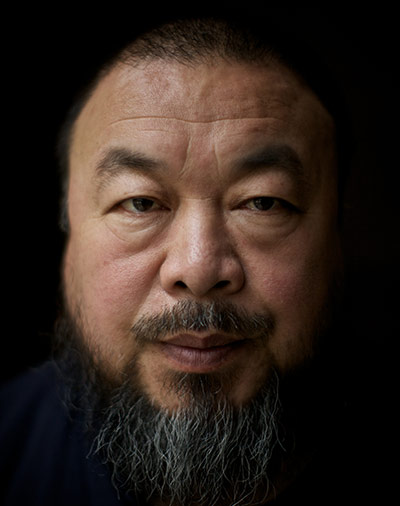
Ai Weiwei – Artist & Social Activist

Solemn yet provocative, artist Ai Weiwei treads a fine line  between commemoration and protest in his piece Namelist. Designed to underscore the deaths of 5,096 children in the 2008 Sichuan Earthquake, Ai’s work—as its title suggests—lists the names, genders, ages, and birthdays of each young victim. But even more, Namelist attempts to make order of the unfathomable chaos of disaster, reinforcing as much the guilt of government officials as the innocence of voiceless victims. Following the earthquake in May 2008, a volunteer investigation spearheaded by Ai uncovered the corruption and oversight of Chinese governmental officials, who failed to address poor school construction before the earthquake and struggled to cover it up in the aftermath. As many like Ai have protested, it was not merely the earthquake itself, but these governmental failures that claimed the lives of thousands of students, who passed away in—to them—unthinkable ways: swiftly, brutally, far from home. Ai’s work thus assumes the task of social activism, challenging quite directly—with simple, black script on white paper—the inhumane response to human catastrophe. But how does such artwork preserve the memory of disaster?

As an American observer, Namelist calls one word to mind: distance. While the Sichuan Earthquake lies distant in my memory— nearly 8,000 miles away and six years into the past—Ai extends this physical separation with his emotionally detached memorial. Countless boxes stretch from one wall to the other, most filled with names and birthdays, some with numbers, others empty. Scanning the list, each box overlaps with the others until the victims themselves seem to lose their individuality. But this feature, I think, encapsulates much of Ai’s message. In his attempt to organize neatly the deadly toll of the earthquake, to personalize each individual’s suffering, Ai fails. The only distinct, individualizing feature of each victim is his or her assigned number, which—in many cases—is the only information listed. Much of this interpretation, I admit, is influenced by the fact that I cannot read each victim’s name or birthday. Regardless of the language barrier, however, I sense a critical distance from the Sichuan Earthquake. I don’t feel any empathy towards its faceless victims. Witnessing loss on this scale seems incomprehensible to me. And for this reason, I believe that Ai’s work successfully assumes the task of social activism. Rather than burying his audience in emotion, he places the viewer in the position of the arbiter, to determine the culpability of those allegedly at fault.

That is not to say that Ai completely depersonalizes the very real suffering of each victim. On the contrary, in his piece Remembrance—a companion piece to Namelist—Ai treats each victim individually. A nearly 4 hour-long  audio recording, Remembrance plays the names of all 5,096 victims read by over 3,000 strangers. As each unique voice reads a name in its native language, each child assumes his or her own individual identity. Like scanning the list of names, I realize just how difficult it is to make sense of, to place an order on the immense suffering and chaos of disaster. But unlike viewing Namelist, I do not  sense the same effect of melding each victim together. Instead, by personalizing each individual’s pain in his depiction, Ai preserves the memory of each child, while the echo of each name reverberating off of the list creates a powerful juxtaposition. As I stated previously, Ai tempers his protest with commemoration. And in combining the experience of Namelist with that of Remembrance, Ai performs this tremendous balancing act, reconciling the impersonal distance of disaster with the personal pain of each victim.

Assuming this position as both a distant arbiter and a personal witness is much like the task of the historian who studies disasters. While analyzing each event empirically is the ultimate aim, one cannot ignore the importance of preserving its memory and those of its victims. As we continue to study disasters this semester, reading the work of both scholars and popular historians, let us remember the critical distance and humane depiction of Ai Weiwei’s works and ask ourselves: how should historians perform this balancing act? Or can only artists, like Ai, tread this fine line between commemoration and analysis?

Simple Words Trump Sheer Size


Warning: Undefined variable $num in /home/shroutdo/public_html/courses/wp-content/plugins/single-categories/single_categories.php on line 126

Warning: Undefined variable $posts_num in /home/shroutdo/public_html/courses/wp-content/plugins/single-categories/single_categories.php on line 127

The “State of Emergency” art exhibit in the Belk Visual Arts Center on the campus of Davidson College almost seems ironic at first glance. An exhibit that shows off artists and their interpretations of crisis is actually remarkably clean, modern and spacious. When I think of disaster and crisis my mind doesn’t picture sleek, white walls and a spacious gallery, however, this is what I saw at the “State of Emergency” exhibit. To me, this unique and somewhat mislead structure, describes the meaning of the entire exhibit as a whole. To me it represents how these works of art are providing different ways at looking at disaster and crisis just as the exhibit structure provides you with a different visual viewpoint. Furthermore, because of this unique design, I found myself leaving the area with most of the art pieces and focusing on the room across the hall. At first, I couldn’t tell if it was a piece of art or a building structure or what; it was massive. As I began to lean in I realized it was a wall with names all over it. But it wasn’t just a wall; this wall represented the massive size of the 2008 Sichuan earthquake.

This work was called “Namelist and Remembrance,” by Ai Weiwei which commemorates the school children lost in the 2008 Sichuan earthquake. According to the exhibit curator, “Namelist” will cover the gallery walls with the names of 5,196 schoolchildren who perished in the earthquake because of shoddily constructed schools. The names of the deceased will be read aloud in the audio work, “Remembrance.”  As background, Ai Weiwei is a Chinese contemporary artist, active in sculpture, installation, architecture, and social, political and cultural criticism. As a political activist, he has been openly critical of the Chinese Government’s stance on human rights and has even investigated government corruption, in particular the Sichuan schools corruption scandal following the collapse of so-called “tofu-dreg schools” in the 2008 Sichuan earthquake.

Subsequently, Weiwei’s work, “Namelist and Remembrance,” is a continuation and political expression of his investigation into the scandal following the earthquake. The 2008 Sichuan earthquake, according to official figures, stated that 69,197 were confirmed dead, including 68,636 in Sichuan province, and 374,176 injured, with 18,222 listed as missing. Besides the sheer size of the artwork by Weiwei and its evident resemblance to the size of the earthquake, I believe his work is making a much bigger political argument than just commemorating the lives lost. I think this piece offers a unique window into the terrors of the earthquake, and in Weiwei’s attempt, probably the terrors of the Chinese government. This piece details all of Weiwei’s work in the past on the corruption of the Chinese government but shows us intimate details about that event like no other kind of historical evidence can. As this piece is a reaction to disaster and crisis, it is fitting that in Ai Weiwei’s past he led a team to survey the post-quake conditions in various disaster zones. I think this artwork can shine some light about the time and place where this crisis occurred and maybe more importantly, something about the human values of this civilization. With the background of Weiwei and the source information from the Sichuan earthquake, I believe his argument is a response to the government’s lack of transparency. By creating this sculpture with all the student’s names on it, I think he is doing what the government didn’t do in revealing names of students who perished in the earthquake due to substandard school campus constructions. A political statement against the Chinese government takes on the simplest of forms, as the artwork is just a list of names; an extremely powerful message.

Weiwei’s piece highlights and certainly speaks true to the message given by exhibit curator Lia Newman when she claimed, “The goal of the exhibition is not simply to present images of horror or ‘disaster pornography’ but rather to open a dialogue about the role artists can play in bringing attention to disasters while working toward recovery.” By not only commemorating those who had passed and taking political action through art, Weiwei is an excellent example of artists using their role in society to shine light on disaster relief and crisis situations at all ends of the earth.

Source: (Ai, Weiwei (2011). Ai Weiwei’s Blog: Writings, Interviews, and Digital Rants 2006-2009. Cambridge, Massachusetts: MIT Press. p. 209.)