Self-inflicted prejudice


Warning: Undefined variable $num in /home/shroutdo/public_html/courses/wp-content/plugins/single-categories/single_categories.php on line 126

Warning: Undefined variable $posts_num in /home/shroutdo/public_html/courses/wp-content/plugins/single-categories/single_categories.php on line 127

“No Irish Need Apply”: A Myth of Victimization by Richard Jensen may be the first work I have read this semester that I completely agree with. Jensen’s explains his thesis claiming, “This paper will explain how the myth originated and will explore its long-lasting value to the Irish community as a protective device” (406). Jensen’s work does a nice job explaining the background behind the slogan as well as giving multiple possible explanations for the significance of the myth without factual historical evidence. His work delves into the Irish myth of victimization using the popular slogan “No Irish Need Apply.” He explains that the Irish American community harbors a deeply held belief that it was the victim of systematic job discrimination in America, and that the discrimination was done publicly in highly humiliating fashion through signs that announced “Help Wanted: No Irish Need Apply” (405). Without historical evidence many historians viewed this slogan as a metaphor for Irish troubles; however, the Irish insist that the signs did exist and seem to prove their discrimination.

The “NINA” slogan seemingly originated out of England after the 1798 Irish rebellion and came over to America with the migration. The myth in America seemed to focus on the public “NINA” signs hanging up in shops and restaurants that deliberately marginalized and humiliated Irish male job applicants. However, with that being said, “No historian, archivist, or museum curator has ever located one; no photograph or drawing exists” (405). Along with no historical evidence of the signs, no other ethnic group complained about being singled out by comparable signs as well as there was no known employment discrimination ever documented. I found this is to be very strange especially after Jensen noted some very famous Americans that said they had heard about the signs growing up. Something had to be going on and Jensen offers some rather valid options. The one I was most interested in was the one he mentions last.

With no physical evidence or documentation of the myth Jensen offers the explanation that myth fostered among the Irish a misconception that other Americans were prejudiced against them, and were deliberately holding back their economic progress.  This perceived prejudice gave the Irish a “chip on the shoulder” mentality and directly added to their encouragement of the myth. No other European Catholic group shared this chip on their shoulder; likely the strong group  ethos that encouraged Irish to always work together, and resist individualistic attempts to break away attributed to the popular myth. The Irish must have been held back by something because they had a statistically lower rate of upward social mobility than average in the 1850-1880 period; but was it internal or external (412)? Jensen argues that there is something else going on that is fostering this self-proclaimed discrimination by the Irish stating, “the Irish chip-on-the-shoulder attitude may have generated a high level of group solidarity in both politics and the job market, which could have had a significant impact on the occupational experience of the Irish” (411). Records show that many Irish worked together in large groups such as labor gangs and construction crews adding to the theory of group solidarity driving the myth. Touching on CT’s previous post, it is important to note the atmosphere of the region at the time and realize that many different cultures and backgrounds could have easily lead to the congregation of Irish immigrants in the some workplaces and communities and held them back from political and social mobility.

In my opinion, self-denial was the king and self-infliction was what led the Irish to popularize this myth. Pete Hamill provides Jensen with a tremendous example of this collective Irish spirit, “This was part of the most sickening aspect of Irish-American life in those days: the assumption that if you rose above an acceptable level of mediocrity, you were guilty of the sin of pride” (417). Their own slogan only pushed them down into lesser jobs. The slogan was in the mind’s eye, and gained steam and significance from the popular song from 1862. With no evidence, the Irish, in my view, become self-proclaimed victims. Discrimination by others may have been relatively irrelevant compared to the effect the Irish slogan had on reinforcing political, social and religious solidarity amongst its own people. It was more of a warning to stick to the neighborhood than it was a prejudice act by Others. I agree with Jensen’s final analysis and believe the slogan identified an enemy to blame for the Irish inability to move socially upward besides their own faults and community ideals.
Colby's Reasoning for the Gap Between Rich and Poor


Warning: Undefined variable $num in /home/shroutdo/public_html/courses/wp-content/plugins/single-categories/single_categories.php on line 126

Warning: Undefined variable $posts_num in /home/shroutdo/public_html/courses/wp-content/plugins/single-categories/single_categories.php on line 127

In his post, Lamoureux describes how “understanding the history of the temperance movement and more government spending in high risk areas it becomes obvious that the issues that the upper class thought they fixed only made matters worse as they created new problems.” I agree with his statement, that because of the existing detachment between the elite and the working class led to an exaggerated representation of the poor’s interests. In my post, I will pinpoint the central issue as while their the poor’s views were somewhat represented, they were also greatly ignored and at times, not payed attention to altogether.

Wilentz agrees with his statement as he claims, “a feeling of prejudices does exist between the wealthy and the laboring classes. But while Lamoureux did not necessarily cite a reasons for the existent gap between the poor and the rich, H.G.O Colby, on page 304, points directly at the cause, “”he blamed this sourness of spirit on demagogues who declaim in bar-rooms and grog shops, with surpassing eloquence, upon equal rights, when the only species of equality they desire is that the loafer shall share the wages of the laborer” In other words, Colby is directly attacking the good intentions of the Church as in his view, “there were was no reason for hostility between the rich and laboring classes.” As for Colby, both the rich and the poor, “had the strongest reason, for mutual friendship and the most cordial unions.” But instead, the church created factions within this group, that while was in the name of quality, only created a greater divide.

'Merica


Warning: Undefined variable $num in /home/shroutdo/public_html/courses/wp-content/plugins/single-categories/single_categories.php on line 126

Warning: Undefined variable $posts_num in /home/shroutdo/public_html/courses/wp-content/plugins/single-categories/single_categories.php on line 127

These two chapters in Wilentz’s book, Chants Democratic, discuss nativism in length. This topic is particularly interesting to me as I’m writing my thesis on a similar topic (The effect of the Great Depression on European Immigration 1933-1939) and I saw many similarities in the 1830s and 1930s. One contrast between the two periods, however, was the mutual respect among native and immigrant journeymen. Wilentz attributes this respect to the same level of training the immigrants had as the native artisans (266). Furthermore, due to internal strife within the movement, the political nativism in the 1830s did not achieve the unity and popularity that nativism would reach later in America’s history. (Fun Fact of the day: Unemployment was higher for craft workers between 1836 and 1842 than during the Great Depression).

Wilentz details the shift from an agrarian dominated economy to the rise of the manufacturing economy. Farmers had always been viewed as the most important laborers (274), but the mechanical labor was gaining ground and the unions saw it as the most important form of labor. Farmers clung to the doctrine of rural moral supremacy, yet the mechanics knew that this rural moral supremacy would continue the United States dependence on Britain for manufactured goods, much like when we were a colony.  When the drought came in 1836, farmers standing dropped even further as they were not able to provide the products and goods that they relied on selling.

To speak to Marie Hemann’s points, I agree with his conclusions. To add to his astute observations, I think it’s important to note the atmosphere of New York during this time. Wilentz hits the nail on the head when he describes the demographic of New York and its undesirable situation for a revival. “New York, with its immigrants, its Bowery, its traditions of popular anticlericalism, and its sheer size, lacked almost all the prerequisites for a successful revival.” (280) In my humble opinion, New York’s size was the greatest factor in this failure for a revival. With many people come many different beliefs and views on issues. This leads to a lower percentage of influence for those in the revival. What I mean by that statement can be further explained by this hypothetical example: if the revival movement in a small town of 100 people converts 10 of these people, their influence is much greater because these 10 people know everyone in the town and can work to encourage them to come to Jesus. Now, in a city, such as New York, let’s say 1,000 people of 100,000 people join the revival. Granted, more total people joined the movement, however these 1,000 people don’t know the other 99,000 people of New York and have a much more difficult time to influence them. Furthermore, the breakdown of those who partook in the revival, specifically the Brainerd Presbyterian Church, emphasize the setup for a failed revival. Many of those participants in the congregation were women, and of those women, nearly half were unmarried. So, the revival wanted to change the drinking habits of men, yet few men (in comparison to women) joined the church. And many of these women were not in constant relation to men by being unmarried, so their influence on men was very limited. (280)


This Is Why We Can't Have Nice Things


Warning: Undefined variable $num in /home/shroutdo/public_html/courses/wp-content/plugins/single-categories/single_categories.php on line 126

Warning: Undefined variable $posts_num in /home/shroutdo/public_html/courses/wp-content/plugins/single-categories/single_categories.php on line 127

Here’s the Drunk History of Oney Judge, Washington’s slave ( Drunk History of Orey Judge )

Chapters 7 and 8 Wilentz have the feel of a parable of greed and redemption. The boisterous lower-class patrons of Bowery Street gain power in the political machine by politicizing their actions, but which spirals out of control in the chaos and loss of the Panic of 1837. It seems that Bowery is the embodiment of the Roman Coliseum and the Elizabethan Round Theatre, except that the top tiers held the prostitutes and not the Patricians. This is what the lower classes did when the upper classes were not around.

Like Ben Hartshorn ’13 and Michael Lamoureux ’14, I was left with the impression that Wilentz hit the nail on the head by presenting Bowery Street as a microcosm of the working class in Jacksonian America. I think this microcosm is more believable as a frame of reference for Northern cities than in “Shopkeeper’s Millennium”. That said, you see some of the same issues with sustaining the temperance movement on Bowery as you do in Rochester. Joseph Brainerd’s Presbyterian Church, which was determined to help workers to better achieve the fruits of their labor, in 1836 was only 37% new members, and of these 87% were women. Overall, very few masters (14.9%) and even fewer journeymen partook (only Frederick Byrd) (280-81).

The great difference between Rochester and Bowery is the role of the Unions in temperance. In Rochester, it seemed that the workers didn’t stay around too long to settle down and join a union. In New York, the Unions found an enemy in the Temperance movement. To the Temperance movement, they had become too similar to the drunken Fire Brigades and “benevolent societies” by creating “foolish nostrums, panaceas, and social hatreds” and meeting in taverns and porterhouses (283).

Mean Streets of New York


Warning: Undefined variable $num in /home/shroutdo/public_html/courses/wp-content/plugins/single-categories/single_categories.php on line 126

Warning: Undefined variable $posts_num in /home/shroutdo/public_html/courses/wp-content/plugins/single-categories/single_categories.php on line 127

This week’s readings from Sean Wilentz’s book Chants Democratic has me thinking along the same lines as Ben regarding the many mean streets of New York City, where life took place for the common person.  More specifically Ben and Wilentz pay close attention to Bowery Street which served as one of the working class areas of New York City.  It is in this account that we become familiar with the theater which served as the hub for activity on the street.  Whether it be the throwing of peanut shells and fruit at the actors on stage when the audience was unhappy with the events taking place, or the prostitutes seated throughout the theater; something was always taking place at the theater that represented the makeup of the common person.  It is here in the theater that American city life in Antebellum America can be fully understood.    However the shift that takes place in America during this time, seen through Bowery Street’s change over time, speaks volumes to the growing state of the working class man’s status.

Wilentz’s account of Bowrey Street at first reminded me of the accounts my grandfather used to tell me when I was growing up.  My grandfather served as a New York City police officer on Pitt Street which is known for the Gompers Houses, a housing project located in one of the “roughest areas of the city.”  Here my grandfather experienced much of the same experiences seen in Antebellum NYC that Wilentz first talks about, only in the 1960s and 1970s.  Streets riddled at night with drunkards and prostitutes created a sense of lawlessness and in many ways excitement due to the unexpected nature of the area.  Education amongst the masses at Gompers was next to nonexistent and in many ways if you didn’t look like you “belonged” in the area life would become very difficult for one.    Luckily, my grandfather was a Gomper’s kid and knew the language of the streets.  It is this idea of looking of sense of belonging that reminds me of Wilentz’s work so much.  Wilentz talks about this sense of “native” pride at the theater on Bowrey Street and that is a concept that exists today.   People supported “guys from the neighborhood” and more often than not cared less about those living outside of their world.  When British actors looked down upon the audience at their show, the crowd didn’t get emotionally worked up because they knew that the guy next to them in crowd would stand by their side in the attempt to stand up for themselves.  It is this same concept that my grandfather was molded in, watching out for guys like him.  Personally I feel like much of this sense of watching out for “guys like him” was to protect himself from being taken advantage of by the upper/smarter members of society.

However, Bowrey Street (as well as Gompers today) changed due to the actions of the upper class (those with power/wealth). Bowrey Street experienced the setbacks of the Panic of 1837 and the temperance movement caught on with some due to the thought that temperance would lead to more money in one’s pocket.  Gompers changed in the 1970s when the government starting pumping resources into the area after widespread riots took place along “rough” city blocks.  In both the Bowrey example and the Gompers example ideas to better life of the “common man” are brought to a community that simply can’t afford to suffer more hardship.  These ideas impact the makeup of the area quickly but the question that emerges from this is “was the situation taken care of or simply swept under the rug?”  Understanding the history of the temperance movement and more government spending in high risk areas it becomes obvious that the issues that the uppers class thought they fixed only made matters worse as they created new problems.

Racism, Xenophobia, and Republicanism: A Night Out on the Bowery


Warning: Undefined variable $num in /home/shroutdo/public_html/courses/wp-content/plugins/single-categories/single_categories.php on line 126

Warning: Undefined variable $posts_num in /home/shroutdo/public_html/courses/wp-content/plugins/single-categories/single_categories.php on line 127

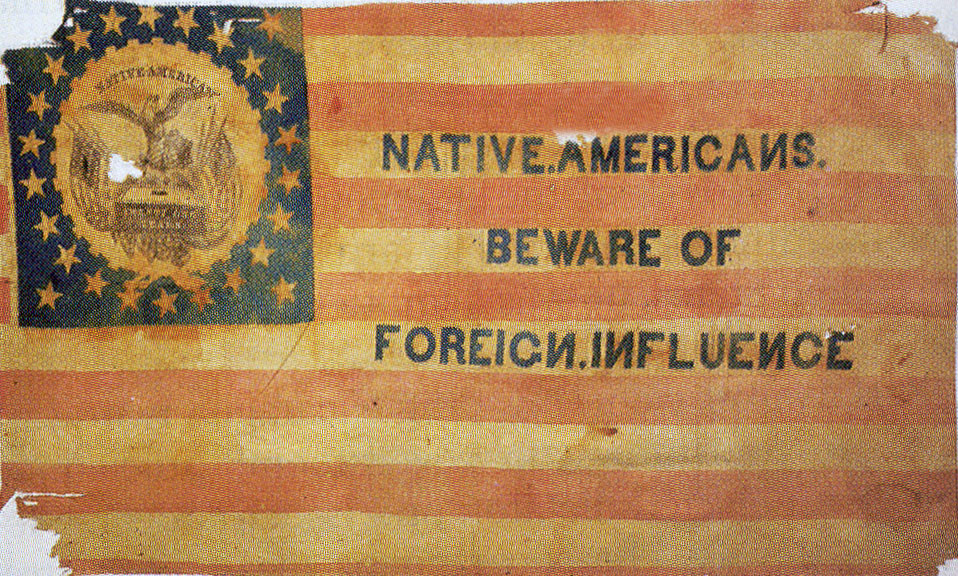
Sean Wilentz utilized Chapters 4-5 of Chants Democratic to document the failure of labor to successfully challenge the major political parties in Jacksonian New York City due to the Working Men’s lack of a solidified class-consciousness. However, Chapters 7-8 exhibit the evident consciousness of ethnic, racial, and religious boundaries amongst the lower classes throughout the city. As Alex noted last week, the workers’ employers had “distanced themselves further from their workers and receded into private terms” during the 1820s, largely leaving them to their own social and cultural circles. These working-class congregations were anything but homogenous; workers typically united around their respective neighborhoods and localities. The groups often radicalized around specific issues, such as hyper-patriotism, anti-Catholicism, and anti-abolition. Even trade unionists saw these groups as uncontrollable renegades in need of “a complete transformation of character centered on temperance”. (255) Through the economic turmoil of the late 1830s, Wilentz argues, these radical congregations such as the Native American Democratic Association and the American Republican Party gained immense political power in the city on a platform of xenophobic rhetoric against Irish Catholics, abolition, and “anti-republican” peoples. (268)

After the fall of the Working Men in 1830, disaffected workers hit the streets and formed their own organizations to represent their interests. Volunteer fire groups were a popular source of fraternal bonding and local identity in poorer parts of the city. In the Bowery, known as “New York’s plebian boulevard,” nativist sentiment amongst the working-class was enflamed by newspapers such as the Spirit of ’76, published by the Native American Democratic Association. (257) They argued that Irish-Catholic immigrants were an inherent threat to the ideals and purity of American republicanism by carrying the “papist monarchical” conspiracy across the ocean from Europe and swelling their presence in America. (267) The intellectualism of the Working Men’s Party had been replaced by the macho-nativism and muscle of the freikorps-like street gangs of angry workers throughout the city, and their power, unfortunately, was destined to increase.

In the Panic of 1837, more of a third of New York workers lost their jobs. After public unrest and rioting, it appeared as though the traditional union movement had surrendered to the “street tactics of the Bowery”. (295) As labor competition increased in the city, the nativist circles gained power by labeling immigrants (especially Irishmen) as lecherous job thieves. Wilentz utilizes the street propaganda of these powerful groups (the Native American Democratic Association, the American Republican Party, and the Loco Focos) as primary sources along with the concerned responses from the entrepreneurial classes (the American Institute, the Washington Temperance Benevolent Society, etc). They targeted both major political parties- the Whigs were accused of upper-class preference and the Democrats of corruption and pandering to immigrants for votes. (320) At the height of the nativist furor, the American Republican Party candidate James Harper succeeded in winning the mayor’s office, although he failed to implement a thorough nativist policy.

According to Wilentz, the emergence of Bowery-style politics in the 1830s reveals one major point: there was no Rochesterian revival of religion, temperance, and civility in NYC. The revivalists largely gave up and moved on, and the booze continued to flow without obstruction. However, he never seems to examine why New York resisted the Second Great Awakening. Was it due to the militarism and ferocity of the working classes, or the passiveness of the business elite? Also, he fails to document the perspective of the Irish Catholics and immigrants vehemently targeted by the nativists. How did they react to their persecution? Did they fight back, or just roll over when push came to shove? While he may have covered these topics in different portions of the book, I hoped to gain a better understanding of the underlying causes and consequences of the nativist furor that dominated the city. Fear of global papist dominance (while frightening!) can only convince me to a certain degree.

Bowery Street


Warning: Undefined variable $num in /home/shroutdo/public_html/courses/wp-content/plugins/single-categories/single_categories.php on line 126

Warning: Undefined variable $posts_num in /home/shroutdo/public_html/courses/wp-content/plugins/single-categories/single_categories.php on line 127

Bowery Street should have been the title of the second half of Sean Wilentz’s book, Chants Democratic.  Wilentz’s detailed description of working class life in Antebellum New York City can be followed through the rise and changes of Bowery Street.  Wilentz described the street as a, “plebian boulevard, the workingmen’s counterpart to fashionable Broadway” (257).  It is almost seems like the Atlantic City to Las Vegas.  It was built in the mid-1820s and by the early 1830s it was a swinging street with food, drinks, dancing, and entertainment.  Much of what Wilentz described about Bowery Street, he could use to describe the bigger picture of the working class.

The theater on Bowery Street is the first place where the street becomes an obvious microcosm of working class life.  The crowded theatre with prostitutes up in the third acted just as the working class would be expected to.  Wilentz details about the crowd, “fortified by drink, armed with an arsenal of peanut shells and rotten vegetables, the Boweryites felt perfectly at home and interrupted the action on the stage at will” (258).  This can be paralled with the mobs that form during the Crisis of 1836.  Armed with drink, fire, and hundreds of men, the mobs would use systematic violence and symbolic attacks to get their point across.  Furthermore, the crowds almost rioting when English actors acted superior and smug on stage ties in nicely with Wilentz’s descriptions of the Nativist views that were prevalent during the coming decade.  The racial tensions that took place on stage also offer a look at the views of many working classmen.  The set-piece minstrel shows “took racism for granted” and were extremely popular with the lower-class audience.  These shows also gave the working class a chance to criticize and laugh at the aristocratic plantation owners and other “dimwitted” upper class leaders (259).

In the next chapter, after the Panic of 1837, the street changes dramatically.  The workers have less spending money and struggling to find work.  As the temperance push becomes greater, many men are found on Bowery Street and brought to the weekly experience meetings to become sober.  The classic Bowery Theater shows that used to be filled with debauchery and partying are moved to temperate theaters as the Washingtonians seem to be taking over the city.  Wilentz could have emphasized how this shift in theaters and action on the street symbolized the working class change of life after the Panic.  All in all, Bowery Street seems to be a good indication of what the working class is up to at any given time.

Maxwell Paul Reihmann (Cincinnati, Ohio) makes several interesting points about the Washingtonian Temperance movement.  It seems like they were able to be so effective because of their acceptance of all religions.  Instead of pushing sobriety and religion on their converts, they just stressed a better life filled with steady meals and hope.  Max also makes a great comparison with the Women’s Rights Movement later in the century.  His point about the outspoken minority is a good one.  Another example of the outspoken minority working today is the push for the legalization of gay marriage.  A small minority of people feels strongly about it and is pushing our country to change for the better.

Temperance: The Impact of the Minority


Warning: Undefined variable $num in /home/shroutdo/public_html/courses/wp-content/plugins/single-categories/single_categories.php on line 126

Warning: Undefined variable $posts_num in /home/shroutdo/public_html/courses/wp-content/plugins/single-categories/single_categories.php on line 127

Much of Sean Wilentz’s analyzation of New York in the 1830’s and 40’s concerns the Temperance movement; a movement that we see often repeated throughout the early history of the American Republic.  The revitalization of the Temperance movement noted by Wilentz in the Washingtonian Temperance movement spurred thoughts of a group conversation in class early in the semester.  Although I do not remember the specific source we were discussing, the topic concerned the idea of the outspoken minority.  We noted that we often hear more about minority radical beliefs because a passionate populace usually brings them to fruition, even though they are a minority and find extreme difficulty for success.  I feel that many times the Temperance Movement was such a cause; people became very passionate about it but ultimately failed to achieve their ultimate goals.  This can be seen in the early entrepreneurs attempts at temperance in the 1830’s, as they achieved difficulty with their opposition to unions.  With the Washingtonian Temperance movement in the 1840’s, however, I feel that enough of the population became involved in order to remove it from this outspoken minority category that we previously discussed.  Wilentz notes “temperance reformers could claim with justice that theirs was now the largest popular movement in the city’s history.” (307).

Such a large movement was bound to have a significant impact on society, however it was unfortunate that the Washingtonian’s reason for their success caused opposition from the American Temperance Union.  The Washingtonian’s were able to achieve such a significant following by including people from all backgrounds, notably by accepting all forms of religion while denying any relation of their movement to religion.  The American Temperance Union, however, was an evangelical organization that saw religious motives behind their temperance movement, denouncing the Washingtonian movement as a result.  Although the American Temperance Union did not single handedly destroy the Washingtonians, they were a factor in the decline.

Such organizational issues could also be seen in the eventual Women’s Rights movement later in the 19th Century.  Many of these women were also involved in the Temperance movement, and organization within the Temperance movement and other idealistic ventures caused the Women’s Rights activists to avoid organization in attempt to avoid division.  Organization was inevitable, however, and division occurred shortly after.

Interestingly, both the Temperance movement and Women’s Rights movement saw success on a national scale at the beginning of the 20th Century, with Prohibition enacted in 1919 and women’s suffrage enacted in 1920.  This reflects the notion of the outspoken minority that we spoke of in class, as we also mentioned that this outspoken minority often spurs a movement that becomes popular, even if it takes some time.  Both of these movements followed this pattern to achieve success, although prohibition was repealed in 1933.  We can see, however, that it takes a minority movement to spur action on a greater scale.  Success is difficult to come by for these activists, but the possibility of ultimate success if worth the efforts.

Another useful map of American politics


Warning: Undefined variable $num in /home/shroutdo/public_html/courses/wp-content/plugins/single-categories/single_categories.php on line 126

Warning: Undefined variable $posts_num in /home/shroutdo/public_html/courses/wp-content/plugins/single-categories/single_categories.php on line 127

Here is another nice visualization of American politics in antebellum America – I especially like how this one shows increases in political participation through voting.

Enjoy!

American political parties and vote

Wilentz's Workies: Labor Power in the Big Apple


Warning: Undefined variable $num in /home/shroutdo/public_html/courses/wp-content/plugins/single-categories/single_categories.php on line 126

Warning: Undefined variable $posts_num in /home/shroutdo/public_html/courses/wp-content/plugins/single-categories/single_categories.php on line 127

Twenty years prior to The Communist Manifesto, the Working Men’s Party (“Workies” colloquially) proposed some incredibly revolutionary ideas in New York City, such as the abolition of private property, universal suffrage, and universal public education. Sean Wilentz, in his epic study Chants Democratic, analyzes the causes, context, and consequences of these critical labor groups. Wilentz rejects the notion that the Workies were a Marxist phenomenon of the proletariat uniting against the oppressive bourgeois. He instead argues that worker groups and their leaders were not “class conscious” of exactly who or what they represented. (15) Were they the party of all working men, or just unskilled urban laborers who rejected capitalism and revivalism? Wilentz portrays how the workingmen’s inability to establish a clear identity of their political goals and base made them susceptible to interference and coercion from the major political parties in the early 1830s.

Wilentz describes how, around 1825, the great “artisan republic” crafted by the Founders had collapsed “gradually but decisively” under the weight of modern capitalism. (145) A new entrepreneurial class, with (then-defunct) Federalist leanings, rose up to claim their foothold in the city. As thoroughly described in The Shopkeeper’s Millennium, these businessmen fueled the religious revivals of the 1820s. As a result, as Michael Lamoreaux pointed out, they “imposed a sense of religion on the poor of their community because they believed a void of morality existed”. The entrepreneurs and businessmen now became the spiritual as well as the economic protectors of the working classes, who were either too incompetent or too drunk to establish a decent code of conduct. Many workers undoubtedly resented this new form of bourgeois condescension onto their lives and chose instead to form political societies based on their own interests.

Wilentz’s description of the Working Men’s leadership is simply fascinating; the party was a hodgepodge of French Jacobins, Painite deists, Owenite Utopians, and even women, such as Frances Wright, who was “the first woman of importance to ascend a lecture platform in the United States.” (182) The party’s figurehead was a agrarian socialist named Thomas Skidmore, whose The Rights of Man to Property!, added a socialist spin to the work of Thomas Paine. Wilentz utilizes the worker-friendly newspapers of New York as primary sources for the events and philosophies of the Workies, such as the Radical, the Working Man’s Advocate, the Free Enquirer, and the Sentinel (205). The party, steadfast in its progressivism, reached into territory uncovered by neither Clayites nor Jacksonians: equal distribution of private property, universal suffrage regardless of race, freethinking independence from religious institutions, and public education. At first, the party experienced surprising local successes, with candidates receiving over six thousand votes in the race for State Senate. (199) However, the party’s working-class unity was soon to falter.

By the turn of 1830, Wilentz reveals how the Workies lack of class-consciousness came back to haunt them. In what Wilentz calls “The Coup”, a coalition of urban workers and Tammany Democrats brought down the agrarian Skidmore from power in a scene worthy of the 1917 Russian Duma. The Democrats then “co-opted” the issues of the Working Men’s Party for their own, effectively sealing former Workies inside their bubble. (202) The party’s newspapers, individually allied with a certain faction of the party, also turned on Skidmore, leaving him without public vindication. Wilentz describes the political coercion and the downfall of Skidmore as rather tragic; the united working class, the only true threat to the two-party system, had been subjugated by coercion and deceit. For years to come, the Tammany political machine would dominate the city using the same tactics displayed against the Workies to consolidate their power in an unrivaled fashion. For now, the great socialist vision of urban America would have to wait.