
Warning: Undefined variable $num in /home/shroutdo/public_html/courses/wp-content/plugins/single-categories/single_categories.php on line 126
Warning: Undefined variable $posts_num in /home/shroutdo/public_html/courses/wp-content/plugins/single-categories/single_categories.php on line 127
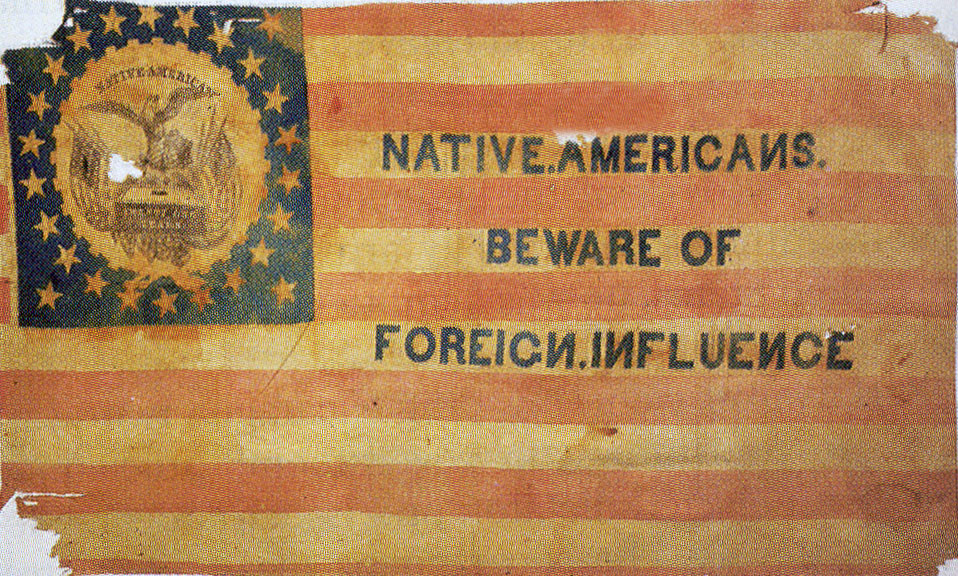 These two chapters in Wilentz’s book, Chants Democratic, discuss nativism in length. This topic is particularly interesting to me as I’m writing my thesis on a similar topic (The effect of the Great Depression on European Immigration 1933-1939) and I saw many similarities in the 1830s and 1930s. One contrast between the two periods, however, was the mutual respect among native and immigrant journeymen. Wilentz attributes this respect to the same level of training the immigrants had as the native artisans (266). Furthermore, due to internal strife within the movement, the political nativism in the 1830s did not achieve the unity and popularity that nativism would reach later in America’s history. (Fun Fact of the day: Unemployment was higher for craft workers between 1836 and 1842 than during the Great Depression).
Wilentz details the shift from an agrarian dominated economy to the rise of the manufacturing economy. Farmers had always been viewed as the most important laborers (274), but the mechanical labor was gaining ground and the unions saw it as the most important form of labor. Farmers clung to the doctrine of rural moral supremacy, yet the mechanics knew that this rural moral supremacy would continue the United States dependence on Britain for manufactured goods, much like when we were a colony. When the drought came in 1836, farmers standing dropped even further as they were not able to provide the products and goods that they relied on selling.
To speak to Marie Hemann’s points, I agree with his conclusions. To add to his astute observations, I think it’s important to note the atmosphere of New York during this time. Wilentz hits the nail on the head when he describes the demographic of New York and its undesirable situation for a revival. “New York, with its immigrants, its Bowery, its traditions of popular anticlericalism, and its sheer size, lacked almost all the prerequisites for a successful revival.” (280) In my humble opinion, New York’s size was the greatest factor in this failure for a revival. With many people come many different beliefs and views on issues. This leads to a lower percentage of influence for those in the revival. What I mean by that statement can be further explained by this hypothetical example: if the revival movement in a small town of 100 people converts 10 of these people, their influence is much greater because these 10 people know everyone in the town and can work to encourage them to come to Jesus. Now, in a city, such as New York, let’s say 1,000 people of 100,000 people join the revival. Granted, more total people joined the movement, however these 1,000 people don’t know the other 99,000 people of New York and have a much more difficult time to influence them. Furthermore, the breakdown of those who partook in the revival, specifically the Brainerd Presbyterian Church, emphasize the setup for a failed revival. Many of those participants in the congregation were women, and of those women, nearly half were unmarried. So, the revival wanted to change the drinking habits of men, yet few men (in comparison to women) joined the church. And many of these women were not in constant relation to men by being unmarried, so their influence on men was very limited. (280)
