Cultural Consciousness


Warning: Undefined variable $num in /home/shroutdo/public_html/courses/wp-content/plugins/single-categories/single_categories.php on line 126

Warning: Undefined variable $posts_num in /home/shroutdo/public_html/courses/wp-content/plugins/single-categories/single_categories.php on line 127

My paternal great grandfather emigrated from Ireland and I remember, as a child, hearing about the “NINA” signs in stores. As children, I think that we judge the truthfulness of a claim, not by the facts, but rather by the statement’s plausibility, and the credentials of the people making the claim. NINA signs certainly seem plausible; in my imagination, they paralleled the “Whites Only” signs of Jim Crow. As far as credibility, parents are about as credible as it gets–at least that’s the way it seems when you’re little. Only now, reading these articles, has my collective, cultural memory been challenged.

Richard Jensen marshals a compelling argument that the NINA signs were, in fact, a mostly imagined phenomenon. While they may have appeared in windows of private homes, especially in Britain, they were non-existent within the commercial world. He discusses the discrimination that the Irish perceived, contradicting it with examples of Irish economic success in America.

Kevin Kenny, though sounding a tone more sympathetic to the Irish than that of Jensen, seems to be in relative agreement. He acknowledges that “demand for unskilled male heavy labor and unskilled female domestic labor in the nineteenth century was simply too great for the Irish to have suffered much by way of anti-hiring discrimination, racial or otherwise.” In seeming agreement about labor, these two historians also write in concordance regarding political discrimination against the Irish, including nativist fears.

Essentially, I think, this discussion comes down to disagreements about what it felt like to be Irish or Irish-American during the nineteenth century. Did it feel discriminatory, or welcoming? The truth can likely be determined from evidence and thoughtful intuition: the Irish, despite being a poor and unskilled immigrant group, often succeeded in the labor market in America. Yet, cultural fears about their race, or their Catholicism persisted. They displayed economic mobility, but were discriminated against politically. The Irish likely felt unwelcome in America, even as they found employment, dominated some industries and gained political franchise. That feeling, not reality, seems to have created the NINA signs that exist in my imagination and the imaginations of millions of other Irish-Americans: sitting in shop windows, they remind us that our ancestors once felt unwelcome, even if that feeling didn’t come from a sign in the window, or a mass inability to find work.

I think that I echo Michael’s final line, where he writes “I think an effort to better connect how the discrimination in other aspects of the Irish experience contributed to the myth of economic discrimination would have added to Jenson’s work.” A focus on the experience of the Irish, and their own understanding of their cultural history, would be extremely useful in conjunction with this factual analysis of the ways the Irish were and were not discriminated against in the 19th century.
'Merica


Warning: Undefined variable $num in /home/shroutdo/public_html/courses/wp-content/plugins/single-categories/single_categories.php on line 126

Warning: Undefined variable $posts_num in /home/shroutdo/public_html/courses/wp-content/plugins/single-categories/single_categories.php on line 127

These two chapters in Wilentz’s book, Chants Democratic, discuss nativism in length. This topic is particularly interesting to me as I’m writing my thesis on a similar topic (The effect of the Great Depression on European Immigration 1933-1939) and I saw many similarities in the 1830s and 1930s. One contrast between the two periods, however, was the mutual respect among native and immigrant journeymen. Wilentz attributes this respect to the same level of training the immigrants had as the native artisans (266). Furthermore, due to internal strife within the movement, the political nativism in the 1830s did not achieve the unity and popularity that nativism would reach later in America’s history. (Fun Fact of the day: Unemployment was higher for craft workers between 1836 and 1842 than during the Great Depression).

Wilentz details the shift from an agrarian dominated economy to the rise of the manufacturing economy. Farmers had always been viewed as the most important laborers (274), but the mechanical labor was gaining ground and the unions saw it as the most important form of labor. Farmers clung to the doctrine of rural moral supremacy, yet the mechanics knew that this rural moral supremacy would continue the United States dependence on Britain for manufactured goods, much like when we were a colony.  When the drought came in 1836, farmers standing dropped even further as they were not able to provide the products and goods that they relied on selling.

To speak to Marie Hemann’s points, I agree with his conclusions. To add to his astute observations, I think it’s important to note the atmosphere of New York during this time. Wilentz hits the nail on the head when he describes the demographic of New York and its undesirable situation for a revival. “New York, with its immigrants, its Bowery, its traditions of popular anticlericalism, and its sheer size, lacked almost all the prerequisites for a successful revival.” (280) In my humble opinion, New York’s size was the greatest factor in this failure for a revival. With many people come many different beliefs and views on issues. This leads to a lower percentage of influence for those in the revival. What I mean by that statement can be further explained by this hypothetical example: if the revival movement in a small town of 100 people converts 10 of these people, their influence is much greater because these 10 people know everyone in the town and can work to encourage them to come to Jesus. Now, in a city, such as New York, let’s say 1,000 people of 100,000 people join the revival. Granted, more total people joined the movement, however these 1,000 people don’t know the other 99,000 people of New York and have a much more difficult time to influence them. Furthermore, the breakdown of those who partook in the revival, specifically the Brainerd Presbyterian Church, emphasize the setup for a failed revival. Many of those participants in the congregation were women, and of those women, nearly half were unmarried. So, the revival wanted to change the drinking habits of men, yet few men (in comparison to women) joined the church. And many of these women were not in constant relation to men by being unmarried, so their influence on men was very limited. (280)


Mean Streets of New York


Warning: Undefined variable $num in /home/shroutdo/public_html/courses/wp-content/plugins/single-categories/single_categories.php on line 126

Warning: Undefined variable $posts_num in /home/shroutdo/public_html/courses/wp-content/plugins/single-categories/single_categories.php on line 127

This week’s readings from Sean Wilentz’s book Chants Democratic has me thinking along the same lines as Ben regarding the many mean streets of New York City, where life took place for the common person.  More specifically Ben and Wilentz pay close attention to Bowery Street which served as one of the working class areas of New York City.  It is in this account that we become familiar with the theater which served as the hub for activity on the street.  Whether it be the throwing of peanut shells and fruit at the actors on stage when the audience was unhappy with the events taking place, or the prostitutes seated throughout the theater; something was always taking place at the theater that represented the makeup of the common person.  It is here in the theater that American city life in Antebellum America can be fully understood.    However the shift that takes place in America during this time, seen through Bowery Street’s change over time, speaks volumes to the growing state of the working class man’s status.

Wilentz’s account of Bowrey Street at first reminded me of the accounts my grandfather used to tell me when I was growing up.  My grandfather served as a New York City police officer on Pitt Street which is known for the Gompers Houses, a housing project located in one of the “roughest areas of the city.”  Here my grandfather experienced much of the same experiences seen in Antebellum NYC that Wilentz first talks about, only in the 1960s and 1970s.  Streets riddled at night with drunkards and prostitutes created a sense of lawlessness and in many ways excitement due to the unexpected nature of the area.  Education amongst the masses at Gompers was next to nonexistent and in many ways if you didn’t look like you “belonged” in the area life would become very difficult for one.    Luckily, my grandfather was a Gomper’s kid and knew the language of the streets.  It is this idea of looking of sense of belonging that reminds me of Wilentz’s work so much.  Wilentz talks about this sense of “native” pride at the theater on Bowrey Street and that is a concept that exists today.   People supported “guys from the neighborhood” and more often than not cared less about those living outside of their world.  When British actors looked down upon the audience at their show, the crowd didn’t get emotionally worked up because they knew that the guy next to them in crowd would stand by their side in the attempt to stand up for themselves.  It is this same concept that my grandfather was molded in, watching out for guys like him.  Personally I feel like much of this sense of watching out for “guys like him” was to protect himself from being taken advantage of by the upper/smarter members of society.

However, Bowrey Street (as well as Gompers today) changed due to the actions of the upper class (those with power/wealth). Bowrey Street experienced the setbacks of the Panic of 1837 and the temperance movement caught on with some due to the thought that temperance would lead to more money in one’s pocket.  Gompers changed in the 1970s when the government starting pumping resources into the area after widespread riots took place along “rough” city blocks.  In both the Bowrey example and the Gompers example ideas to better life of the “common man” are brought to a community that simply can’t afford to suffer more hardship.  These ideas impact the makeup of the area quickly but the question that emerges from this is “was the situation taken care of or simply swept under the rug?”  Understanding the history of the temperance movement and more government spending in high risk areas it becomes obvious that the issues that the uppers class thought they fixed only made matters worse as they created new problems.

Racism, Xenophobia, and Republicanism: A Night Out on the Bowery


Warning: Undefined variable $num in /home/shroutdo/public_html/courses/wp-content/plugins/single-categories/single_categories.php on line 126

Warning: Undefined variable $posts_num in /home/shroutdo/public_html/courses/wp-content/plugins/single-categories/single_categories.php on line 127

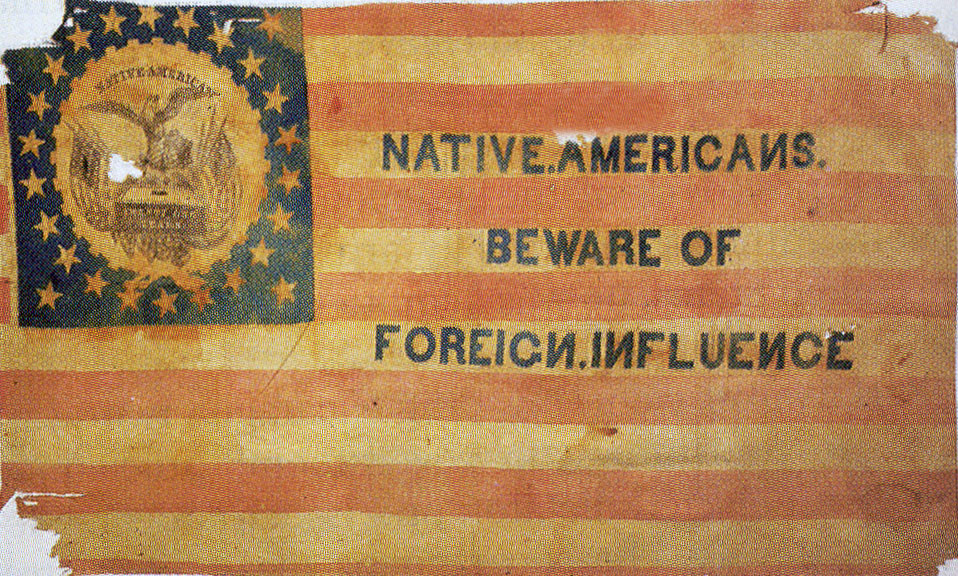
Sean Wilentz utilized Chapters 4-5 of Chants Democratic to document the failure of labor to successfully challenge the major political parties in Jacksonian New York City due to the Working Men’s lack of a solidified class-consciousness. However, Chapters 7-8 exhibit the evident consciousness of ethnic, racial, and religious boundaries amongst the lower classes throughout the city. As Alex noted last week, the workers’ employers had “distanced themselves further from their workers and receded into private terms” during the 1820s, largely leaving them to their own social and cultural circles. These working-class congregations were anything but homogenous; workers typically united around their respective neighborhoods and localities. The groups often radicalized around specific issues, such as hyper-patriotism, anti-Catholicism, and anti-abolition. Even trade unionists saw these groups as uncontrollable renegades in need of “a complete transformation of character centered on temperance”. (255) Through the economic turmoil of the late 1830s, Wilentz argues, these radical congregations such as the Native American Democratic Association and the American Republican Party gained immense political power in the city on a platform of xenophobic rhetoric against Irish Catholics, abolition, and “anti-republican” peoples. (268)

After the fall of the Working Men in 1830, disaffected workers hit the streets and formed their own organizations to represent their interests. Volunteer fire groups were a popular source of fraternal bonding and local identity in poorer parts of the city. In the Bowery, known as “New York’s plebian boulevard,” nativist sentiment amongst the working-class was enflamed by newspapers such as the Spirit of ’76, published by the Native American Democratic Association. (257) They argued that Irish-Catholic immigrants were an inherent threat to the ideals and purity of American republicanism by carrying the “papist monarchical” conspiracy across the ocean from Europe and swelling their presence in America. (267) The intellectualism of the Working Men’s Party had been replaced by the macho-nativism and muscle of the freikorps-like street gangs of angry workers throughout the city, and their power, unfortunately, was destined to increase.

In the Panic of 1837, more of a third of New York workers lost their jobs. After public unrest and rioting, it appeared as though the traditional union movement had surrendered to the “street tactics of the Bowery”. (295) As labor competition increased in the city, the nativist circles gained power by labeling immigrants (especially Irishmen) as lecherous job thieves. Wilentz utilizes the street propaganda of these powerful groups (the Native American Democratic Association, the American Republican Party, and the Loco Focos) as primary sources along with the concerned responses from the entrepreneurial classes (the American Institute, the Washington Temperance Benevolent Society, etc). They targeted both major political parties- the Whigs were accused of upper-class preference and the Democrats of corruption and pandering to immigrants for votes. (320) At the height of the nativist furor, the American Republican Party candidate James Harper succeeded in winning the mayor’s office, although he failed to implement a thorough nativist policy.

According to Wilentz, the emergence of Bowery-style politics in the 1830s reveals one major point: there was no Rochesterian revival of religion, temperance, and civility in NYC. The revivalists largely gave up and moved on, and the booze continued to flow without obstruction. However, he never seems to examine why New York resisted the Second Great Awakening. Was it due to the militarism and ferocity of the working classes, or the passiveness of the business elite? Also, he fails to document the perspective of the Irish Catholics and immigrants vehemently targeted by the nativists. How did they react to their persecution? Did they fight back, or just roll over when push came to shove? While he may have covered these topics in different portions of the book, I hoped to gain a better understanding of the underlying causes and consequences of the nativist furor that dominated the city. Fear of global papist dominance (while frightening!) can only convince me to a certain degree.