Ethical Concerns When Working with Data


Warning: Undefined variable $num in /home/shroutdo/public_html/courses/wp-content/plugins/single-categories/single_categories.php on line 126

Warning: Undefined variable $posts_num in /home/shroutdo/public_html/courses/wp-content/plugins/single-categories/single_categories.php on line 127
  • Data is not objective, and is not neutral. (Noble, O’Neill)
  • Human motives influence the bias in the data. (Eviction Lab)
  • Readers might not be aware of these biases. (Simpson’s Paradox, Asimov)
  • Data needs to be looked at in context. (Klein, Klein and D’Ignazsio)
  • Lack of depth/context can lead to unintentional bias. (Eviction Lab, O’Grada and Guinnane)
  • In order for users to feel safe, they should understand how/where data is being collected. (Eviction Lab, Force 11)
  • Not enough people know that data is not your own. (Gabourey)
  • Verifying your data
  • Make sure your survey design is good (Eviction Lab)
  • Consent (What you Can’t and Shouldn’t do with social media)
  • It is not always clear what your audience is when using social media to collect data  (Gabourey, Klein, Healy)
  • Think about the financial incentives (Gabourey)
  • Publishing accurate statistics makes it possible to infer personal information (Healy)
Best Practices for Sharing Data and Code


Warning: Undefined variable $num in /home/shroutdo/public_html/courses/wp-content/plugins/single-categories/single_categories.php on line 126

Warning: Undefined variable $posts_num in /home/shroutdo/public_html/courses/wp-content/plugins/single-categories/single_categories.php on line 127
  • Make sure that your data was ethically collected. (Pew, Healey)
  • Use common language (Binder)
  • Have variables that make sense
  • Make sure that the layout of your interface is mobile accessible
  • Use keys
  • Make sure that your data that can be analyzed in many softwares (i.e. non-proprietary format)
  • Pre-usage instructions (e.g. read me document)
  • Being respectful – anticipating the expectations of the people whose data you are using (Noble)
  • Sticking to larger datasets
  • Only share the data you need/used for replication
  • Account for the Hawthorn effect
  • Do not share names and location.

Best Practices for Making Public-Facing Data Projects


Warning: Undefined variable $num in /home/shroutdo/public_html/courses/wp-content/plugins/single-categories/single_categories.php on line 126

Warning: Undefined variable $posts_num in /home/shroutdo/public_html/courses/wp-content/plugins/single-categories/single_categories.php on line 127
  • Make the presentation of the data understandable by anyone. Enough so that it is not necessary for you to be there to describe the data
  • Use a shared vocabulary so people can understand your work without doing too much learning
  • Make sources of information clear and available. Be clear about where the data is coming from and how you collected it (Klein and D’Ignazsio)
  • Protect any personal information provided by people that you used for your data
  • Be mindful of the purposes of your research
  • Create visual / easy to understand methodology along with data (Drucker)
  • Always cite our sources to ensure credibility & give credit to people/services that are typically overlooked
  • Make sure any visualizations accurately represents the data
  • Being transparent enough for replication purposes *(Force 11, Ramsey and Rockwell, Pew, Eviction Lab)
  • Consider context when looking at data (Klein and D’Ignazsio)
  • Being overall aware of potential subjectivity of data and how you yourself are able to skew the data.

Code to check if packages are installed, run if not


Warning: Undefined variable $num in /home/shroutdo/public_html/courses/wp-content/plugins/single-categories/single_categories.php on line 126

Warning: Undefined variable $posts_num in /home/shroutdo/public_html/courses/wp-content/plugins/single-categories/single_categories.php on line 127

Hello all,

We can certainly run each package at the start of each notebook, but if you are comfortable, you can also use the following code:

# List your packages here (this checks to see if tidyRSS and stringr are installed.
packages <- c("tidyRSS", "stringr")

# Run this without making changes
package.check <- lapply(packages, FUN = function(x) {
  if (!require(x, character.only = TRUE)) {
    install.packages(x, dependencies = TRUE)
    library(x, character.only = TRUE)
  }
})

Editable network thing


Warning: Undefined variable $num in /home/shroutdo/public_html/courses/wp-content/plugins/single-categories/single_categories.php on line 126

Warning: Undefined variable $posts_num in /home/shroutdo/public_html/courses/wp-content/plugins/single-categories/single_categories.php on line 127

Thing

Work.csv


Warning: Undefined variable $num in /home/shroutdo/public_html/courses/wp-content/plugins/single-categories/single_categories.php on line 126

Warning: Undefined variable $posts_num in /home/shroutdo/public_html/courses/wp-content/plugins/single-categories/single_categories.php on line 127

work.csv

Thinking about data structures


Warning: Undefined variable $num in /home/shroutdo/public_html/courses/wp-content/plugins/single-categories/single_categories.php on line 126

Warning: Undefined variable $posts_num in /home/shroutdo/public_html/courses/wp-content/plugins/single-categories/single_categories.php on line 127

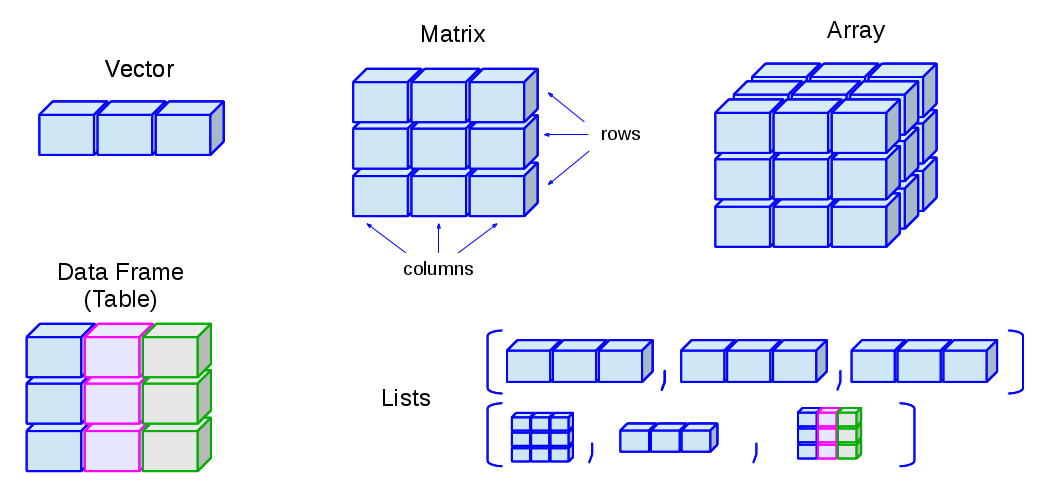
Here’s a helpful viz of how to imagine and visualize the different kinds of data structures:

Systematically Collecting Oral History Data


Warning: Undefined variable $num in /home/shroutdo/public_html/courses/wp-content/plugins/single-categories/single_categories.php on line 126

Warning: Undefined variable $posts_num in /home/shroutdo/public_html/courses/wp-content/plugins/single-categories/single_categories.php on line 127

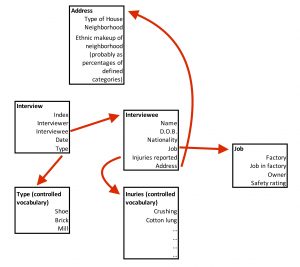
Using your data models, I have created a form that captures a lot of the data you specified. Over the weekend, fill out the form for THREE people.

Relational Databases


Warning: Undefined variable $num in /home/shroutdo/public_html/courses/wp-content/plugins/single-categories/single_categories.php on line 126

Warning: Undefined variable $posts_num in /home/shroutdo/public_html/courses/wp-content/plugins/single-categories/single_categories.php on line 127

What do I need to do before class today?


Warning: Undefined variable $num in /home/shroutdo/public_html/courses/wp-content/plugins/single-categories/single_categories.php on line 126

Warning: Undefined variable $posts_num in /home/shroutdo/public_html/courses/wp-content/plugins/single-categories/single_categories.php on line 127

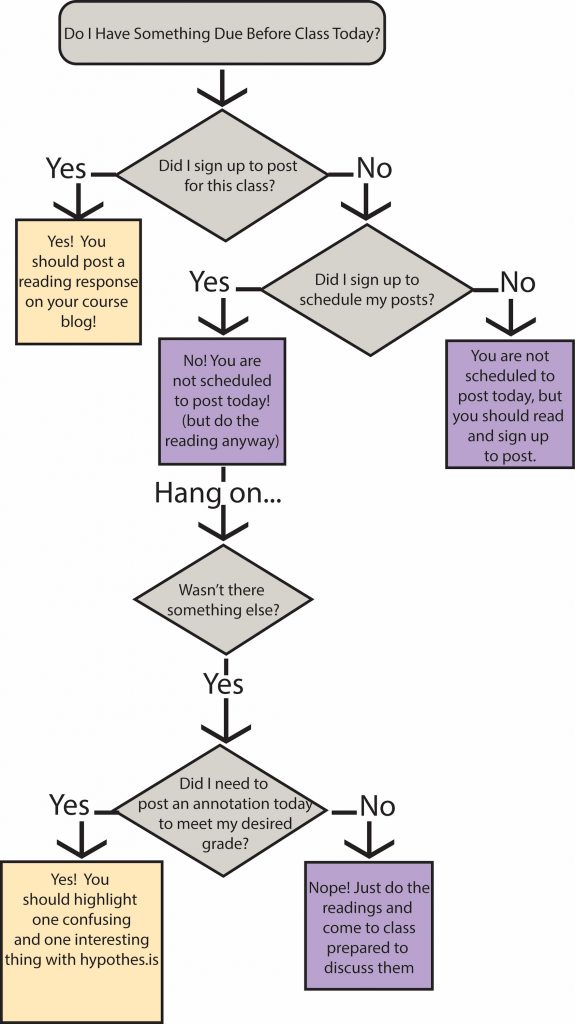
Figuring out what work needs to be done before each class can be a bit confusing – this flowchart should help you determine whether you should post a reading response or annotate some readings.

If you have forgotten whether or not you signed up to post, you can check here for section A (11:00-12:40) and here for section B (2:40-4:00). The google table lists your initials, as well as the classes for which you signed up to post. The next available class for which to post will be bolded. After a class has passed, it will be deleted from the list.

DCS 104 Class Work Flow Chart