Pompeii, Hollywood, and the Great Romance of Disaster


Warning: Undefined variable $num in /home/shroutdo/public_html/courses/wp-content/plugins/single-categories/single_categories.php on line 126

Warning: Undefined variable $posts_num in /home/shroutdo/public_html/courses/wp-content/plugins/single-categories/single_categories.php on line 127

What is so romantic about impending disaster? In Hollywood, the combination of budding romance between star-crossed lovers and mass destruction has proven to be dramatic gold. James Cameron’s tale in Titanic of class-defying romance and inevitable heartbreak proved to be not only a huge success at the box office, but among critics as well. Titanic’s acclaim (and its monetary success) was certainly not ignored, and its strategy has been emulated numerous times. Pompeii, the new film from Paul W.S. Anderson (yes, the Resident Evil franchise director), undoubtedly reflects the ‘Jack, Rose, and rich snob’-style  love triangle, with a disaster conveniently located to level the playing field and unite the true lovers.

The plot here shouldn’t surprise anyone. There are three main (heavily archetypal) characters: Milo (Harrington, the subjugated but suave slave/gladiator with a soft side for the ladies), Cassia (Browning, the aristocratic young beauty who despises her patrician peers), and Corvus (Sutherlund, the cruel politician with no empathy who wants to take Cassia as his wife). Vesuvius, of course, provides the convenience of destroying the class and social barriers preventing Milo and Cassia from riding off into the sunset. As John noted previously, Carl Smith emphasized how this destruction of barriers often horrified the upper classes, while many common people reveled in the anarchy.

The audience gets two major satisfactions from this kind of storyline. First, the Romeo and Juliet story provides catharsis, as it allows true love to emerge over seemingly insurmountable barriers. Second, the audience witnesses the downfall of corruption and egocentrism (a slave-owning society that values hedonism), exemplified through particular characters, who are often quite wealthy. If everyone thought that Corvus or Cal Hockley were great guys, then the star-crossed romance would have less punch. In other words, the disaster destroys both class superiority as well as the boundaries preventing “true love” from being achieved. Time to grab some popcorn.

Fire and Brimstone: Religious Interpretations of the 1906 San Francisco Earthquake


Warning: Undefined variable $num in /home/shroutdo/public_html/courses/wp-content/plugins/single-categories/single_categories.php on line 126

Warning: Undefined variable $posts_num in /home/shroutdo/public_html/courses/wp-content/plugins/single-categories/single_categories.php on line 127

As we have consistently seen, religion tends to have a significant impact on the interpretation of disasters. From Father Pernin’s narrative of the Peshtigo Fire, to the interpretation of the Chicago fire as cleansing, religious interpretations of disasters abound. Given both the often complex nature of disasters, coupled with the wanton destruction, disasters seem to almost request the meaning which religion may ascribe to them. Furthermore, disaster almost always inspires community unification and religion has often facilitated such unity.

I would like to examine a specific disaster and the religious response which it elicited from the community, on a local or perhaps wider scale. What were the religious or other interpretations of this disaster and its significance? How were interpretations of this disaster shaped by religious leaders and the religious community? How did religious disaster narratives shape the recovery from this disaster? How did the religious landscape change as a result of the disaster or the concomitant changes? In what ways were religious disaster narratives productive or counterproductive, in terms of rebuilding community in the wake of this disaster?

I think that the 1906 San Francisco earthquake and fire might be particularly interesting to examine, for a variety of reasons. Foremost, the scale of the disaster, which was substantial, would have accentuated any effects that such a disaster might have on a populace or community. Yet, this alone does not distinguish San Francisco’s disaster from some others. Though fires were the most destructive element in this case, they were secondary to an earthquake, in terms of cause. Earthquakes present a particularly interesting disaster in that they are—much more than Mrs. O’Leary or her cow—open to religious interpretation. The trembling of the very earth beneath our feet lends itself to religious interpretation. Moreover, San Francisco in 1906 was a city of cultural clashing, with significant divides between the white and Chinese communities. Doubtless, such cultural conflict played out in the context of religious thinking.

Local and community newspapers will be a great source for this examination, especially if they cater to a specific religious community within the city. I do not, necessarily, need to limit myself to local newspapers but can look on a national and state scale as well, since those have potential to be sources of religious interpretation as well. Within newspapers, I expect editorials to be a particularly good source. Journals or correspondence, though rare, have the potential to be great sources of religious thinking or interpretation, especially that which people might not say publicly. Perhaps there are records of sermons that were given in the aftermath of the disaster or during the recovery that address the disaster in a religious context.

Mulholland’s Mishap: The St. Francis Dam Collapse of 1928


Warning: Undefined variable $num in /home/shroutdo/public_html/courses/wp-content/plugins/single-categories/single_categories.php on line 126

Warning: Undefined variable $posts_num in /home/shroutdo/public_html/courses/wp-content/plugins/single-categories/single_categories.php on line 127

In the late 1800s, Los Angeles created a massive irrigation project in the Owens Valley to provide water to the ever-growing metropolis. The project, under the leadership of civil engineer William Mulholland, was marred by controversy, including shady land dealings and the collapse of the St. Francis Dam in 1928, which resulted in the deaths of roughly 600 people in the Santa Clara River Valley.

Several important historical questions will guide my research:

  1. How did the urbanization of Southern California shape regional politics and the allocation of public resources?
  2. How did the political agendas of Los Angeles politicians influence public construction projects?
  3. How was responsibility allocated for the collapse at the St. Francis Dam?

My research will focus less on the effects and aftermath of the St. Francis Dam collapse and more the politics surrounding its construction as well as the sloppy engineering that led to its demise. I hope to examine sources that shed light on the California Water Wars of the late 19th and early 20th century, showing how the allocation of resources became a major political struggle. William Mulholland and his corps of engineers will also receive my scrutiny, as I hope to determine if their construction effort was based on a desire for political gain or public welfare and safety.

For my analysis, I will make use of Los Angeles public records, such as the purchase of land and waterways, irrigation plans and objectives, and the professional reports of engineers engaged in the project, focusing on the St. Francis Dam in Ventura County. As my work specifically follows William Mulholland, I will utilize any and all of his letters, journals, and reports from the 1920s and possibly earlier. Newspaper articles documenting the expansion of the irrigation project and the construction of the dam would also be ideal sources. Lastly, the critics of the Dam (or the irrigation project as a whole) may be able to provide interesting insight on the situation through their personal correspondence, public reports, and newspaper opinions.

Gilded Age Topic Proposal


Warning: Undefined variable $num in /home/shroutdo/public_html/courses/wp-content/plugins/single-categories/single_categories.php on line 126

Warning: Undefined variable $posts_num in /home/shroutdo/public_html/courses/wp-content/plugins/single-categories/single_categories.php on line 127

Lodged between the
jammed pack Civil War and reconstruction era and the booming Progressive Era of
the early 20th century, the Gilded Age lends itself to critiques as
a time where the nation was littered with fraud, corruption and rotten to the
core. The term “Gilded Age” was coined from the title of the novel published by
Charles Dudley Warner and Mark Twain in 1873, and as the decades passed,
scholars from the 20th century began to unanimously deem this term
an appropriate descriptor for the period. This label for the late 18th
century has caused much evaluation from historians ever since the 20th
century and has had rather larger implications then possibly predicted. Since
the mid-20th century, Gilded Age historians have gone through
serious reevaluation in an effort, not to deny what happened during the period,
but rather assess the practicality of the Gilded Age as a serious and study
worthy period of the American history. In the past few decades, scholarship on
the viability of the Gilded Age, upon closer examination, has revealed some new
ways of envisioning the term “Gilded Age” and has lent itself to the question:
if the late 1800s was not the Gilded Age, they ask, then what was it? Other
historical questions surrounding this scholarship are: does the period between
the Civil War and the Progressive Era even deserve a periodization of its own
and if new historians deem the Gilded Age as not worthy of its name then do we
have to discuss the practicality of combining it with the Progressive Era as a
period of grassroots movement and establishment of a foundation for the
Progressive Era? Some primary sources that I would want to analyze would be
newspaper clippings during and after the Gilded Age period to look for the
shift in labeling this period, possibly political speeches that address the
times of the period and how it will be categorized in the future. Also, it
might be beneficial to look at historical magazine articles to see and analyze
any scholarship coming out at that time regarding the outlook of the period its
difference from the Civil War Era.

Davidson snows of yore


Warning: Undefined variable $num in /home/shroutdo/public_html/courses/wp-content/plugins/single-categories/single_categories.php on line 126

Warning: Undefined variable $posts_num in /home/shroutdo/public_html/courses/wp-content/plugins/single-categories/single_categories.php on line 127

We might think of the snow as anomalous, but Davidsonians of previous years have also had to contend with storms (and also took lots of pictures of the snow!)

As promised, here are some pictures of historical Davidson snowstorms from the DPLA:

Rolling a giant snowball, 1916
Snowy Chambers, 1921


An impressively artistic Davidson snowman, 1929
Snowcovered downtown Davidson, 1933


Chicago Exceptionalism


Warning: Undefined variable $num in /home/shroutdo/public_html/courses/wp-content/plugins/single-categories/single_categories.php on line 126

Warning: Undefined variable $posts_num in /home/shroutdo/public_html/courses/wp-content/plugins/single-categories/single_categories.php on line 127

Contrary to what the title might suggest, I will not be talking about deep dish pizza. I will, however, discuss Carl Smith’s well-written article, “Faith and Doubt,” and the importance of the Chicago fire. Rarely do I ever enjoy reading (I picked the wrong major), but Smith’s analysis of the fire’s social affect on the city whetted my appetite for something different than descriptions of the fire’s physical destruction. One of his arguments claims that, at least among fire literature and Chicagoans, the city’s importance grew following the fire. He claims “the destruction indicated not the degree of Chicago’s venality or misfortune, but the grandeur of its destiny.” (130) The Chicago fire became the city’s “epic moment” that spawned a belief that Chicago was “pure, heroic, and modern.” (131) Religious explanations for the fire further contributed to this thinking by claiming “God smote the city…as a warning and a lesson for all other cities.” (135) Therefore, members of the city and nation must protect the valuable future of Chicago (by protecting the social order) because only Chicagoans could withstand such a divine beating. I viewed these religious justifications as comparable with the struggles of Job in the Bible. Smith cites individuals that believed the deaths as a result of the fire were deserved due to a lack of “character and resolve.” (150)
Countering this view of Chicago’s perfect post-fire community, Smith provides numerous examples of terrible actions performed by these supposedly “good” people. Thieves, looters, and whiskey-drinking women plagued the city. Although many of these criminal accounts were exaggerated, Smith hits the nail on the head by claiming that the fire brought all forms of society down to the lowest level. (151) To quote my esteemed colleague Price, who quoted Smith, “inequalities of society were now leveled off as smooth as the beach itself.” (157) The fire evened up the playing field by destroying a significant aspect crucial to class separation: material wealth.

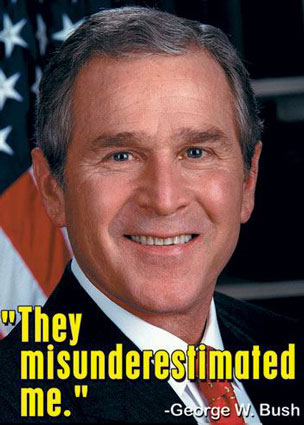
Perhaps because Chicago did not witness a pivotal battle in the Civil War, I often forget of its existence during this period. Reconstruction, disenfranchisement, and southern hostility are the key words I think of eight years following “The War to Suppress Yankee Arrogance.”* Smith, however, reminds us (me) that the city did exist and became instrumental in the nation’s healing process after the war. I never thought of that angle, but his justification for this claim persuaded me to believe him. Many Americans donated to assist the burned city and focused on Chicago’s needs instead of other social disagreements. “The rest of the country forgot its petty artificial division and rediscovered its finest collective self,” claimed Smith. (141) Although I think Smith may have exaggerated to the extent these petty differences were forgotten, I thought back to 9/11 and how unified America was. Following 9/11, President Bush’s approval rating was through the roof; proof that disaster causes those affected to forget other predicaments. In the wise words of my Davidson advisor, “when shit hits the fan, people rally around their own.”


*One of many ridiculous names for the Civil War. For further reading and laughs, http://civilwartalk.com/threads/the-different-names-for-the-civil-war.76252/

The “Common Brotherhood”: The Memorialization of the Chicago Fire


Warning: Undefined variable $num in /home/shroutdo/public_html/courses/wp-content/plugins/single-categories/single_categories.php on line 126

Warning: Undefined variable $posts_num in /home/shroutdo/public_html/courses/wp-content/plugins/single-categories/single_categories.php on line 127

Carl Smith’s “Faith and Doubt: The Imaginative Dimensions of the Chicago Fire” provides two commonly accepted, but opposing, depictions of the Great Chicago Fire in the late 1800s. The first argued that the Fire was an act of deus ex machine, with God reaching his hand down to Earth and tearing down institutions of malice. The second, and more foreboding, depiction instead viewed the Fire as a great revelation of the sins and evils within the city that humanity must work to ameliorate. Both views can be boiled down to one question: was the fire a reformation in itself, or a call to action for reform? For many observers, the fire was itself a positive, unifying force that tore down social barriers and created a singular community and a “common brotherhood” of Chicagoans. (141) However, the landed classes in Chicago viewed the newly level playing field with hysteria and paranoia, calling it an indistinguishable blend of “human creatures and maddened animals.” (158) Smith writes this piece to remind us that the “moral value” of disaster is entirely based on perspective.

As Casey noted earlier today, Smith does an excellent job juxtaposing the “recovery and hospitality” after the fire with the “violence and corruption” that occurred during it. The first half of Smith’s article focuses entirely on positive memorializations of the fire. His sources range from pastors who praise the fire as a destruction of Chicago’s “gambling-hell” and “primal sin of selfishness” to journalists who celebrate the response as “kindling the fire of sympathy” within the nation (133/141/142).  These positive interpretations of the blaze highlight how the incident served as a “trial of the city’s character,” with the city emerging as unified and determined to rebuild (136). The second half of his article is less cheery, stressing the chaotic reports of people who experienced the fire firsthand. Law, order, and the established social structure break down in favor of looting, lynching, and vigilante justice. The class divides that existed before the fire “were leveled off as smooth as the beach itself,” as fire proved to be a thoroughly class-blind destroyer of property (157). The “swift justice” (A&E reality show potential there) that met thieves in the form of lynching and hanging proved to be a barbaric foil to the great sympathy and care shown to survivors after the fire (153).

“Faith and Doubt,” while not making any bold argument on the moral value of the Great Chicago Fire, serves as a fitting reminder that no disaster can ever be interpreted as purely “good.” While the relief efforts and tales of rebuilding are inspiring, the memoirs of the survivors document a darker story. In the Lord of the Flies-type environment created by the fire, it was every man for himself, with justice nowhere to be found. Smith gives us a solemn  example of how “leveling the playing field” may not be quite as idyllic as we hoped it to be.

Disaster Boosterism and Fear of the Poor


Warning: Undefined variable $num in /home/shroutdo/public_html/courses/wp-content/plugins/single-categories/single_categories.php on line 126

Warning: Undefined variable $posts_num in /home/shroutdo/public_html/courses/wp-content/plugins/single-categories/single_categories.php on line 127

Carl Smith’s intense analysis of the narrative which formed around the Chicago fire in its aftermath is both fascinating and telling. I think it is, perhaps, an even more revealing analysis than any direct analysis of the fire might be, because the particulars of his investigation expose the thoughts, fears, and culture of Chicago’s narrative-makers.

Clearly, we saw in Cronon’s work that Chicago possessed ample boosters. Yet, boosterism in the face of disaster might still be unexpected; yet, it persisted. To Chicago’s boosters, and indeed many of its citizens, the fire marked Chicago as a great city: “Greater than the catastrophes that consumed Rome, London, and other world capitals, the fire proved that Chicago and America had already surpassed or would soon supersede these other cities in all respects”(130). The logic feels backward, but perhaps it is sound. Indeed, only a significant city could have a disaster on the scale of the Chicago fire of 1871. This is likely true of many disasters; as we have discussed, disasters are the confluence of nature and humanity, with the human element emerging as a decisive division between disasters and events. Today, our public figures are quicker to mourn the losses than to highlight the silver lining of a disaster. Leaders in the Gilded Age, however, seemed to remain relentlessly positive in the face of disaster.

On the other hand, the fire brought to light the fear of social instability. The rhetoric that emerged from disaster posited that the ‘respectable’ elements had banded together, unified and determined to survive. The poor were the most significant losers, altogether. From one perspective, they were the malefactors and miscreants who encouraged and spread the fire, looted, raped vulnerable women, and inconsiderately occupied crowded spaces with the wealthy. From another, they were helpless: “Others among the poor died because they evidently lacked the character and resolve to save themselves, which was also why they were poor in the first place”(150). In this case, Smith is merely explaining the narrative that existed, rather than asserting the above himself. These two narratives seem contradictory: these helpless poor, unable to save themselves, were amply able to terrorize the respectable citizens already traumatized by the approaching flames. Displacing the natural horror of the fire with fears of social unrest likely served to reinforce existing social order, implying that through a control of the ‘less respectable’ citizenry, the elite and middle class might be more able to exert control over such uncontrollable events as fire.

I take a more cynical view of preserved and “natural” spaces, such as National Parks, than does Emily. I think that the preservation of these natural spaces is as much a part of the capitalist culture as anything else. National parks and outdoor spaces have been commodified within the ethos of our consumer culture. People drive to these “natural” spaces, spend a day there, bring their own food or purchase it their. Trips down rivers are often guided. My own extensive time spent canoeing Wisconsin’s beautiful waterways has sent me past as many riverside houses, park ranger stations, and farms as anything else. We consume this preserved nature in small doses, which we can easily control. It certainly has an inherent appeal; however, that does not extricate it from capitalism. Capitalism does not judge the things we consume, but makes them available in the most appetizing portions for our consumption. Natural spaces in America have been packaged and labeled for our consumption, and we suspend our knowledge that they are just as “unnatural” as Manhattan as we consume them.

I don’t think the cow did it


Warning: Undefined variable $num in /home/shroutdo/public_html/courses/wp-content/plugins/single-categories/single_categories.php on line 126

Warning: Undefined variable $posts_num in /home/shroutdo/public_html/courses/wp-content/plugins/single-categories/single_categories.php on line 127

And even if it did, it’s a cow, so is it really to blame?

Richard Bales’ investigation of the Chicago fire of 1871 seems like a crime scene investigation, more than historiographical work. I certainly share his chagrin that the investigatory committee did not further investigate  “Peg Leg” Sullivan and Dennis Regan more, since their testimony does seem strange and not very believable. I wonder, also, why none of Bales’ documents include testimony from anyone at the McLaughlin party, since they were closest to the barn and were still, according to Mrs. O’Leary’s testimony, awake at the time. It seems deeply unfair that Mrs. O’Leary was assumed to be instantly guilty. Her testimony as well, in my opinion, seems somewhat jumbled, which cannot have favorably impacted her case.

Denser, lengthier and yet more interesting was Father Pernin’s account of the Peshtigo fire. I don’t think that I could have chosen a better person to describe such an event: his command of language, combined with his spiritual attitude of morality driving results, and belief that the fire may be the apocalypse itself makes for quite an interesting description. For instance: “I perceived above the the dense cloud of smoke overhanding the earth, a vivid red reflection of immense extent, and then suddenly struck on my ear, strangely audible in the preternatural silence reigning around, a distant roaring, yet muffled sound, announcing that the elements were in commotion somewhere” (253). Such a description balances ominous portents with matter-of-fact description to create a chilling and vivid scene. He also seems to imply, on some occasions, that certain people died in the inferno due to their misbegotten behavior: the guests of the party who laughed at him, the dog that didn’t come with him, his horse that wouldn’t follow (even when he used its name, if you can believe that!).

All in all, he creates a scene of grand chaos, which elegantly describes what must have been a horrifying experience for everyone involved. Certainly, little can be worse than surviving such horror, only to return to bury the dead and care for the dying. One thing that I found particularly odd was that the townspeople chose to hang the man looting corpses, but then let him go. I suppose that there was no modicum of punishment available in this particular case, what with the fire and all.

Finally, I want to disagree with Marston’s claim that Cronon underestimated the role of technology, science and industrialization in driving Chicago’s rise.  Cronon’s analysis continually examines the ways in which the “natural advantages” of Chicago–the river, the location near the lake, the surrounding plains–were often fraught with drawbacks. He documents well the ways in which Chicago and her boosters subverted nature in order to create a city from the mud. Ultimately, Cronon’s vision of Chicago is much more of a city crafted from “capital geography” than its natural counterpart.

Chicago: the power of space


Warning: Undefined variable $num in /home/shroutdo/public_html/courses/wp-content/plugins/single-categories/single_categories.php on line 126

Warning: Undefined variable $posts_num in /home/shroutdo/public_html/courses/wp-content/plugins/single-categories/single_categories.php on line 127

A couple years ago, I heard about a UW-Madison professor who was under attack by local Republicans, after criticizing actions by Governor Scott Walker to strip unions of collective bargaining rights and insinuating connections between ALEC (the American Legislative Exchange Council, an organization with strong ties to the Koch brothers). The university was subject to a FOIA request on his emails as they might pertain to Republicans, and while UW did release some of his emails, they also withheld others, and argued that the FOIA request was essentially an attack on academic freedom. That professor, I recently learned, was Bill Cronon.

I share the above because it is a personal connection to Cronon, given that I was born and raised in Madison, and count it as my home. I think that one of the greatest struggles in life is self-understanding, and I have found that history is an incredibly effective avenue through which to pursue that understanding. From before early modern Europe to 20th century America and beyond, everything that we understand about our past informs us of our present. Perhaps that is why, as a midwesterner who lives three hours from Chicago and has spent days and weeks there and in its suburbs, I found Cronon’s work so interesting. While I realize that it is a long assignment, I encourage you to read it. It is revealing and fascinating in ways that pushed me to think differently about a wide variety of things.

Turner argued that in the frontier we saw civilization rebuild itself. Yet, what we truly saw was a civilization that already existed push its way into seemingly boundless space in a way that had never been done before. Cronon wrote of American imperial desires, and certainly these existed. Westward expansion was its own form of imperialism, and not many years after the Chicago fire the U.S. expanded overseas. Yet, part of the ethos of America, especially of the past, which I am beginning to understand is the desire for commercial hegemony. The empire that Americans envisioned was commercial, not political. This vision has largely been realized, and a plethora of examples come to mind: the Panama canal, banana republics, our dominance of the World Bank and the IMF, the massive amount of money which foreign citizens and governments our willing to lend us, New York as the center of the financial world, our power to affect drug policy in Latin America, the power of free trade agreements to make or break developing countries.

The history of Chicago is fascinating. Boosters argued that the city had the natural benefits which would enable it to succeed: it’s location on the Chicago river, which would serve as a natural harbor on the Great Lakes and its central location. Yet, these benefits did not seem to be so beneficial after all. The government was forced to spend hundreds of thousands of dollars to allow ships passage on to the Chicago River, and the swamp-like characteristics of the surrounding area limited passage to the city for a significant part of the year. And yet, Chicago still managed to achieve significance with the building of a canal that connected it to the east. Then, railroads expanded, first with a line intended to stretch from Chicago to Galena, and then the Illinois Central railroad. Over time, the “geography of capital,” as Cronon brilliantly describes it, came to favor Chicago at least as much as its natural geography.

I am humbled by my inability to adequately communicate Cronon’s sublime understanding of Chicago, but I will try to contribute my own thoughts. It is amazing to me that Chicago succeeded at all, for every benefit seemed insignificant and every drawback, paramount. Yet, it did succeed. Perhaps the relentless boosterism should take credit, though it seems that other cities had as many proponents as Chicago. Rather than ask why Chicago succeeded, perhaps we might acknowledge that some midwestern city had to succeed in such a way. Chicago functioned as a gateway to the west, and while it did not have to be Chicago which succeeded, it had to be some city. As Cronon illustrated, Chicago came to exist both on the boundary of two literal watersheds, as on the boundary of two watersheds of capital. In the later parts of its development, its function as the terminal for so many rail lines made its success inevitable. Clearly, however, the competition offered by transportation on waterways to eastern markets made rail lines compete, which I imagine had some positive effect.

I also want to add that I thoroughly appreciated Cronon’s elucidation of railway economics, with high fixed costs, which is a cornerstone of microeconomic thinking and, I think, helps the reader to understand why the railways, though mighty concentrations of capital, were not immune to bankruptcy.

I think that Marston made a good point regarding  Cronon and Turner: whether or not Cronon changed one’s mind on Turner, he certainly cast him and his work in a better light. Cronon forced me, though ready to heap criticism upon Turner, to reconsider his thesis in a different and more sympathetic light. Cronon’s work pushed me to examine the ways in which Turner had contributed to historiography and to American imaginings of the frontier and our history. Rather than endearing Turner to me, this makes me more wary. Consider, please, the way in which Turner has shaped historical views of the west and the frontier. Consider, again, the way in which Cronon is able to recast Turner’s work and defend it. These examples illumine the significant power that historiography and general academic exegesis have to shape our perceptions. Perhaps we should be even more careful and critical in our readings, so as not to be led astray.